Selkirk Rex: Cat Breed Profile, Characteristics & Care
The Selkirk rex, a breed native to the United States, has a curly coat shared by only three other cat breeds: the Cornish rex, Devon rex, and LaPerm. The tousled appearance of the Selkirk rex, coupled with their laid-back attitude, brings new meaning to the saying, “Curly hair, don’t care.” This cat's easygoing personality makes them as charming as they are beautiful.
Learn about the Selkirk rex, from their history and care needs to their appearance and health.
Breed Overview
Personality: Laid-back, friendly, affectionate
Weight: Up to 16 pounds
Length: Up to 30 inches
Coat Length: Short or long hair
Coat Colors: Any genetically possible color or combination
Coat Patterns: Tabby, shaded, tortoiseshell, chinchilla, smoke, calico, bicolor, tricolor, pointed, mink, sepia
Eye Color: Any color
Lifespan: Up to 15 years
Hypoallergenic: No
Origin: United States
Selkirk Rex Characteristics
While the Selkirk rex has a very mellow temperament, they're also warm and affectionate; they tend to get along with everyone. This medium to large-sized feline is exceptionally tolerant and friendly, making them a great pet for families with kids or other pets.
Affection Level | High |
Friendliness | High |
Kid-Friendly | High |
Pet-Friendly | High |
Exercise Needs | Low |
Playfulness | Medium |
Energy Level | Medium |
Intelligence | Medium |
Tendency to Vocalize | Medium |
Amount of Shedding | Medium |
History of the Selkirk Rex
In the late 1980s, a Persian breeder in Montana named Jeri Newman discovered an unusual mixed-breed kitten born to a feral cat. This kitten was the only one in the litter that had a wavy coat and curly whiskers.
Newman pounced on this genetic anomaly and adopted the kitten, naming her DePesto. She later bred DePesto to a black Persian male named PhotoFinish of Deekay. Three of the resulting six kittens had wavy coats, and Newman used them to launch the Selkirk rex breed.
To build genetic diversity in this new breed, The Cat Fanciers’ Association (CFA) breed standard allowed outcrosses with British shorthairs or exotic shorthairs until January 1, 2025. Since then, only kittens from two Selkirk rex parents qualify as part of the breed.
Selkirk Rex Care
When it comes to their activity level, Selkirk rexes aren’t hard to manage. But because they have a curly coat, you need to keep certain things in mind when it comes to grooming them.
Exercise
The Selkirk rex has lower exercise needs than other more active and energetic cat breeds. Nevertheless, providing this cat with plenty of toys, scratching posts, cat trees, and perches will keep them active, which is important for their physical and mental health.
Interactive play is a great way to build your bond with your Selkirk rex, and you can also give them puzzle toys to give them a challenge that will reward them with treats.
Shedding
The Selkirk cat’s coat doesn't shed much, but it requires unique care because any loose hairs tend to stay trapped in the coat rather than drop off onto your clothes and furniture. When loose hairs stay in the coat, they may cause the coat to become matted.
Grooming
Over-brushing the coat of a Selkirk rex is discouraged as it tends to loosen up the curls. Instead, combing with a wide-toothed comb will help prevent mats while maintaining the coat’s curls.
In addition to combing, regular baths can also help avoid matting. The Selkirk rex’s coat looks best when washed with light shampoos that don’t weigh the coat down. Ask your breeder or a professional groomer for a shampoo recommendation.
Avoid using conditioners or conditioning sprays, which may loosen the curls. After a bath, towel dry to remove most of the water, then allow the coat to air dry. Hair dryers can result in frizz or a flat coat rather than crisp curls.
Trim the nails short and inspect the ears weekly. If the ears look dirty, wipe them out with a cotton ball or square of gauze and a pet-safe ear cleaner. Brush your cat’s teeth daily to help maintain oral health.
Common Health Problems
Like many purebred cats, the Selkirk rex is prone to certain hereditary genetic conditions, especially those that affect the breeds that are part of their background. Reputable Selkirk rex breeders screen their adult cats before breeding them to avoid passing on these conditions and to preserve the health of the breed as a whole.
Some congenital diseases that might be seen in this breed inclue:
Polycystic kidney disease (PKD): This is a condition in which cysts on the kidneys that are present at birth cause problems with kidney function and, eventually, kidney failure. PKD is common in Persian cats and exotic shorthairs. A genetic test is available.
Hypertrophic cardiomyopathy (HCM): This is a type of heart disease that causes thickening of the heart muscle, and is common in Persian cats and British shorthairs. Screenings may be performed to determine if a cat is likely to be free from HCM.
Hip dysplasia: This is common in Persians, and affects the development of the hips, leading to mobility issues and pain.
Appearance
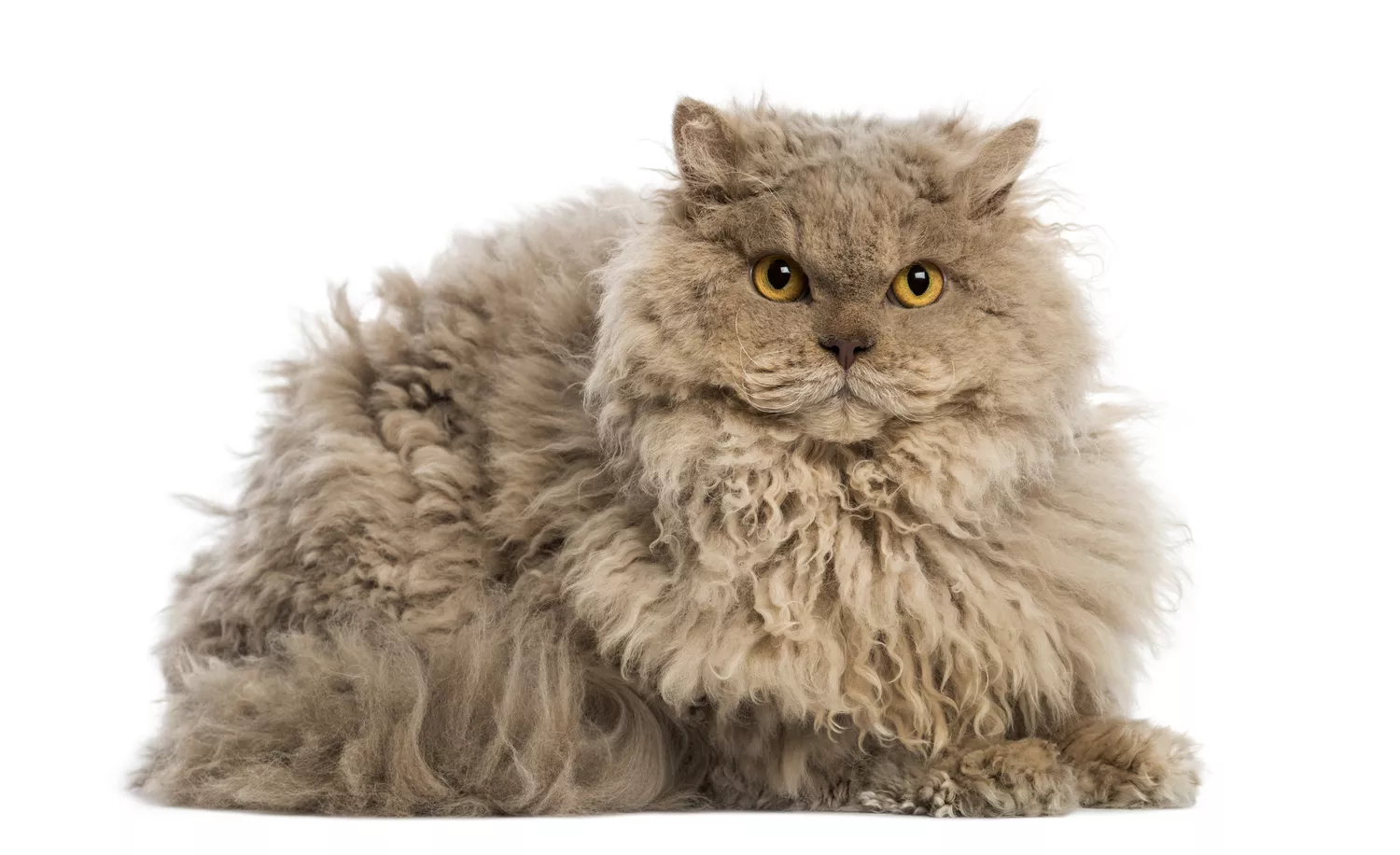
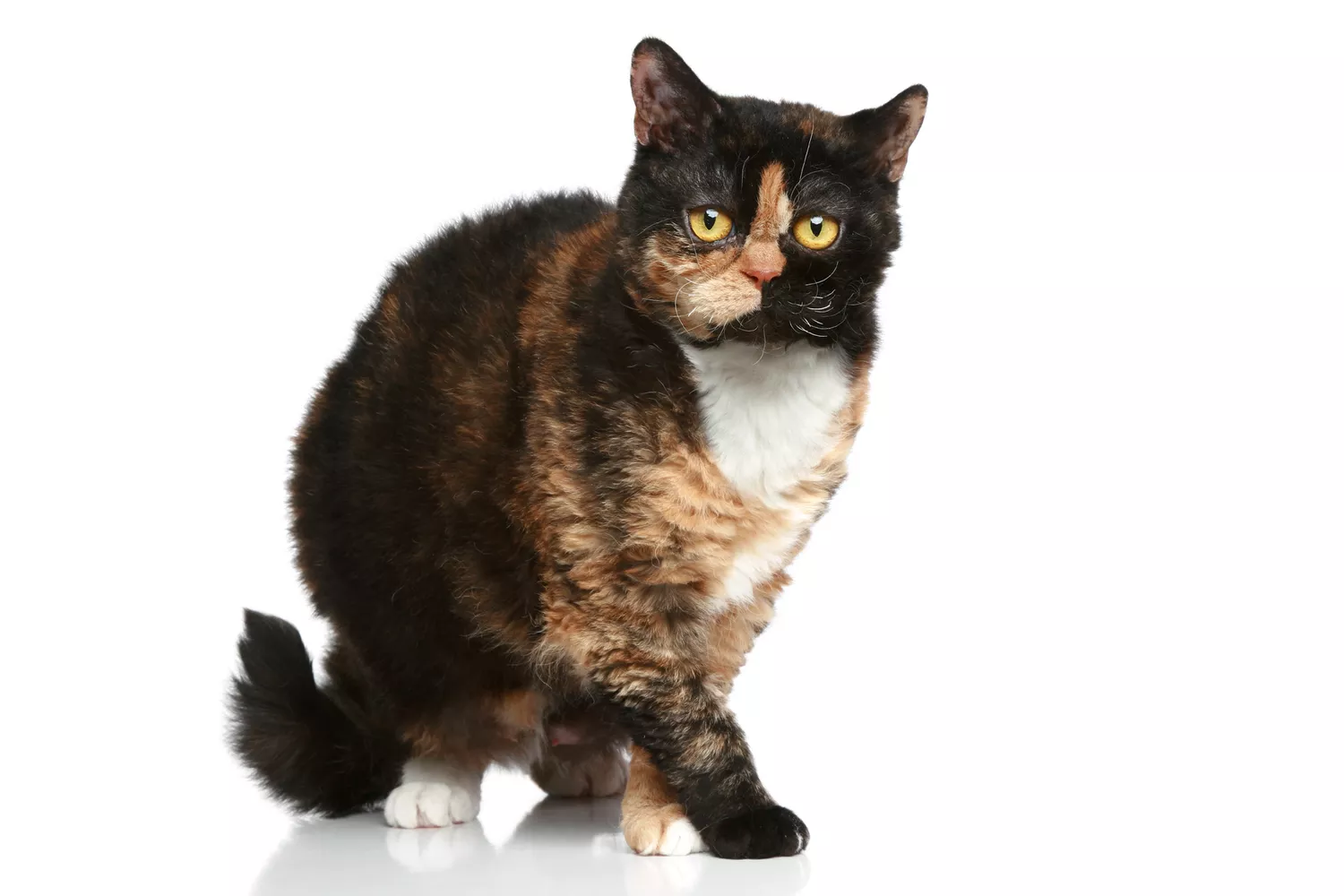
The Selkirk rex may have short hair or long hair. Both coat lengths display curls, but curling is more dramatic in long-haired Selkirk rexes. Even the Selkirk’s whiskers are curly. The coat is soft and plush, with a luxurious feel.
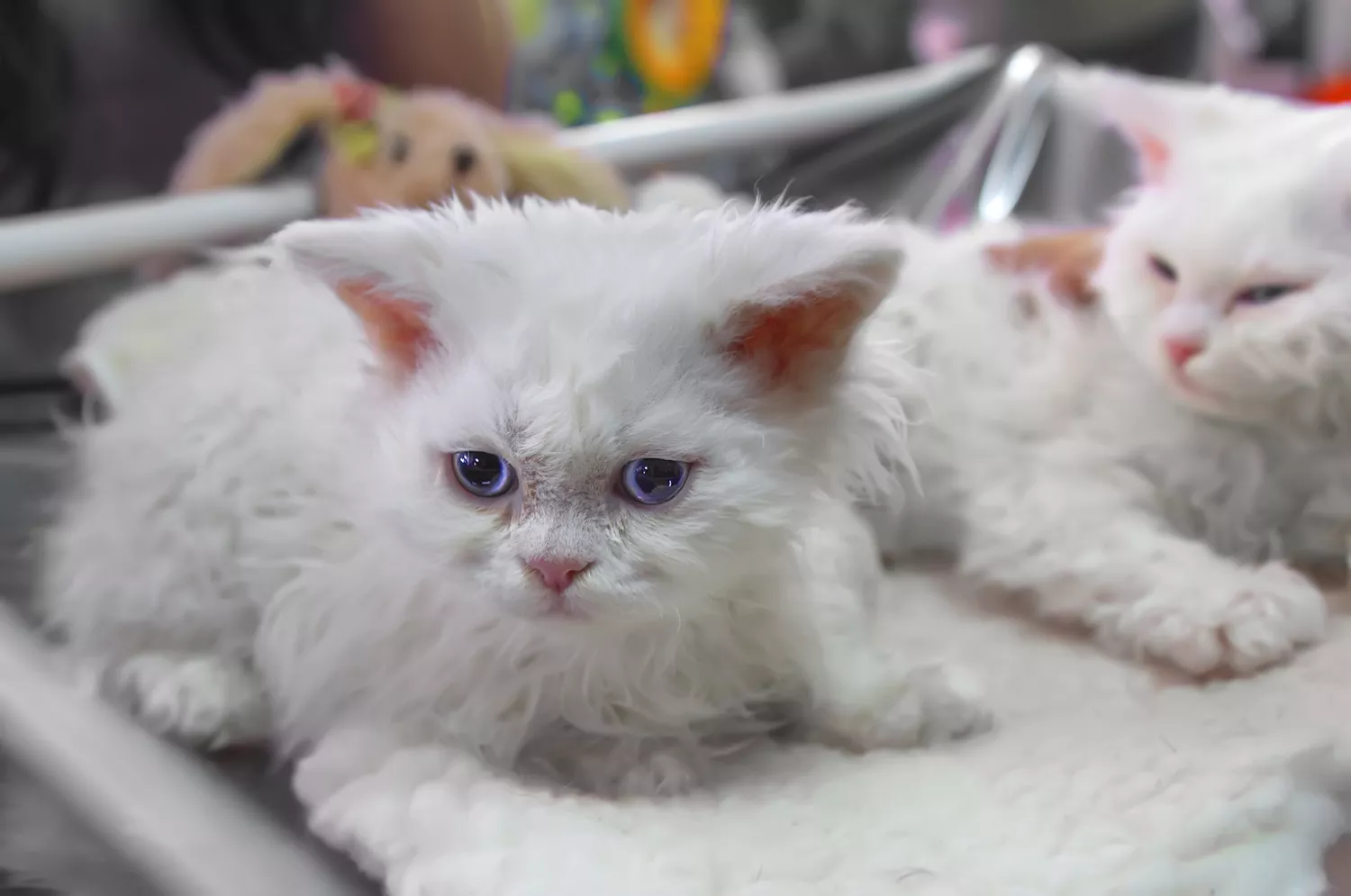
In a litter of Selkirk rex kittens, some will have curly hair and some will have straight hair. Straight-haired Selkirk rex kittens make wonderful pets, although you won’t see them competing in the show ring.
This breed is solidly built, with substantial muscle and boning.
Diet and Nutrition
Due to the Selkirk rex’s larger frame, it’s especially important not to overfeed. Staying lean helps to prevent health issues like diabetes and arthritis, as well as heart disease and hip dysplasia, which are known to affect the breed.
Ask your veterinarian or breeder about the best food and amounts to feed your Selkirk rex, and feed measured meals two or three times a day to ensure proper portions. Free feeding (leaving food out all day) can lead to overeating, which can contribute to weight gain.
Where to Adopt or Buy a Selkirk Rex
If you’re longing to bring home a Selkirk rex kitten, consider attending a cat show, where you can meet local cat breeders. Cat shows are lots of fun and a wonderful way to learn about all the different cat breeds. To find a cat show in your area, do an internet search for “cat show near me.”
Be sure to choose a reputable breeder, and expect to pay a high amount, as these cats average $500 to $1,500.
Although rare, some Selkirk rex or Selkirk mix cats, usually adults, might occasionally end up in rescue. Check with local cat-specific rescue groups or even local shelters.
You can visit the following resources to find a Selkirk rex breeder or rescue:
The Cat Fanciers’ Association Breeder Listing
The International Cat Association Breeder Listing
Selkirk Rex Rescue
Petfinder
Selkirk Rex Overview
The Selkirk rex initially catches the eye because of their curly coat, but breed enthusiasts know that this cat's charm is as attractive as their hair. The Selkirk is relaxed and friendly, and doesn't need a lot of special attention (besides the occasional grooming session). This is not a high-energy cat but they enjoy the company of kids, other cats, and dogs. Overall, the Selkirk rex makes a great companion for just about everyone.
Pros of Selkirk Rex Cats
Uniquely curly coat
Mellow, friendly personality
Gets along well with kids and other pets
Cons of Selkirk Rex Cats
Requires regular grooming
Predisposed to certain health issues
Rare; may be hard to find
What Is the Difference Between Cat Hair and Fur?
More Cat Breeds and Further Research
If you’re interested in similar breeds, check out:
Scottish Fold
Munchkin
Burmese
Otherwise, check out all of our other cat breed profiles.



