Sphynx Cat Characteristics: Breed Profile & Comprehensive Care Guide
The sphynx cat, sometimes called the hairless cat, is a unique cat breed known for their wrinkly skin and peach fuzz coat. Sphynxes stand out among other cats due to their lack of fur or hair—an uncommon occurrence among most mammals. Despite their regal appearance, they are playful and goofy pals who sometimes act more like dogs than cats.
These non-furry felines love to sprawl out in sunspots for warmth whenever possible, and they make excellent cuddle buddies. Sphynxes generally enjoy the company of other cats, dogs, and children, making them a great choice for a family pet, but they do have some special needs.
Learn all about the sphynx cat breed to decide if this is the right cat for you.
Breed Overview
Personality: Playful, affectionate, friendly, energetic, loving
Weight: Less than 12 pounds
Length: 13 to 15 inches
Coat Length: Nearly hairless, peach fuzz
Coat Color: Any color, including white, black, red, brown, white, and lilac
Coat Patterns: Any pattern, including solid, bi-color, tabby, tortoiseshell, calico, tuxedo, and pointed
Eye Color: Any possible feline eye color
Lifespan: 8 to 14 years
Hypoallergenic: No
Origin: Canada
Sphynx Cat Characteristics
What the sphynx cat lacks in hair, they more than make up for in personality. These peach-fuzz-coated cats are known for their exceptionally friendly, affectionate, and cuddly personalities.
Many are dog-like in their desire to be close to their favorite humans whenever possible. They enjoy cuddling and other affectionate interactions, and they are rarely shy with new people, children, other cats, and even dogs.
Sphynxes are very energetic cats that like to play and explore, but once playtime is over, they will unfailingly seek out a nearby lap for cuddling, or else a warm and sunny spot for a good catnap.
While sphynx cats make wonderful family pets, they hate being alone for long, so if you cannot devote plenty of regular attention to your cat, the sphynx is not the right breed for you.
Affection Level | High |
Friendliness | High |
Kid-Friendly | Medium |
Pet-Friendly | High |
Low | |
Playfulness | High |
Energy Level | High |
Intelligence | High |
Tendency to Vocalize | High |
Amount of Shedding | Low |
History of the Sphynx Cat
Feline sphynxes were named after the Egyptian legendary sphinx (although, the cat is spelled with a "y" instead of an "i") for their sophisticated look and graceful nature.
While the ancient Aztecs bred hairless cats hundreds of years ago, the sphynx cat we know today is actually a Canadian breed originating in Toronto in 1966 from a random genetic mutation. The mutation caused the kitten to be hairless. Some breeders took a liking to the hairless cat and decided to breed individuals that produced consistently hairless offspring.
Originally called the Canadian hairless, the breed made its way to America, and both American and Canadian breeders continued to develop the new breed, cross-breeding sphynx cats with Devon rex cats, another breed that has little hair. Over time, the sphynx cat was established as a new breed with its own breed standards.1
The sphynx breed was recognized by The International Cat Association in 2005, The Cat Fanciers' Association in 2002, and several independent cat clubs in Europe, though standards for the breed all differ slightly. The American Cat Fanciers Association also recognizes the breed.
Some purebred feline registries will not recognize the sphynx cat based on the idea that the breed’s hairlessness is a genetic abnormality that could be harmful to individual cats’ health and longevity.
Sphynx Cat Care
Sphynx cats have a lot of energy and can be loads of fun. But they do have specific grooming requirements because of they are hairless and their skin can be sensitive.
Exercise
Sphynx cats are loyal and full of love for their humans and can often be spotted following them around or snuggling up while wagging their tail. Even though they would almost always rather be cuddling, sphynx cats are natural athletes and playful pals. Though sphynx cats are exceptionally active felines, their exercise needs are low.
These cats are happy to entertain themselves for hours at a time, but some might love to have a buddy. If you are away from home for most of the day, you might want to get two sphynx cats. Sphynxes get along with other pets, too, so you can rest easy knowing they will be happy if you have another animal they can snuggle with at home, including dogs.
Sphynx cats love to play, jump, and may even fetch once trained. Social and smart, sphynx cats respond well to positive reinforcement training like clicker training.
Shedding
Because they’re hairless, sphynx cats don’t shed like other cats do, and you don’t need to worry about getting fur on your furniture or clothes.
Contrary to popular belief, sphynx cats are not completely hypoallergenic. They may look hairless, but these cats are actually covered in a very fine, suede-like coat. Doctors may, however, still recommend a sphynx cat as a solution for cat lovers who are searching for a breed that carries less allergens on their fur than others.
Grooming
You might assume that a cat with little-to-no fur wouldn't require much grooming, but in fact, the sphynx cat needs more grooming than many other normally furred breeds. Because they have no hair to absorb their body oils, the sphynx cat’s skin must be washed regularly to maintain a healthy balance of oil and prevent skin problems and oil spots on furniture.
You should bathe your sphynx cat weekly or biweekly to remove oil buildup. Use a gentle shampoo formulated specifically for cats to avoid skin irritation or excessive dryness. Most breeders of sphynx cats accustom the kittens to regular baths, so the majority of these felines are quite agreeable to submersion in water, unlike many other breeds of felines.
Another area to focus on is your sphynx's ears. Due to the lack of fur, these cats tend to accumulate quite a bit of wax and dust inside their ears, which is both unsightly and potentially a source of infection. Use a cotton ball—not a swab—to gently remove wax and grime from your pet's ears once per week. If you notice redness, sores or scabs, excessive debris, or a bad smell, it's time for a call to your veterinarian.
Like any cat, your sphynx also needs regular nail trims and should have its teeth brushed regularly, as well.
Common Health Problems
As with all purebred pets, always ask your breeder for a health guarantee for your sphynx kitten. When bred responsibly, sphynx cats have a generally healthy outlook. However, they can exhibit the following problems:
Sensitive skin: Due to their hairlessness, sphynx cats are sensitive to sun exposure as they have no fur to protect their skin from harmful UV rays.2 Their direct sun exposure should be limited, as just like humans, these cats can get a sunburn if exposed to sunlight for too long. For this reason, sphynxes should remain indoor pets or be monitored closely when outside.
Hypertrophic cardiomyopathy: This is a common heart disease that causes thickening of the heart muscle.3
Periodontal disease or gum disorders:4 Brushing your cat’s teeth at home can help prevent oral health problems like gum disease, but some cats also develop issues like tooth resorption, which a vet can help you address.
Urticaria pigmentosa: This is an itchy, hereditary skin condition that causes a rash.5
Your sphynx should have annual health checkups with your veterinarian to detect potential health problems before they become serious. Of course, should your cat show signs of illness, it's always a good idea to contact your vet.
Appearance
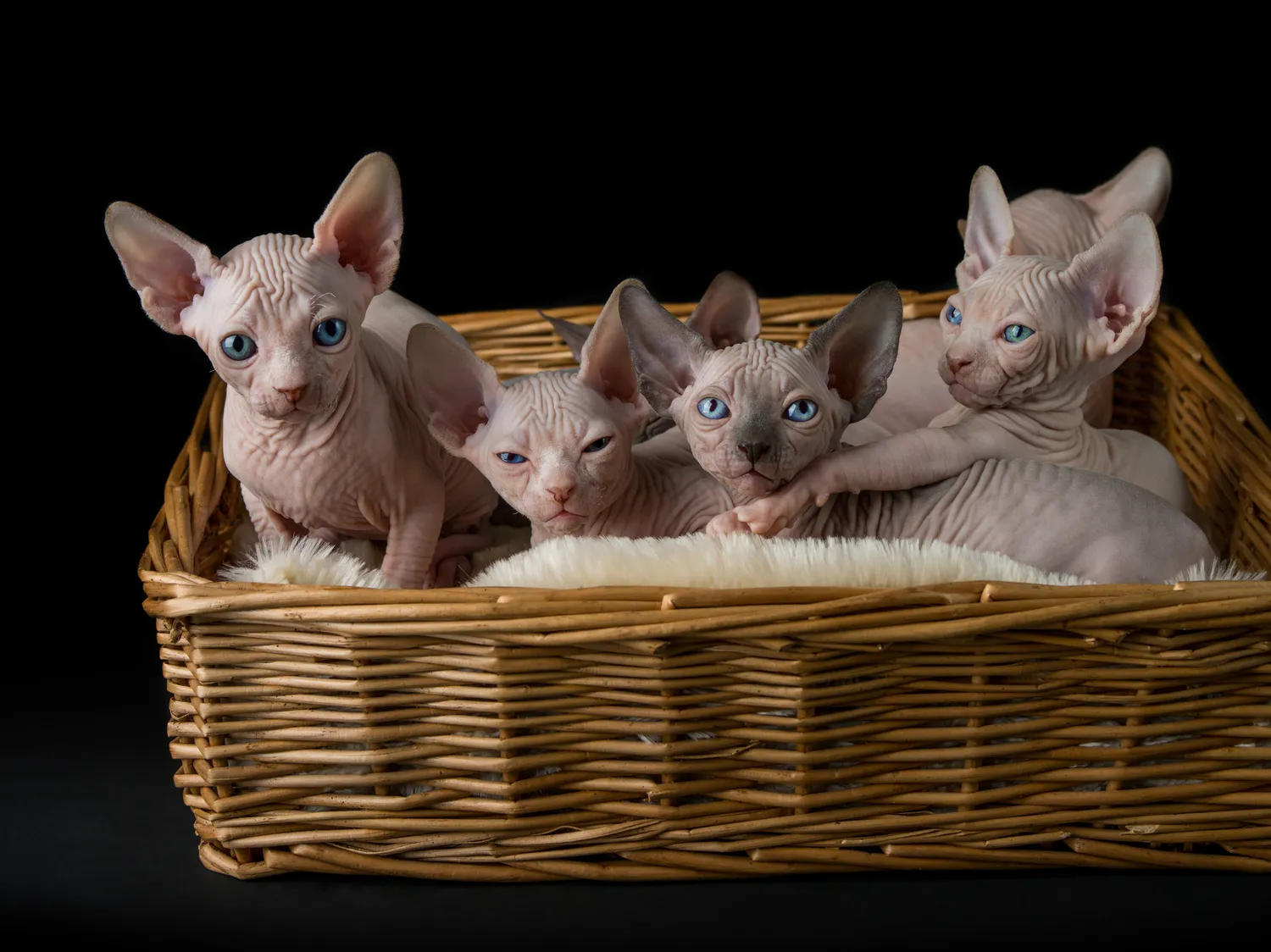
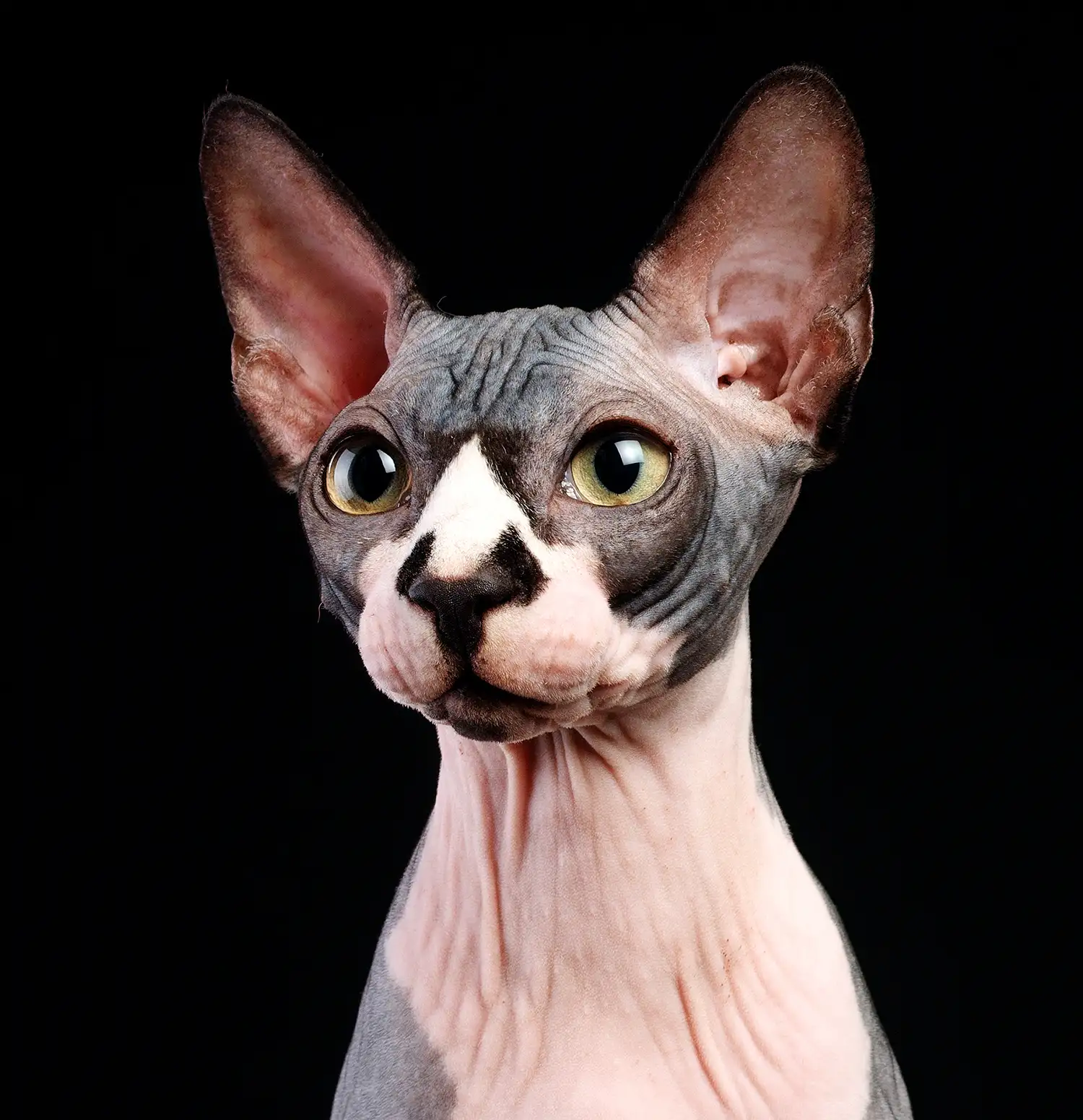
The most obvious and striking thing about a sphynx cat's appearance is the lack of fur. Note that these cats are not always completely bald, though; according to their breed standards, they can have a "peach-fuzz" coating of hair that is no more than 1/8-inch in length.
They typically all have a bit of short hair on the bridge of their nose and the backs of their ears. Most do not have whiskers, although they do have the characteristic whisker pads above the mouth.
The skin of a sphynx should have some wrinkles, especially around the shoulders and between the ears. The ears themselves are very large, giving the cat an "elf-like" expression. The eyes are also large and set fairly far apart on the animal's head. A sphynx cat's eyes can be any color genetically possible in felines, including blue, green, amber, orange, brown, yellow, or two different eye colors.
Lack of fur doesn't mean lack of color; the skin of a sphynx cat can be any color that is genetically possible in felines, and any "coat" pattern as well. That includes black, white, gray, brown, cream, red, and lilac coloration, and tabby, bi-color, tortoiseshell, pointed, calico, or tuxedo patterns.
These cats are a medium size, with a muscular body build and a long, slender tail.
Diet and Nutrition
Sphynx cats love food, and their potbellies prove it. Most will eat anything you offer them. You should still pay close attention to their nutrition, though, and be sure your pet doesn't gain too much weight.
Sphynx cats have a high metabolism and a sensitive digestion system, so small meals in regular intervals throughout the day is ideal. Serving food this way prevents cats from getting disinterested with their meals, too.
Whether you feed your cat an all-kibble diet, all-wet diet, or a mixture of both is mostly a matter of preference. Some sphynx cat parents opt for a raw food diet and claim numerous health benefits. But as with all cats, your sphynx requires a diet that is high in protein, moderate in fats, and low in carbohydrates.6
You can also offer your cat treats that help clean the teeth and keep the gums healthy.
Where to Adopt or Buy a Sphynx Cat
Sphynx cats are very popular, but it may still take some work to find one. These cats rarely end up in shelters or rescues, although it's always worth looking. Note that cats from shelters or rescues are often mixed-breed, not purebred animals.
If your heart is set on a purebred sphynx, your best bet is to contact breeders. You can locate sphynx breeders at cat shows, search online, or check cat association websites for lists of breeders.
Resources that can be helpful include:
Petfinder
Adopt-a-Pet
Cat Fanciers’ Association Breeder Listing
The International Cat Association Breeder Listing
Sphynx Cat Overview
Petting a sphynx cat is often compared to stroking warm, purring suede. These hairless cats are extremely affectionate and devoted, loving nothing more than a cuddle in your lap or a nap in your bed, preferably with you beside them. They enjoy playing, but do not demand a tremendous amount of exercise. Still, these intelligent and outgoing felines get along well with humans young and old, other cats, and most dogs.
Because sphynxes hate to be alone for long and do require quite a bit of attention, it's best to choose another breed if your lifestyle requires you to be gone from home for long periods, or if you don't have the time or the desire to groom your cat regularly.
Pros of Sphynx Cats
Loving, playful, loyal
Gets along well with other cats and dogs
Hairless, so no shedding
Cons of Sphynx Cats
Prone to sunburn and can't tolerate cold temperatures
Allergens are still secreted through the saliva and skin
Prone to cardiomyopathy, skin problems, and dental concerns
More Cat Breeds and Further Research
If you’re interested in other cat breeds with outgoing personalities or unusual fur, check out:
Siamese
Bengal
Devon Rex
Otherwise, take a look at all of our other cat breed profiles.



