Poodle: A Complete Guide to Characteristics & Care
The poodle is an extremely smart, energetic, and friendly dog known for their signature curly coat and three size varieties: toy, miniature, and standard. Under the poodle's frilly, low-shedding coat is a powerful athlete and an overall wonderful companion. These dogs typically get along with people very well and can be trained in a variety of tasks, including work as service and therapy dogs.
Learn more about the appearance, care, history, and pros and cons of the standard poodle.
Breed Overview
GROUP: Non-Sporting
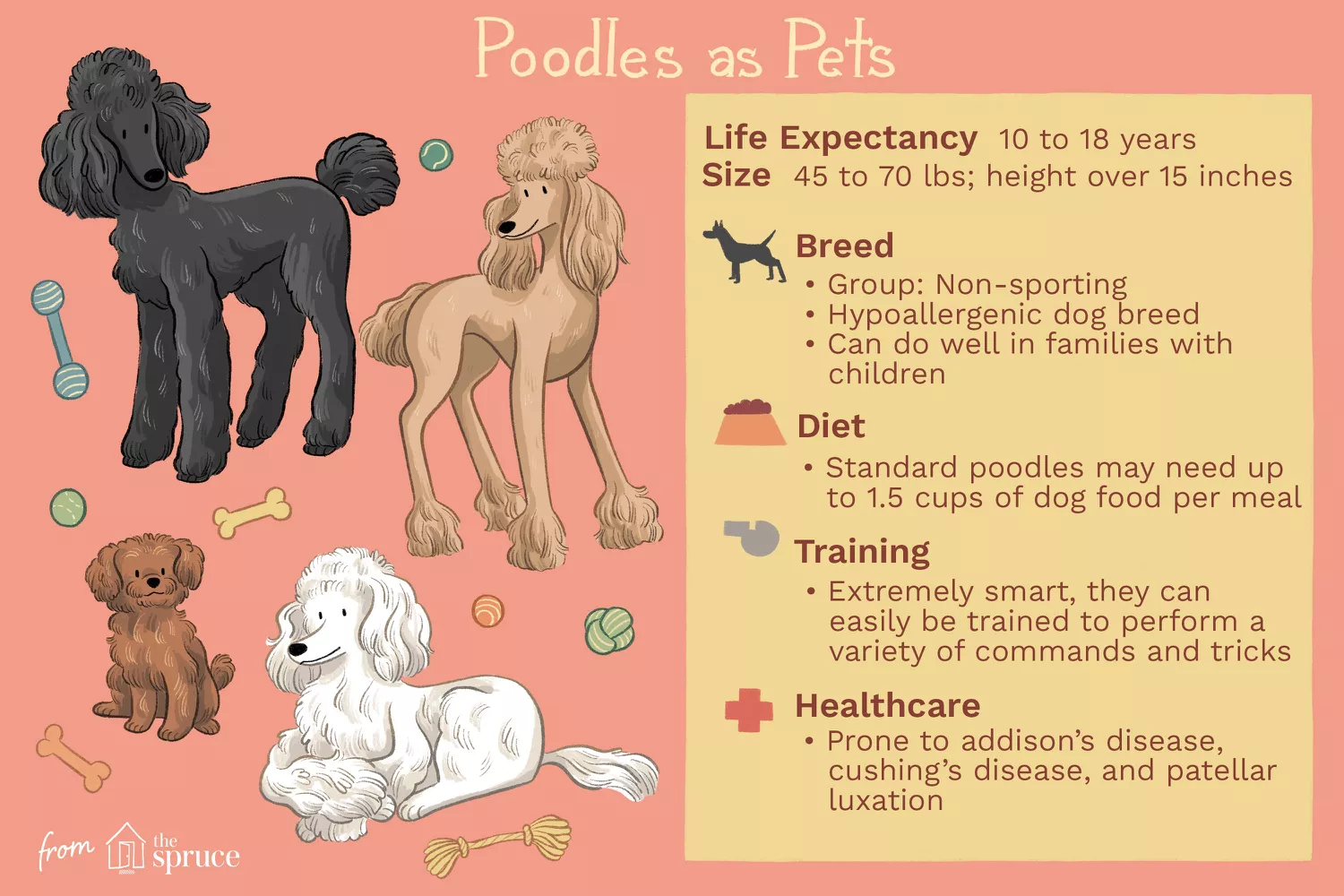
HEIGHT: Up to 10 inches (toy); 10 to 15 inches (miniature); over 15 inches (standard)
WEIGHT: 4 to 6 pounds (toy); 10 to 15 pounds (miniature); 40 to 70 pounds (standard)
COAT: Curly, long
COAT COLOR: Apricot, black, blue, brown, cafe au lait, cream, gray, red, silver, silver beige, or white
LIFE SPAN: 10 to 18 years
TEMPERAMENT: Intelligent, affectionate, active
HYPOALLERGENIC: Yes
ORIGIN: Germany
Characteristics of the Poodle
Poodles tend to have a friendly and outgoing personality. High energy and intelligence also influence their temperament, and they prefer to have an active lifestyle. They generally are good with kids and even open to meeting strangers if socialized properly.
Affection Level | High |
Friendliness | High |
Kid-Friendly | High |
Pet-Friendly | Medium |
Exercise Needs | High |
Playfulness | High |
Energy Level | High |
Trainability | High |
Intelligence | High |
Tendency to Bark | Medium |
Amount of Shedding | Low |
History of the Poodle
Despite being associated with France, poodles trace their origin back to Germany.1 Going back more than 400 years, Germany had a dog that resembled today’s poodle—a retriever that was skilled in the water. In fact, the breed’s name comes from the German word for puddle.
The standard poodle is the oldest form of the breed. Hunters used this dog to retrieve waterfowl (ducks, in particular), as well as to be a loving and loyal pet. They made ideal companions because of their intelligence and ability to swim.
Their coat protected them against the elements, and the hunters gave the poodles their trademark haircut, shaving parts of their body for better range of motion but keeping the hair long around the chest and joints for protection and insulation.2
Although the standard poodle was used for duck hunting, these dogs have also been used to find truffles,1 and miniature poodles were used in circuses. Then, in the early 20th century in America, the breed was downsized to the toy poodle as more people, including those living in cities, wanted the poodle for companionship rather than for hunting.
The American Kennel Club recognized the poodle breed in 1887, and it is still one of the most popular dog breeds in the U.S. today. Even famous people, such as Betty White and Ellen DeGeneres, have shown their love for these dogs.
Poodle Care
Poodles require ample daily exercise and mental stimulation to keep them happy and healthy. They also need consistent training and are typically adept at picking up new skills. Plus, their curly coat needs a fair amount of grooming attention.
Exercise
Poodles have a high energy level, along with high mental stimulation needs. They need at least an hour of exercise per day. Great options to give them exercise include:
Brisk walks
Jogging
Hiking
Swimming
Dog sports
Agility
As retrievers, poodles also love a game of fetch or an opportunity to duck hunt.
Poodles even make great service or therapy dogs. Giving them a job will help keep their minds and bodies happy and healthy.
Grooming
The poodle is a hypoallergenic breed with minimal shedding, so these dogs can be an option for those with allergies.
The coarse, curly, low-shedding, single-layer coat of a poodle grows continuously. This dog needs regular haircuts to keep them looking their best. Most people keep the coat short for easier maintenance. You can either learn how to trim it at home or take your poodle to a groomer roughly every four to six weeks.
Regular brushing is essential, as the hair is retained in the coat rather than being shed. This can lead to painful matting if you don’t brush your poodle fully to the skin. It’s best to brush at least two to three times per week, and some people do so daily.
Baths and nail trims will be required about every four to six weeks. Also, check your dog’s ears at least weekly to see whether they need cleaning or have any abnormalities. Finally, aim to brush your dog's teeth every day.
Some poodles, particularly light-colored dogs, will have tear staining. A vet can examine your dog to ensure there isn’t a blockage in the nasolacrimal duct. If they're healthy, you can keep their face clean by wiping it with a damp cloth daily and using a bit of hydrogen peroxide to remove any stains.
Cute and Classy Poodle Names: 70 Top Picks for Your Sophisticated Pet
Training
Like all dogs, poodles require proper training and socialization to be happy and well-adjusted. Because poodles are extremely smart and eager to please, they can easily be trained to perform a variety of commands and tricks and can do well in dock diving and agility training. They can also be used as service dogs.
Start socialization as early as possible by exposing your dog to different people, other dogs, and various settings. Most poodles love people and can even be good in multi-pet households when raised with other pets. Plus, poodles are generally good around children. However, the smaller toy and miniature poodles might not be a good choice with small children who could be too rough with the dog.

Common Health Problems
The poodle is a healthy dog breed overall. But these dogs are prone to some hereditary health issues3, including:
Hip dysplasia: This orthopedic problem affects the hip joint, impacting its function and stability and creating symptoms like unusual gait, limping, and exercise intolerance.
Eye problems: Examples of eye ailments in dogs include cataracts (affects the lens of the eye, causing it to become cloudy), progressive retinal atrophy (also known as PRA, it affects the cells in the retina and leads to vision loss), and optic nerve hypoplasia (the optic nerve doesn’t develop properly; this typically affects miniature poodles).
Epilepsy: This neurological disease causes seizures. A vet can provide guidance regarding options for treating and managing it.
Sebaceous adenitis: This disease affects the sebaceous glands and can lead to changes in the skin and coat, including hair loss.
Von Willebrand’s disease: This is a blood disorder that affects clotting and can lead to symptoms like bruising, bleeding gums, and excessive bleeding.
Bloat: Also known as gastric dilatation-volvulus (GVD), this potentially life-threatening problem occurs when the stomach fills with food, gas, or fluid and ends up twisting.
Addison’s disease: This condition affects the adrenal glands, causing them to make inadequate amounts of hormones, which then affects electrolyte levels.
Cushing’s disease: This condition causes the adrenals to produce too much cortisol. Symptoms include thinning coat and skin, increased thirst, increased urination, excessive panting, and a lack of energy.
Hypothyroidism: This condition causes the thyroid gland to underproduce thyroid hormones, resulting in symptoms like lethargy, dull coat, and weight gain.
Diet and Nutrition
Always have fresh water available for your poodle. Most owners feed two measured meals per day of a quality, nutritionally balanced canine diet. Standard poodles typically eat around 1.5 to 3 cups of food daily, split between two meals.
Discuss the type of food and the quantity with your vet, as this can vary depending on age, activity level, and other factors. Make sure to factor treats and other extra food intake into your dog’s daily diet to prevent overeating.
Where to Adopt or Buy a Poodle
If you’re looking for a reputable breeder puppy, expect to pay around $2,000 on average4, though this can vary widely.
Check your local animal shelter and breed-specific rescue groups for a poodle in need of a home. For further information to help connect you with a poodle, check out:
Poodle Club of America Rescue Foundation
The Poodle Club of America
Poodle Overview
The poodle is a very popular breed for many good reasons. These intelligent, loyal, and loving dogs make great pets, but they do have high grooming and exercise requirements.
Pros of Poodles
Generally does well with children
Smart and easy to train
Low shedder
Cons of Poodles
Requires a significant amount of grooming
Requires sufficient daily exercise
Needs lots of attention
More Dog Breeds and Further Research
As with any breed, if you think the poodle is right for you, be sure to do plenty of research before buying or adopting one. Talk to veterinarians, poodle owners, reputable breeders, and rescue groups to learn more.
If you’re interested in similar breeds, check out:
Irish Water Spaniel
Portuguese Water Dog
Goldendoodle
Shih-Poo



