20 Blue Dog Breeds For Fans of Unique Pups
A blue dog breed is not truly blue, but more of a silvery-gray or icy color. Blue-coated dogs have noses that appear to have a bluish shine, and many have blue eyes that emphasize their blue coat sheen. The blue color can vary from light, pale blue to a deeper, steely shade of blue.
Blue dogs come in all sizes. Some breeds are known for their blue coat, while others carry the blue coat gene outside the breed standard. Many blue dog breeds are sought after and highly prized for their good looks and unique blue coat markings, including blue tick, blue merle, blue harlequin, and blue brindle.
Here are the top 20 breeds known for carrying the blue coat gene.
01 of 20
Australian Cattle Dog
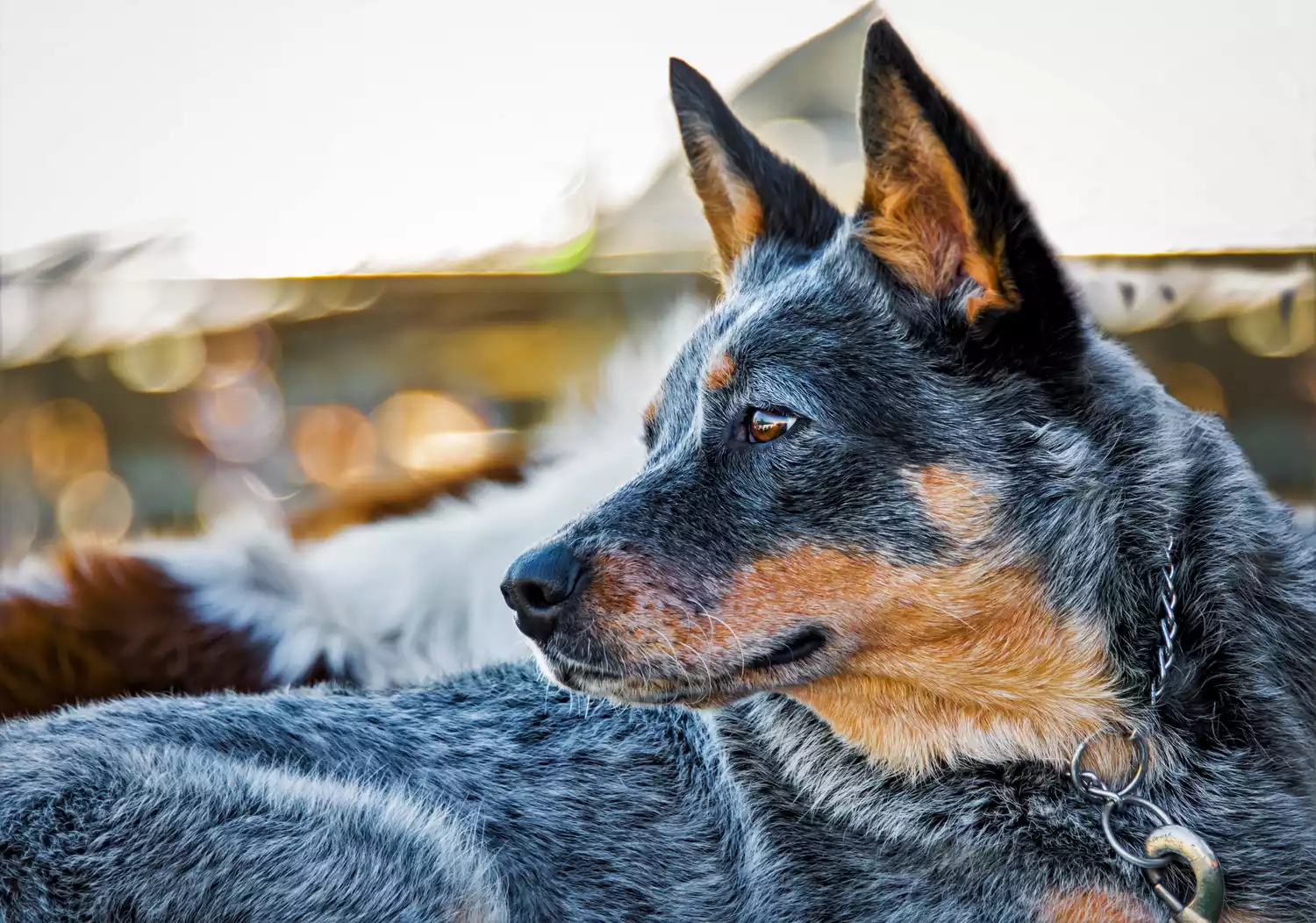
Also known as the blue heeler, it’s no surprise that the Australian cattle dog lands on the list of best blue dog breeds. While a red coat is also possible (known as the red heeler), a blue coat on this dog may be solid, mottled, or speckled according to the breed standard. Other markings in black or tan may be present, but the overall impression of a blue heeler is a blue cast.
American cattle dogs are known as ‘shadow dogs’ because they are intensely devoted to their families and thrive on constant companionship. These hardworking herding dogs are best suited for active families who can provide daily mental stimulation and physical exercise.
Honorable mention: a related hybrid breed with similar colors is the Texas heeler.
Breed Overview
02 of 20
Kerry Blue Terrier
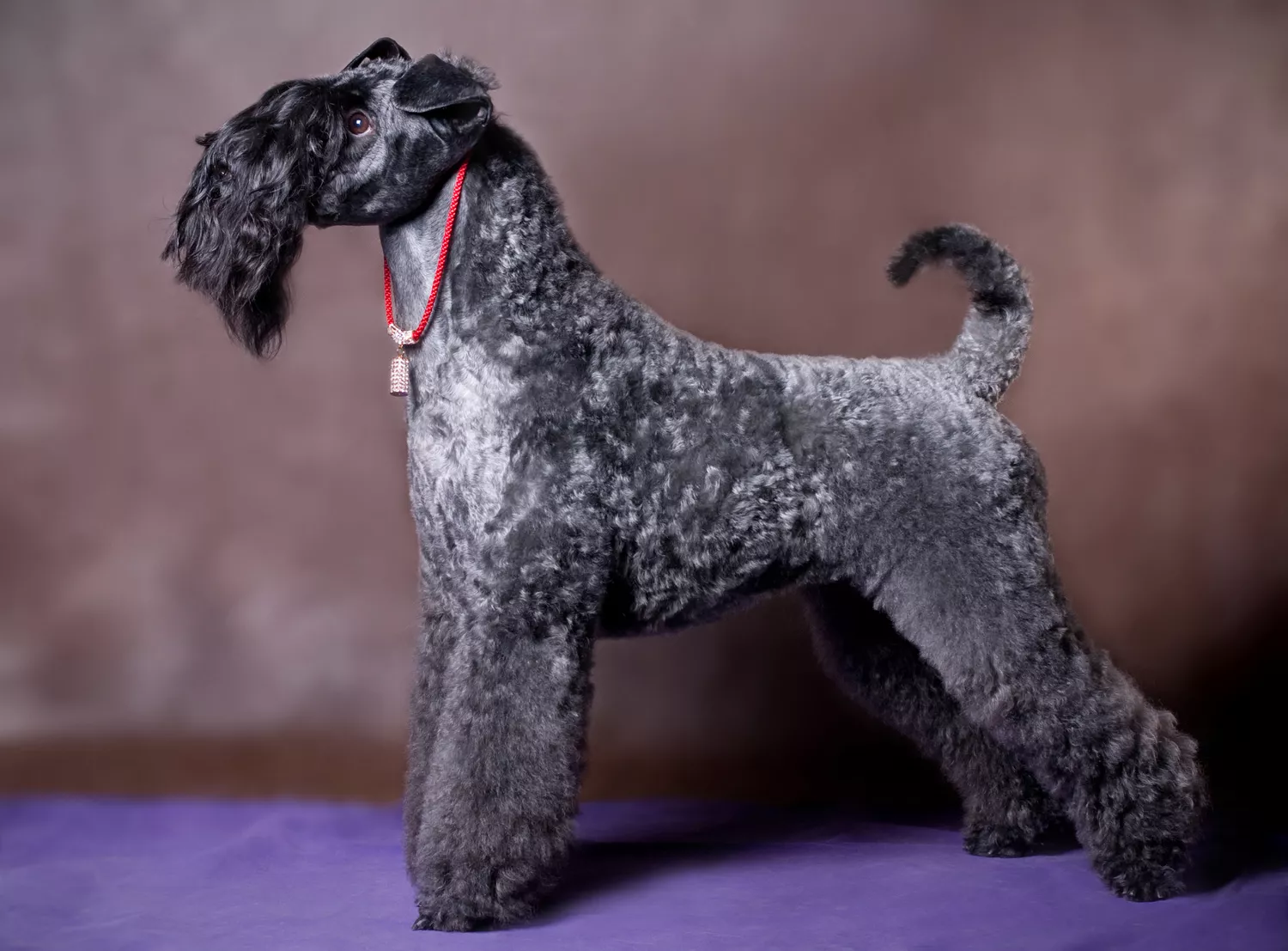
As the name suggests, the Kerry blue terrier only comes in one color: blue. This breed has a unique, curly coat that ranges in shade from a deep slate to a light blue-gray.
While the muzzle, head, ears, tail, and feet may be darker (or even black), the breed standard calls for a dog that is described as either “blue-gray” or “gray-blue,” with either color showing more dominantly. However, the blue hue should not be missing.
All Kerry blue puppies are born black. Through a process called “clearing,” the coat of a Kerry blue terrier gradually changes to the characteristic blue coat color by about 18 months.
Breed Overview
03 of 20
Weimaraner
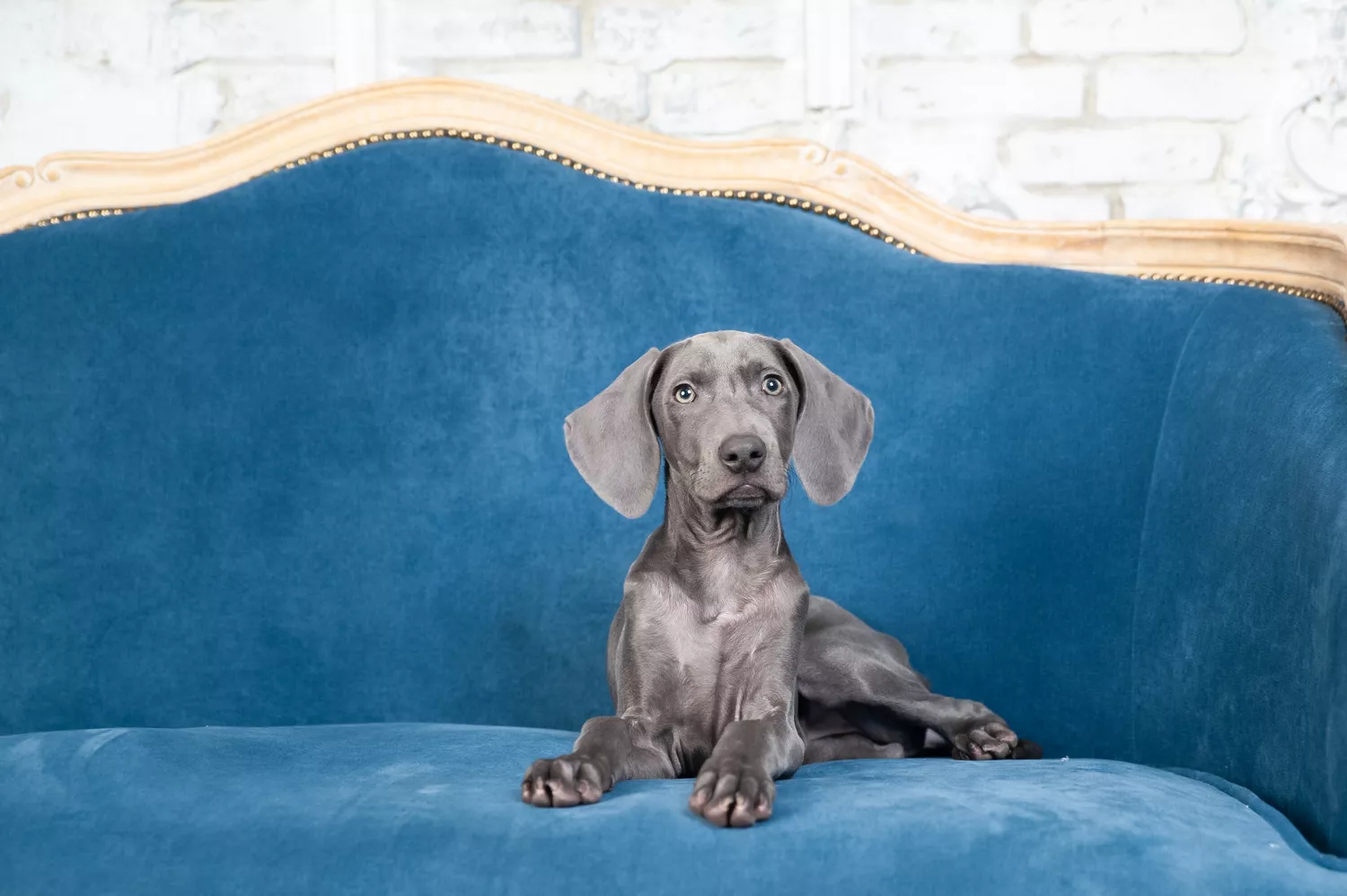
Weimaraners are typically steely gray, exhibiting their dilute brown coat gene. In some Weimaraners, a gene causes the coat to appear dark gray or blue. Although blue-coated Weimaraners are disqualified from breed standards at dog shows, many people are drawn to their athletic and striking appearance.
Breed Overview
04 of 20
Chihuahua
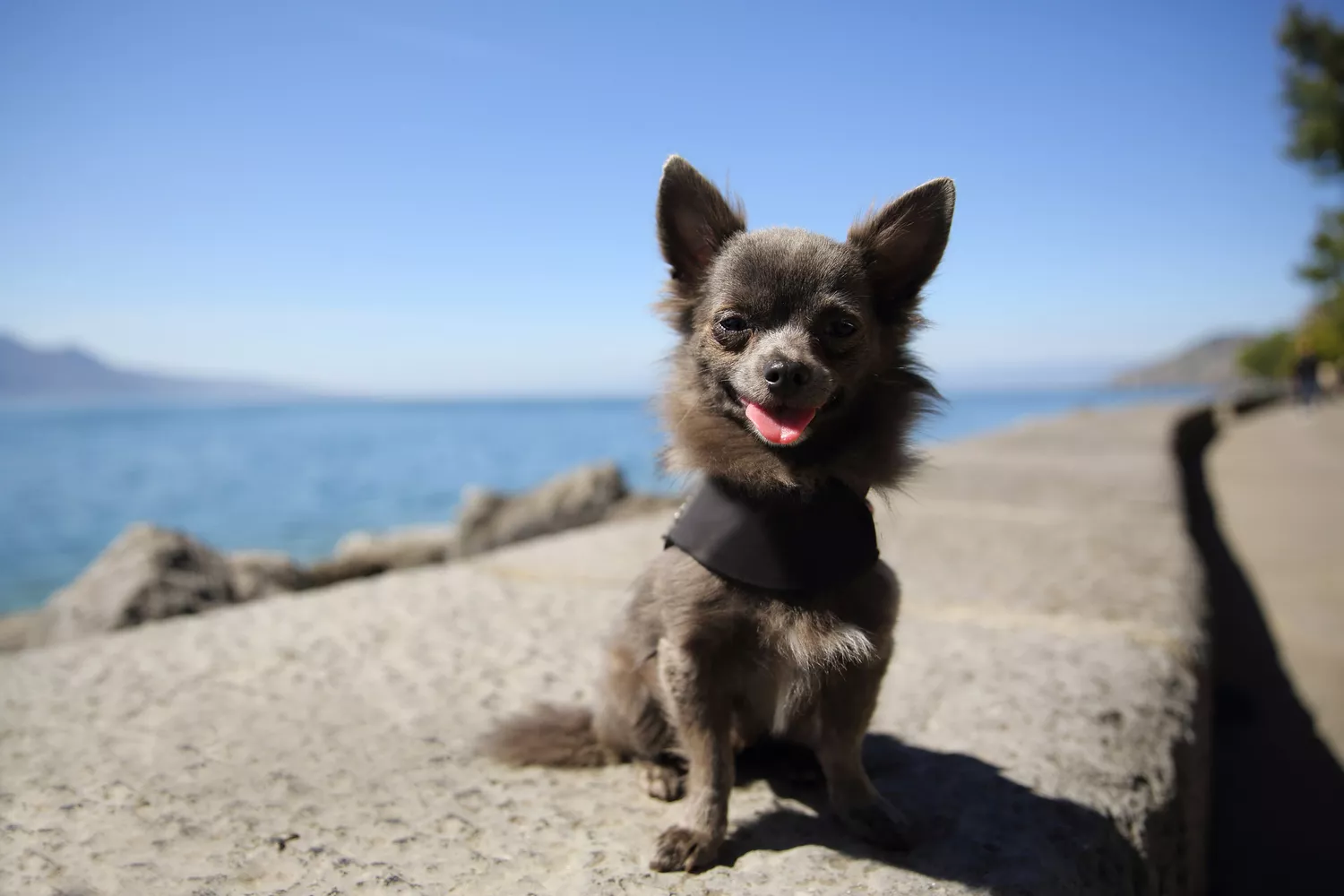
One of the smallest dog breeds, there is no shortage of coat colors for the Chihuahua—including a beautiful blue coat. The recessive blue gene in Chihuahuas is relatively rare. When it appears, the blue may be solid or appear in combination with tan, white, fawn, or brown markings. A blue coat can turn up in long-haired and short-haired Chihuahuas.
These petite pups are known for being sassy, and they are small and easy to take with you wherever you go. However, they aren’t the best choice for families with small children who may not know how to interact with them gently.
Breed Overview
05 of 20
Bearded Collie
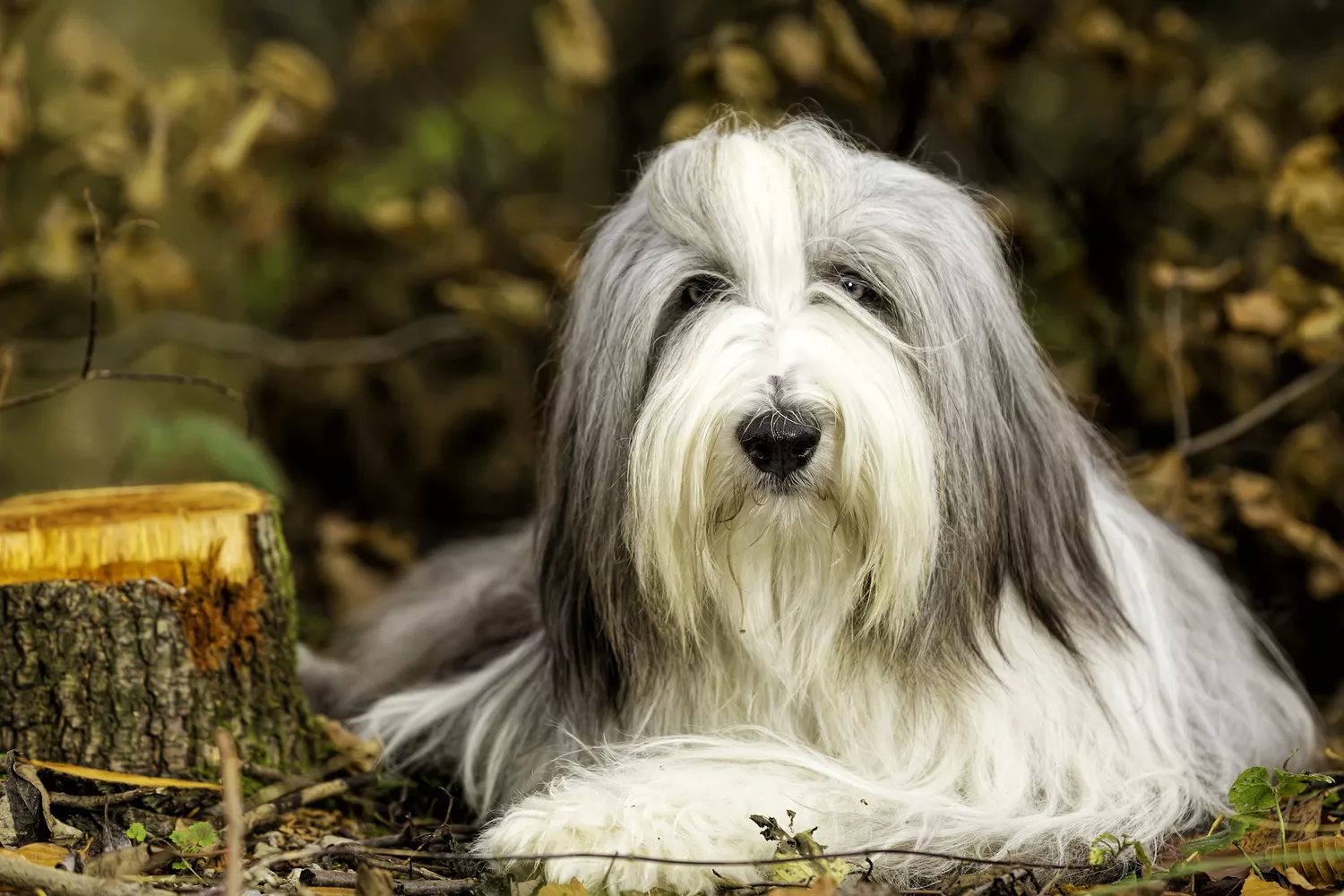
The shaggy coat of the bearded collie comes in a handful of colors, including blue. Commonly seen with white markings on the face, chest, legs, and tail, the body is always solid in color from the shoulders back. Blue bearded collies may be born with a darker color coat—blue or gray—that gradually lightens as they mature.
These loyal dogs like to make friends with people and other animals, making them good for homes with kids and other pets. They also enjoy a variety of physical activities, so they are a good choice for active families.
Breed Overview
06 of 20
Boston Terrier
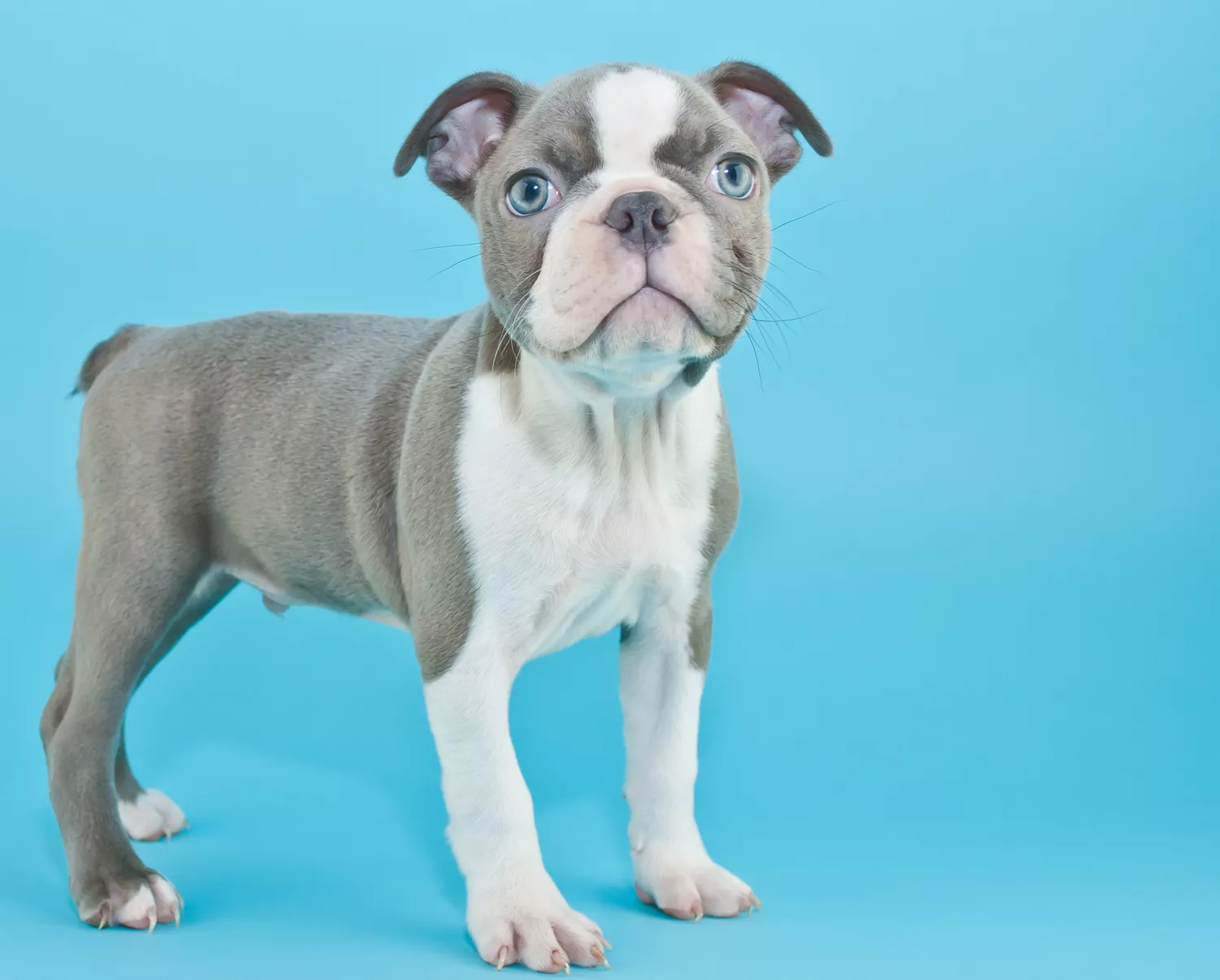
The Boston terrier wears a little tuxedo, and while their coat is usually black-and-white in color, a recessive red or blue coat sometimes occurs. The blue coat variation isn’t acceptable according to the AKC breed standard. The blue coat of a Boston terrier may appear distinctly blue or have a silver or gray shade.
These comical dogs enjoy playing, and can get along with everyone because they are friendly and affectionate. They also have a lot of energy, so you can have lots of fun with them by getting them involved in dog sports and other athletic activities.
Breed Overview
07 of 20
Italian Greyhound
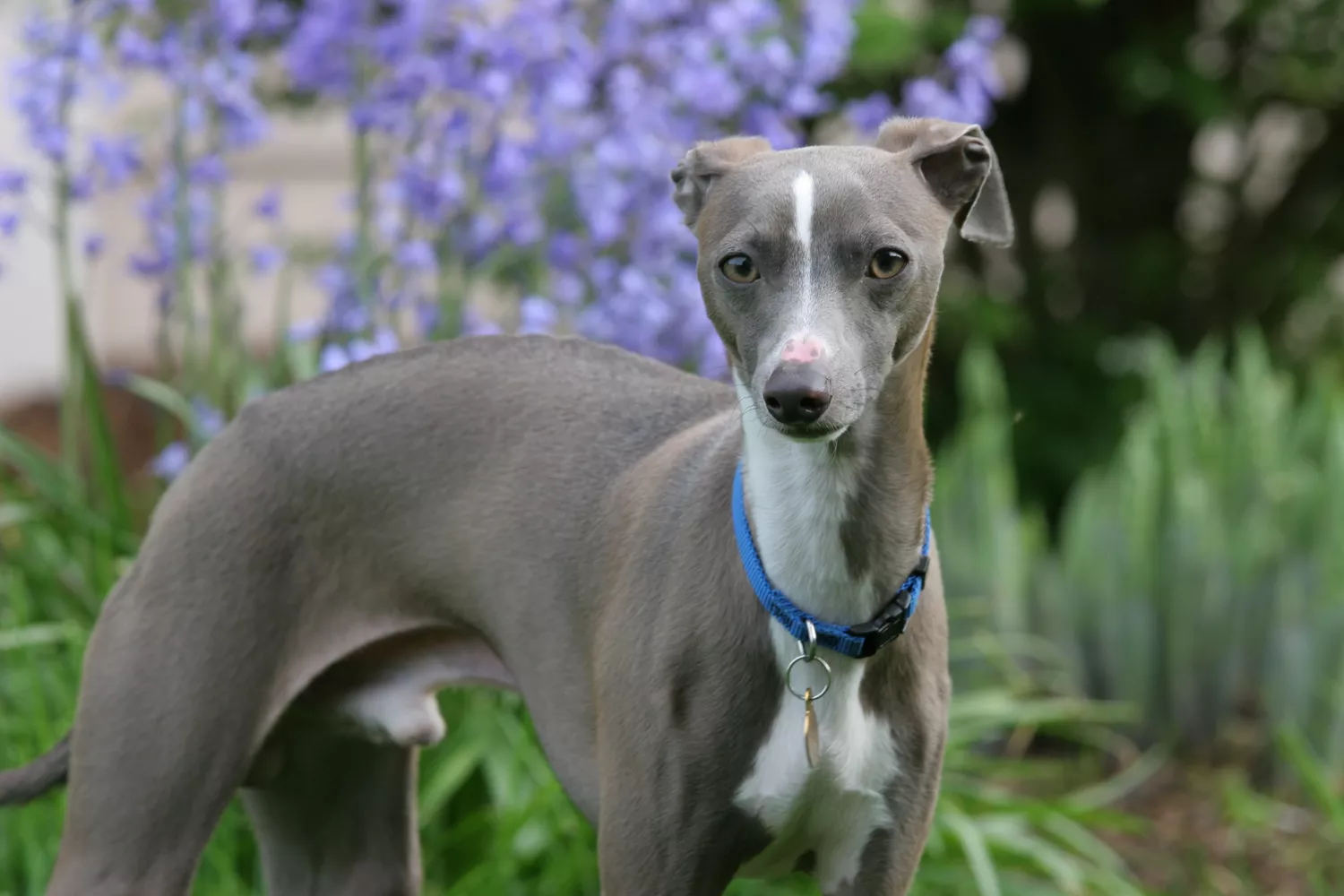
The Italian greyhound’s long legs and petite body give this dog a graceful look—especially when they are sporting a blue coat. While not exclusively a blue dog breed, the Italian greyhound does carry the gene for a dilute black coat, looking like a dark gray coat with a distinctly blue cast.
These dogs are sensitive, crave being around people, and don’t like being alone. They respond well to positive reinforcement training. And because of their small size, they can live comfortably in an apartment or small house. Plus, they don’t have complicated grooming requirements.
Breed Overview
08 of 20
Blue Lacy
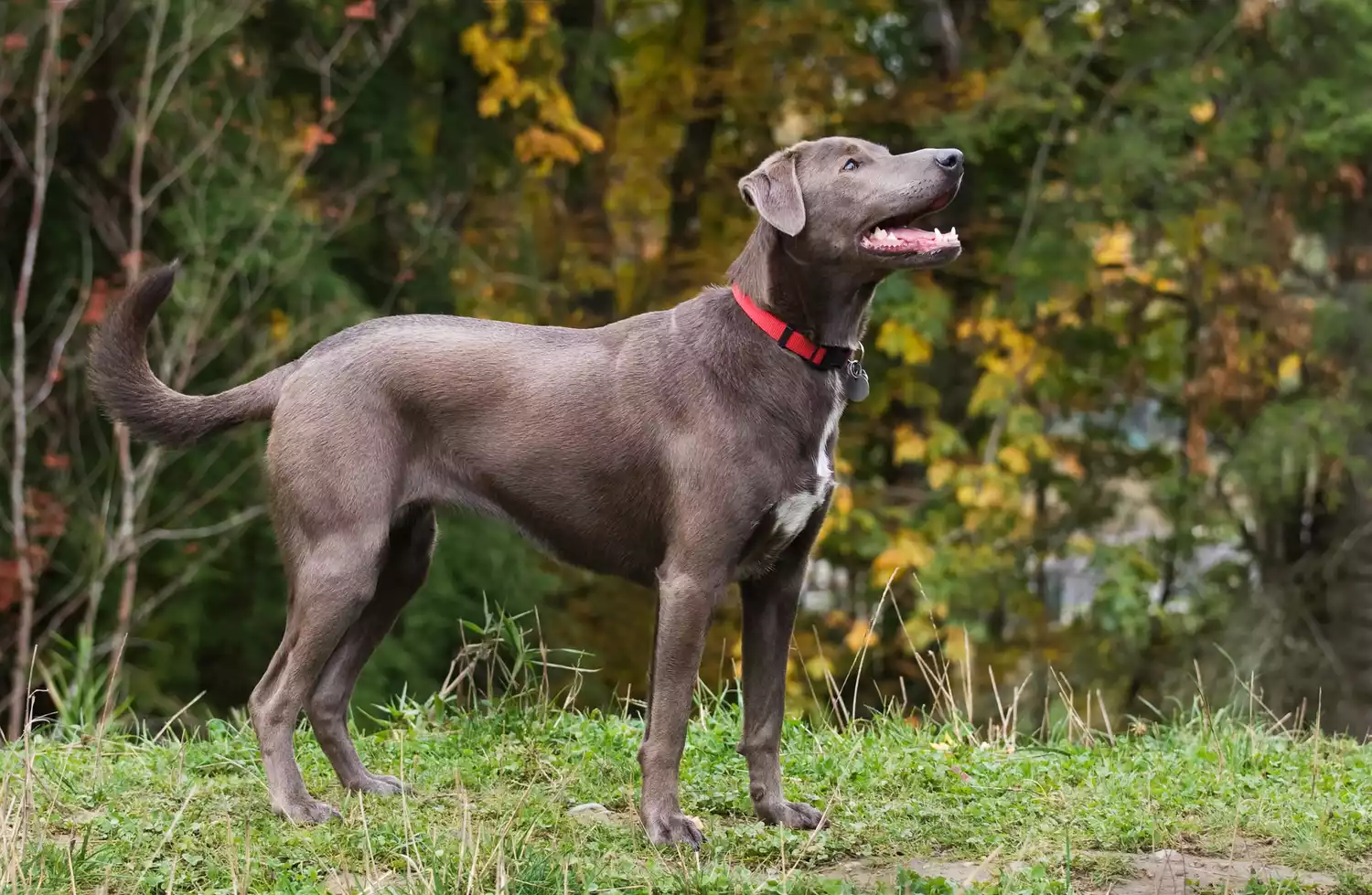
The blue Lacy is a rare blue dog breed, developed by the Lacy brothers as a rancher’s right-hand companion and herding dog in Texas in the mid-1800s. While not yet AKC-recognized, this breed is Texas’ state dog.
These dogs carry the recessive gene responsible for producing a blue coat and may also produce red, cream, or tricolor puppies. The blue Lacy is known for having a natural aptitude for work and a high level of intelligence.
Breed Overview
09 of 20
Neapolitan Mastiff
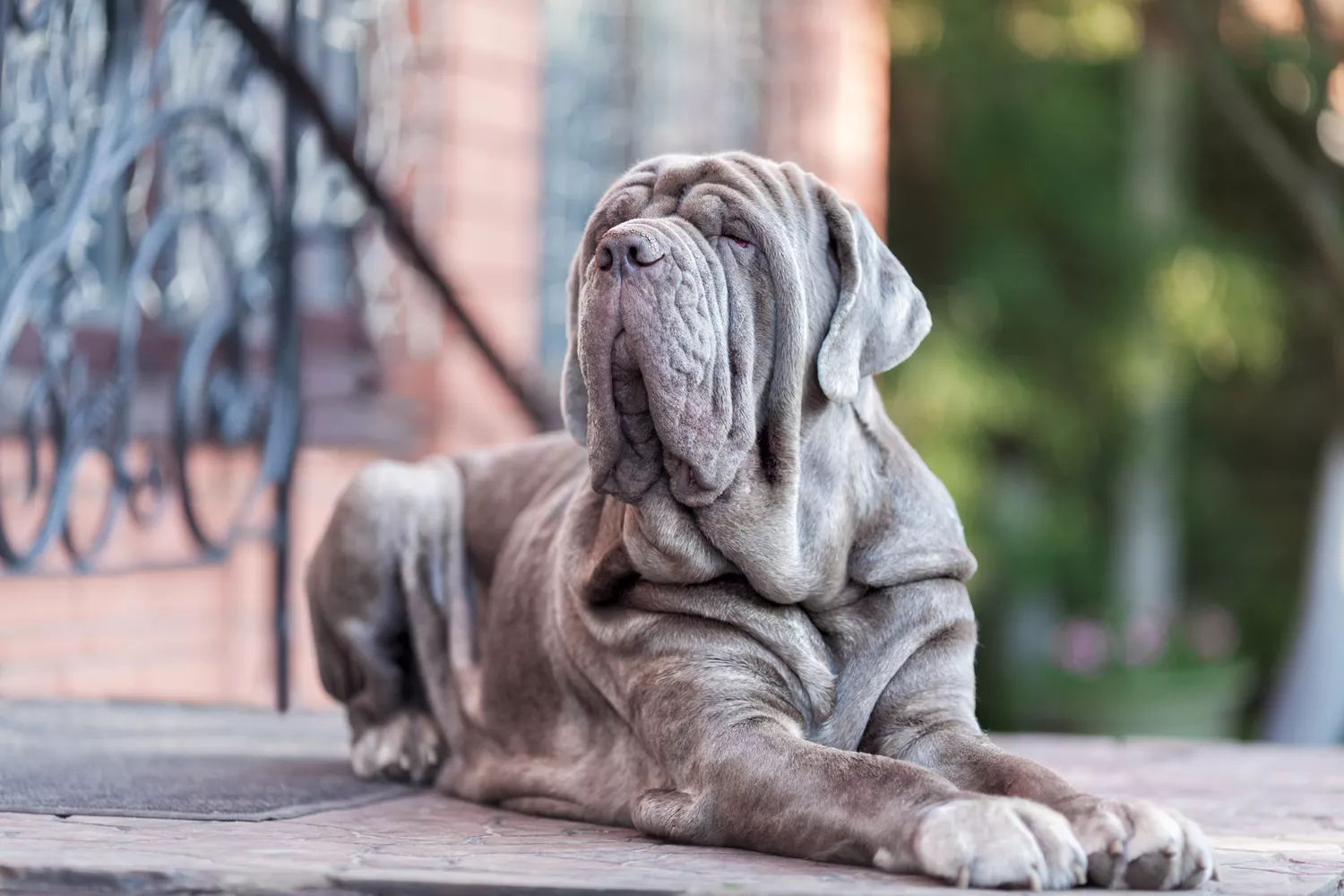
For a giant blue dog breed, look no further than the Neapolitan mastiff. This large breed is recognized by their imposing frame and loose skin, which often wrinkles around the head.
A blue coat is relatively common, along with black, mahogany, and tawny, and they may have a brindled or striped appearance. Blue is an accepted color in the AKC breed standard.
These loyal and protective dogs can be good guardians for your family, and they are also a good choice if you’d prefer a low-energy breed that doesn’t need a lot of exercise. However, their wrinkles need to be kept clean.
Breed Overview
10 of 20
Shar-Pei
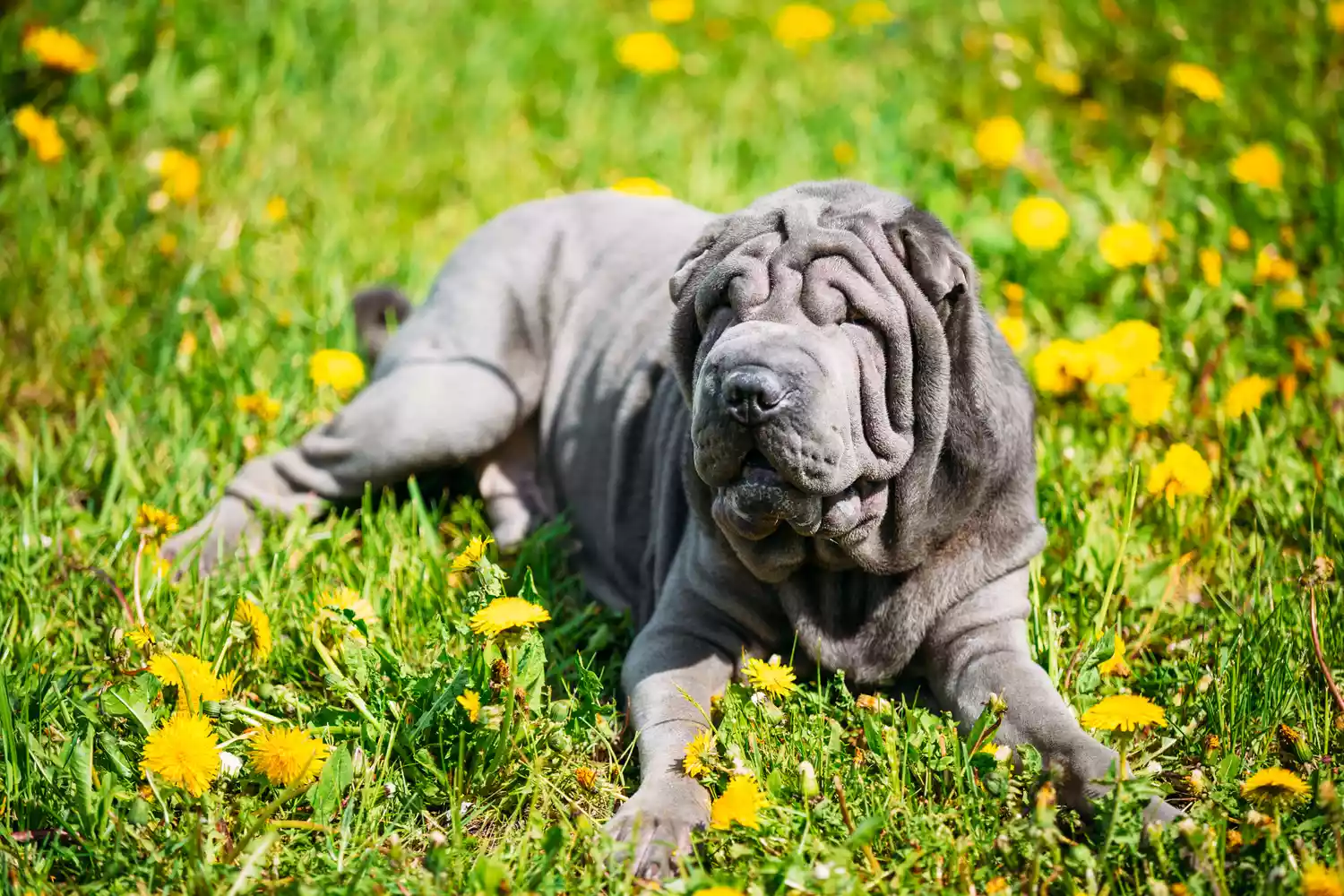
Most people know the Chinese shar-pei for their folds of skin and wrinkled appearance. This dog breed comes in a variety of coat colors, including blue. The breed standard allows for a shar-pei coat to be any color—as long as it’s solid or sable.
Blue shar-peis can range from a lighter hue of gray-blue to a deeper slate color. Some of these dogs have shading along the back and ears, but it must be of the same color as the rest of the coat. Interestingly, this blue dog breed has a blue-black tongue regardless of coat color.
Breed Overview
11 of 20
Irish Wolfhound
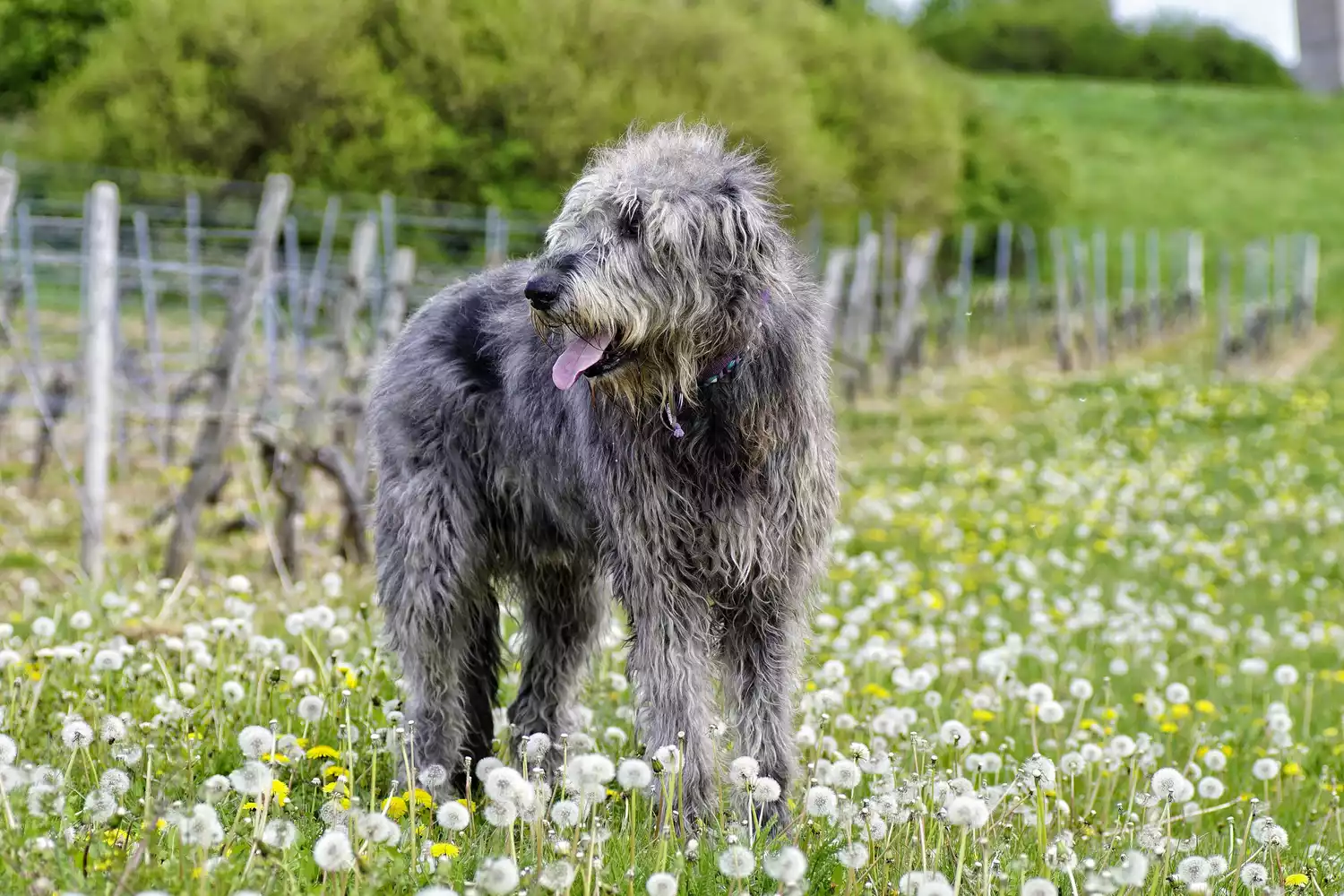
The gene responsible for diluting a black coat and making it appear blue also occurs in Irish wolfhounds. It’s believed that this trait was inherited from another giant blue dog breed, the Great Dane.
While many blue Irish wolfhounds appear somewhat gray at first glance, their blue coats have a distinctive blue tint, and they might also have liver-colored paw pads, nose, and eye rims.
Breed Overview
12 of 20
American Staffordshire Terrier
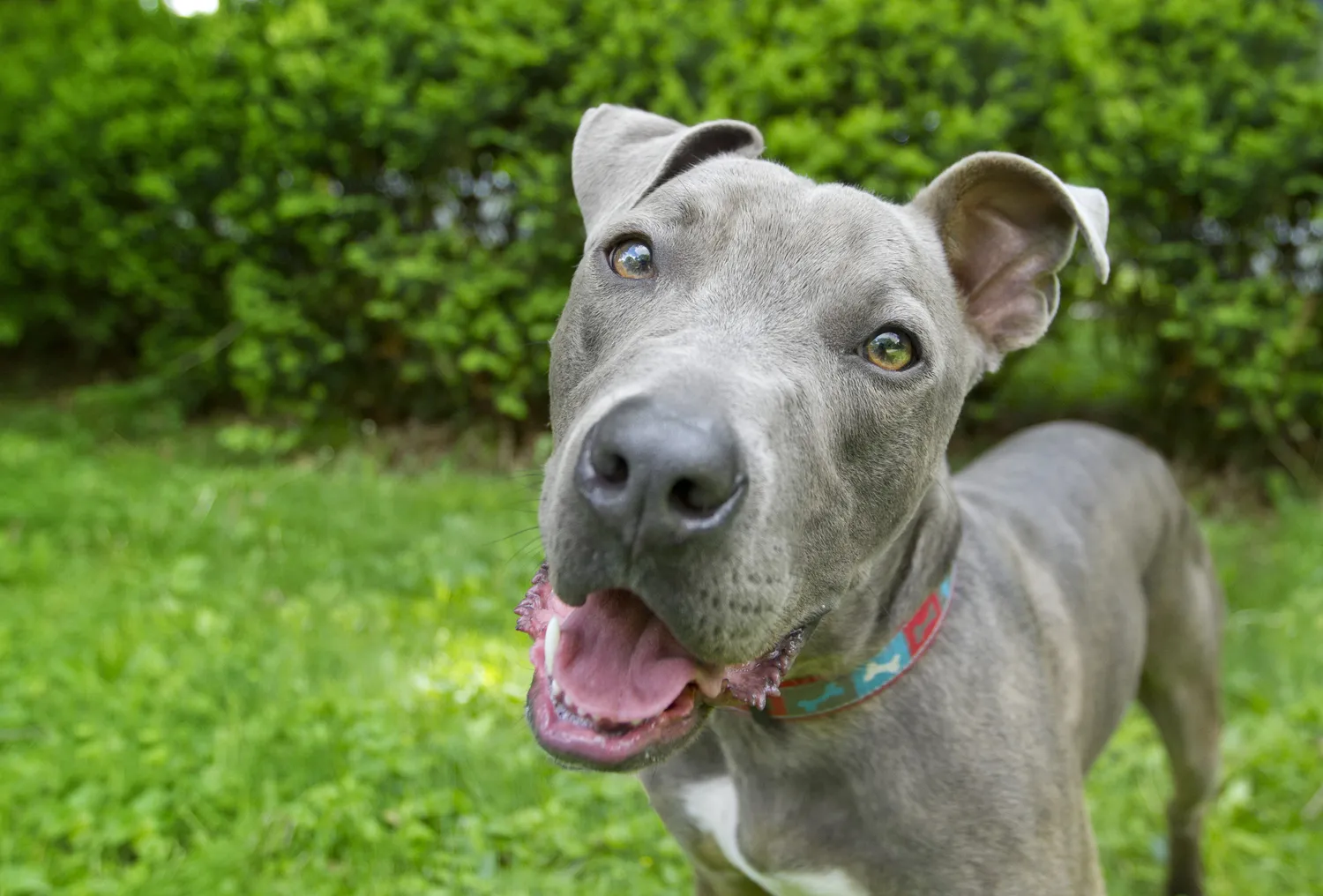
The American Staffordshire terrier is a breed of many colors with short, coarse hair. Their steel gray coat is often described as blue and generally appears in combination with white patches.
Also known as the AmStaff, these dogs are friendly, moderate energy companions. They’re also very loyal and can make good watchdogs, but they can be stubborn and overly protective. Proper socialization and training from a young age is important.
Breed Overview
13 of 20
Bluetick Coonhound
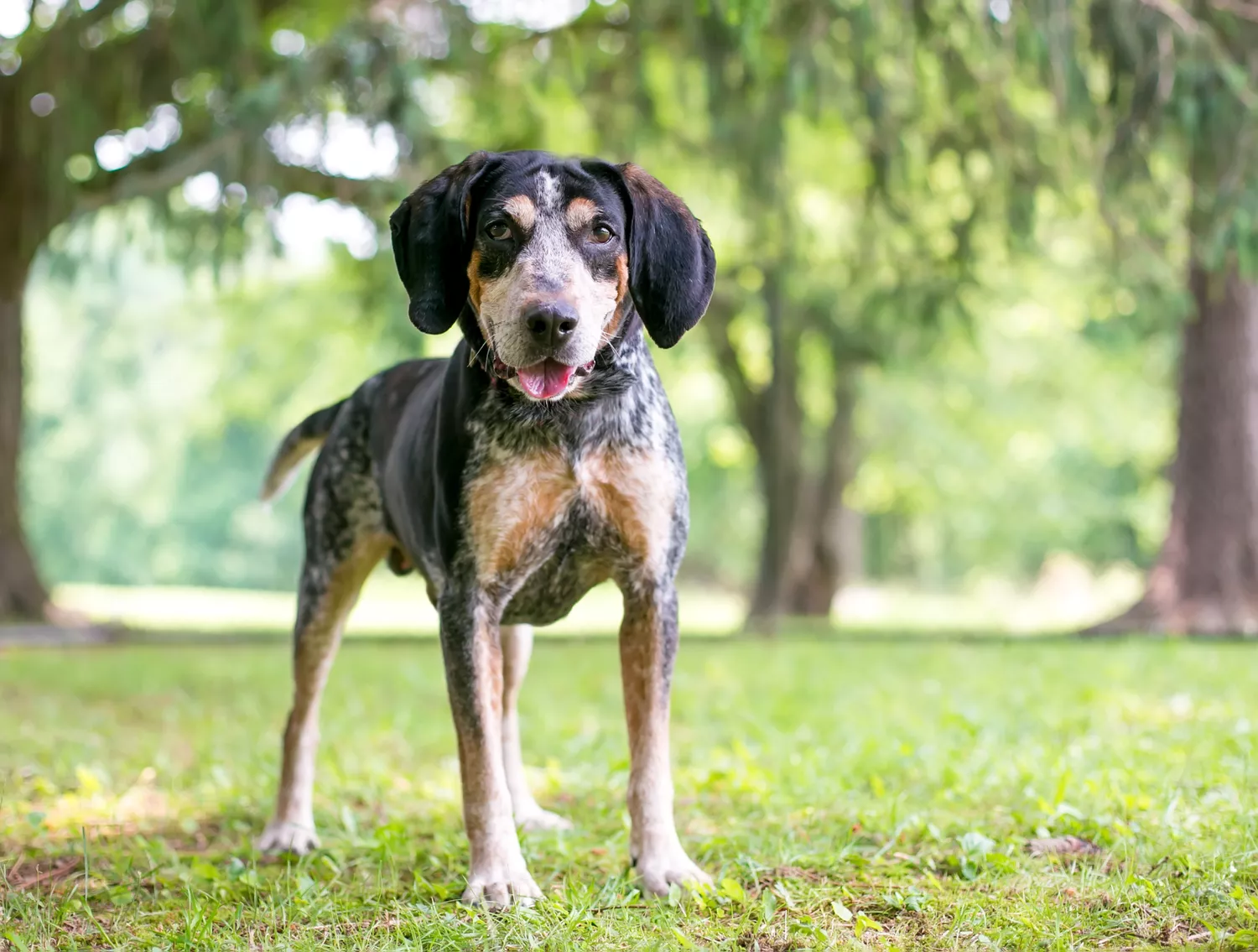
The bluetick coonhound’s smooth, glossy coat is dark blue, thickly mottled or “ticked” with black spots on the back, ears, and sides. This mottling gives the impression of a navy blue color. The head and ears are mostly black, with tan markings on the face.
This blue dog breed is considered high-maintenance and may not be ideal for first-time dog parents because they need a lot of attention. They have a high prey drive and a high energy level, need plenty of daily exercise, and are very vocal.
Breed Overview
14 of 20
Australian Shepherd
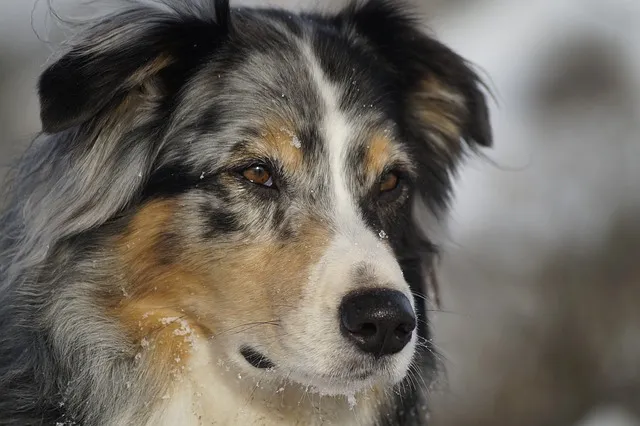
Australian shepherds that appear blue usually have a merle coat pattern, which is common in the breed. Their merle coat is a patchy smattering of gray shades, predominantly appearing as blue.
The blue merle Australian Shepherd usually has a combination of blue, gray, black, and white in their fur. Blue merle Aussies may have stunning blue eyes, brown eyes, amber eyes, or even one blue eye and one that is brown.
Breed Overview
15 of 20
Great Dane
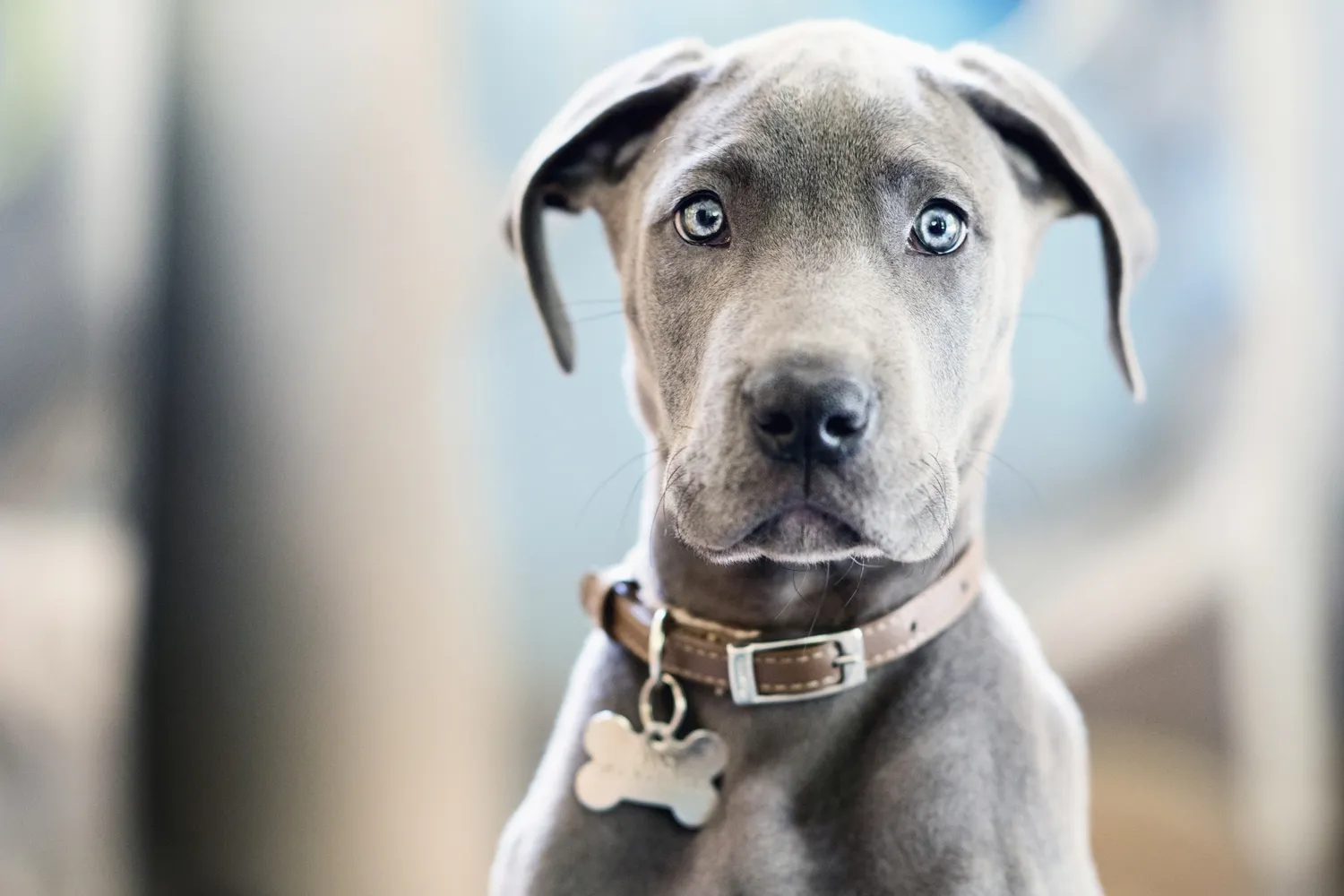
Great Danes can have a solid blue coat or a harlequin blue coat pattern. Harlequin looks like a white base with solid splotches of blue. It’s easily confused with merle coats, but harlequins tend to be just two colors or shades, and the large patches of color are a bit more distinct. Only two purebred dogs display harlequin coats: Great Danes and Beaucerons.
The Great Dane is a friendly and loving blue dog breed. They get along with children and other pets and, despite their large size, are gentle. Also, because they have a moderate energy level, they don’t need as much exercise as high-energy dogs.
Breed Overview
16 of 20
Greyhound
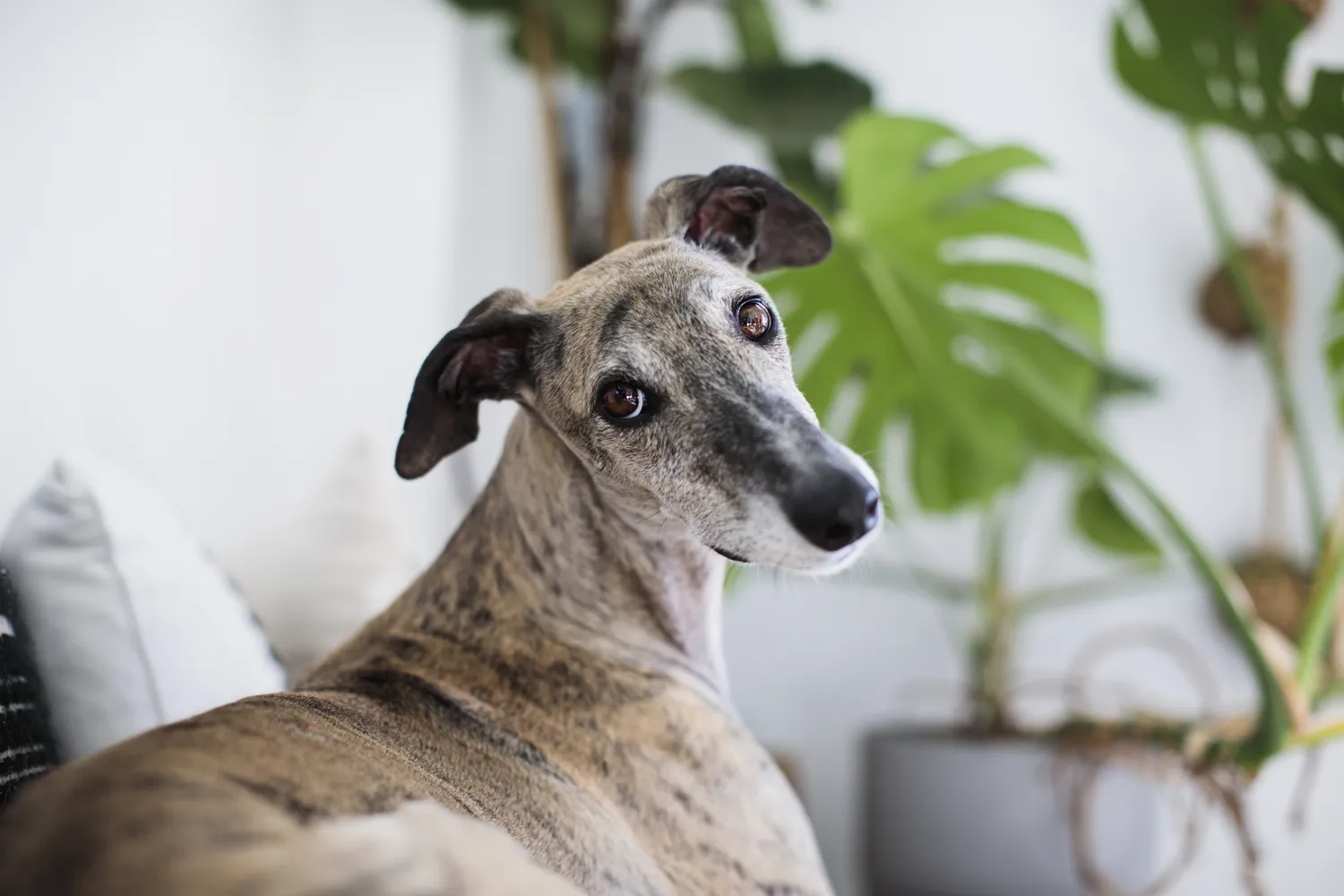
The greyhound has a short and smooth coat that comes in a variety of colors, including blue. Their coat is so short that it doesn’t provide much warmth in the winter or insulation in the summer. In addition to blue, greyhounds can also be black, white, fawn, brindle, red, and any combination of those colors.
Greyhounds are known for their speed, and they can run up to 45 miles per hour. They love their family, make great pets, and even get along with strangers. But they are sensitive and do best in peaceful homes.
Breed Overview
17 of 20
Whippet
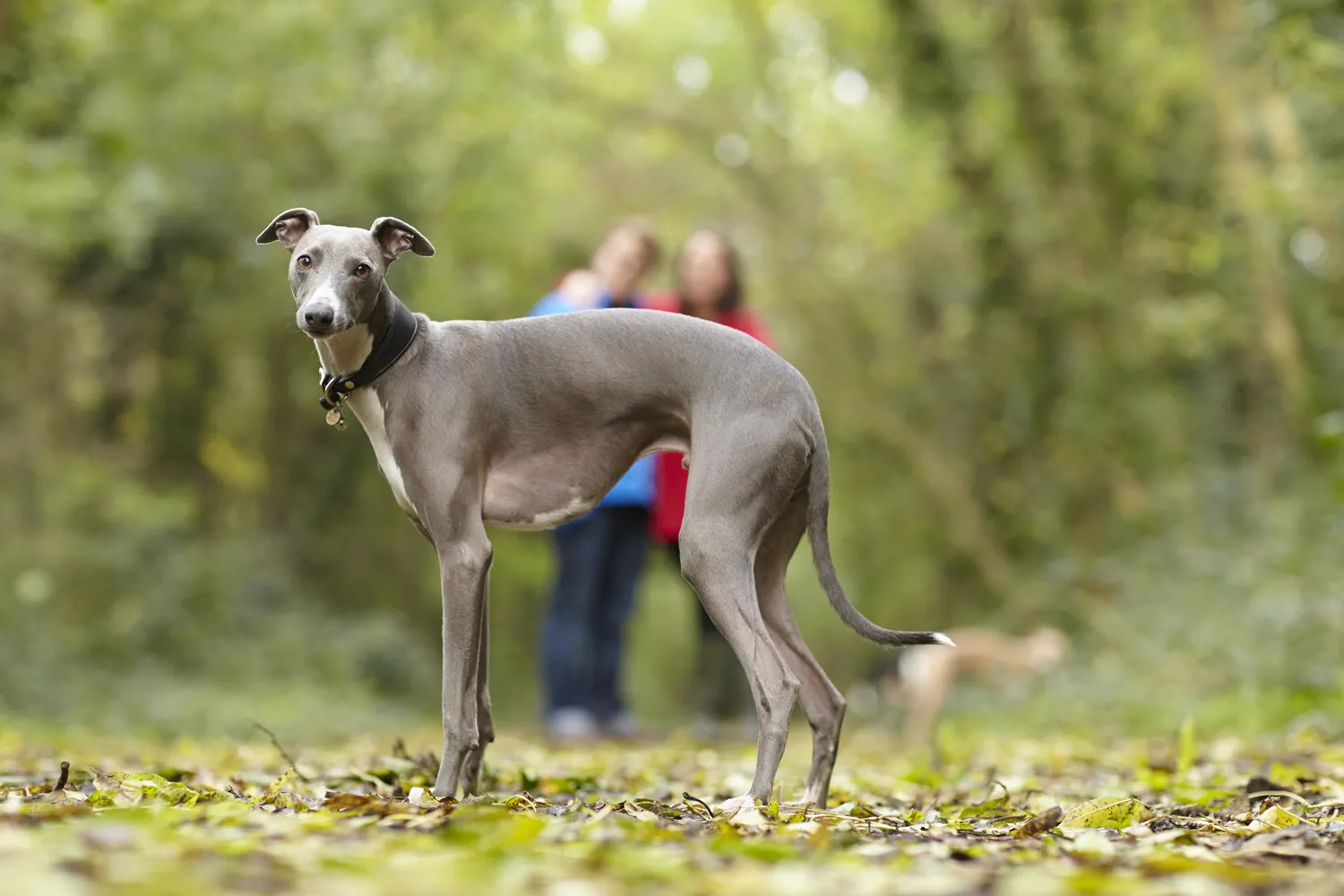
The whippet is very similar to the greyhound, just in a smaller package. Their easy-to-care-for short coat comes in virtually every color and combination, including blue, black, fawn, red, white, brindle, and combinations of those colors. They will never be merle, tricolor, or harlequin, so if you do see a whippet with those patterns, they are not a purebred whippet.
This blue dog breed is known for getting along with kids and other pets, and can also live comfortably in an apartment. If they are left alone for too long, though, they can become destructive. And they have the instinct to chase animals.
Breed Overview
18 of 20
Thai Ridgeback
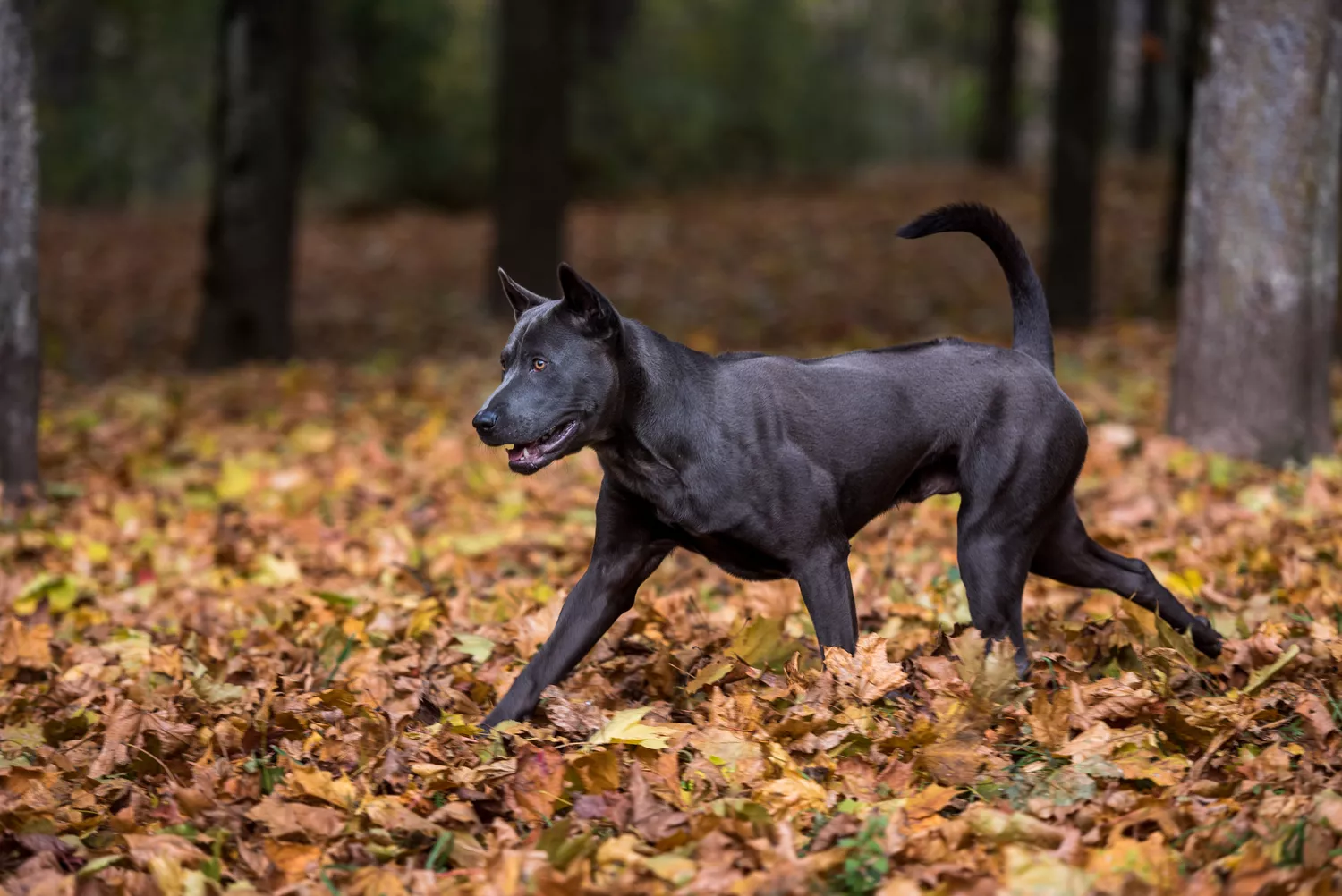
A large and muscular dog, the Thai ridgeback sports the signature ridge of hair on their back that grows in the opposite direction from the other hair, like the Rhodesian ridgeback. Their smooth coat can be black, blue, fawn, or red.
These are playful, athletic, and energetic dogs that need to stay physically active and mentally stimulated. They require minimal grooming. Training and socialization are important because they can be stubborn.
Breed Overview
19 of 20
Chow Chow
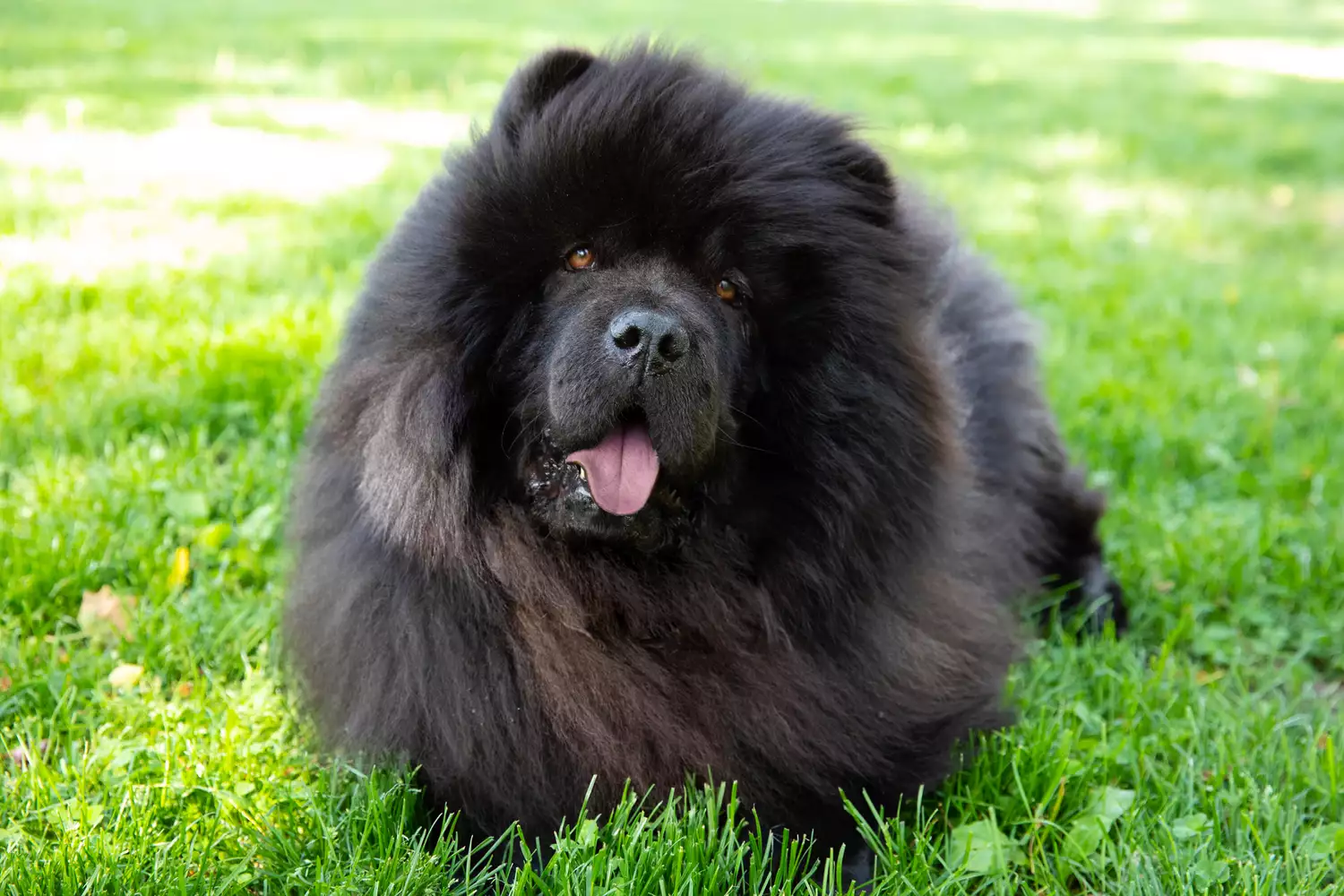
Probably most recognized for their blue tongues, chow chows also have a blue coat pattern. Their double coats can be either rough or smooth and are also seen in black, cinnamon, cream, and red.
Chow chows can make good guard dogs, but they require proper training to ensure they don’t get too aggressive or territorial, so they do best with assertive dog parents. Because they’re quiet and not high-energy, they can do well in apartments.
Breed Overview
20 of 20
Poodle
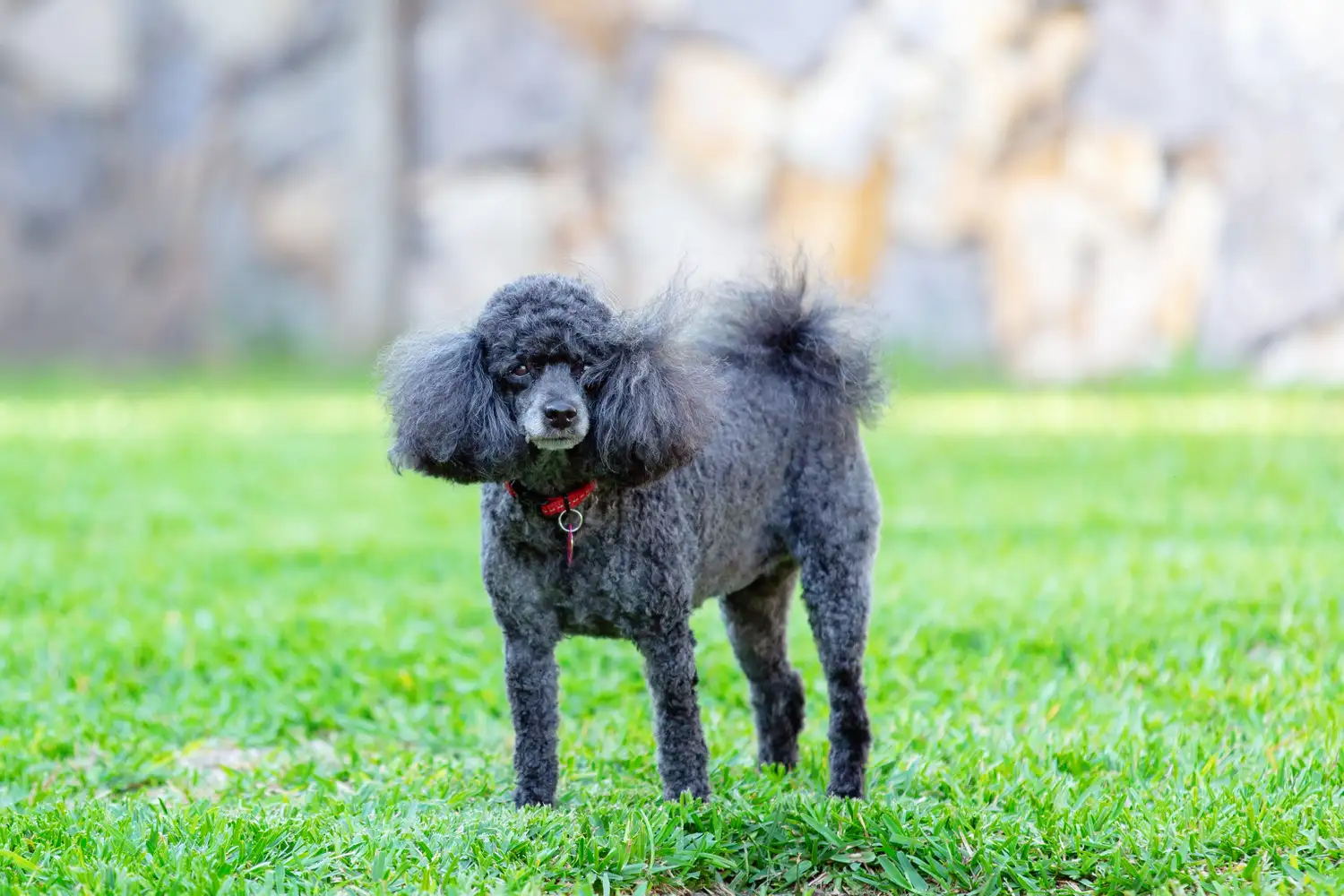
Poodles are perhaps most well-known for their unmistakable curly coats, sometimes cut into the iconic show style. Whether toy, miniature, or standard, poodle coats come in blue as well as a variety of other colors, including black, brown, apricot, and white.
This blue dog breed is high-maintenance when it comes to grooming, needing regular haircuts. But because the coat doesn’t shed much and is considered hypoallergenic, this dog can be an option for those with allergies.
Breed Overview
Breed Characteristics
Blue dog breeds carry the recessive genes for blue coat coloration from their parents. Both parent dogs do not have to be blue, but each will have the gene for a diluted black coat.
If your dog has the merle gene, it can manifest as mottled patches of color. Merle-patterned dogs cannot consistently create pigment, which explains the bluish coloration. Blue merle dogs also have a greater chance of having blue eyes or heterochromia—two different colored eyes.
Breeds to Avoid
If blue dog breeds meet your fancy, then pure white dogs, devoid of any color, would likely not interest you. The snowy coats of Arctic dogs like the Samoyed and American Eskimo dog adapted to match their frozen surroundings, while white dogs like the Komondor, with a long, white corded coat, blended in with the sheep they would herd.
Other popular white breeds include:
Great Pyrenees
West Highland White Terrier
Bichon Frise



