Affenpinscher: Dog Breed Characteristics & Care
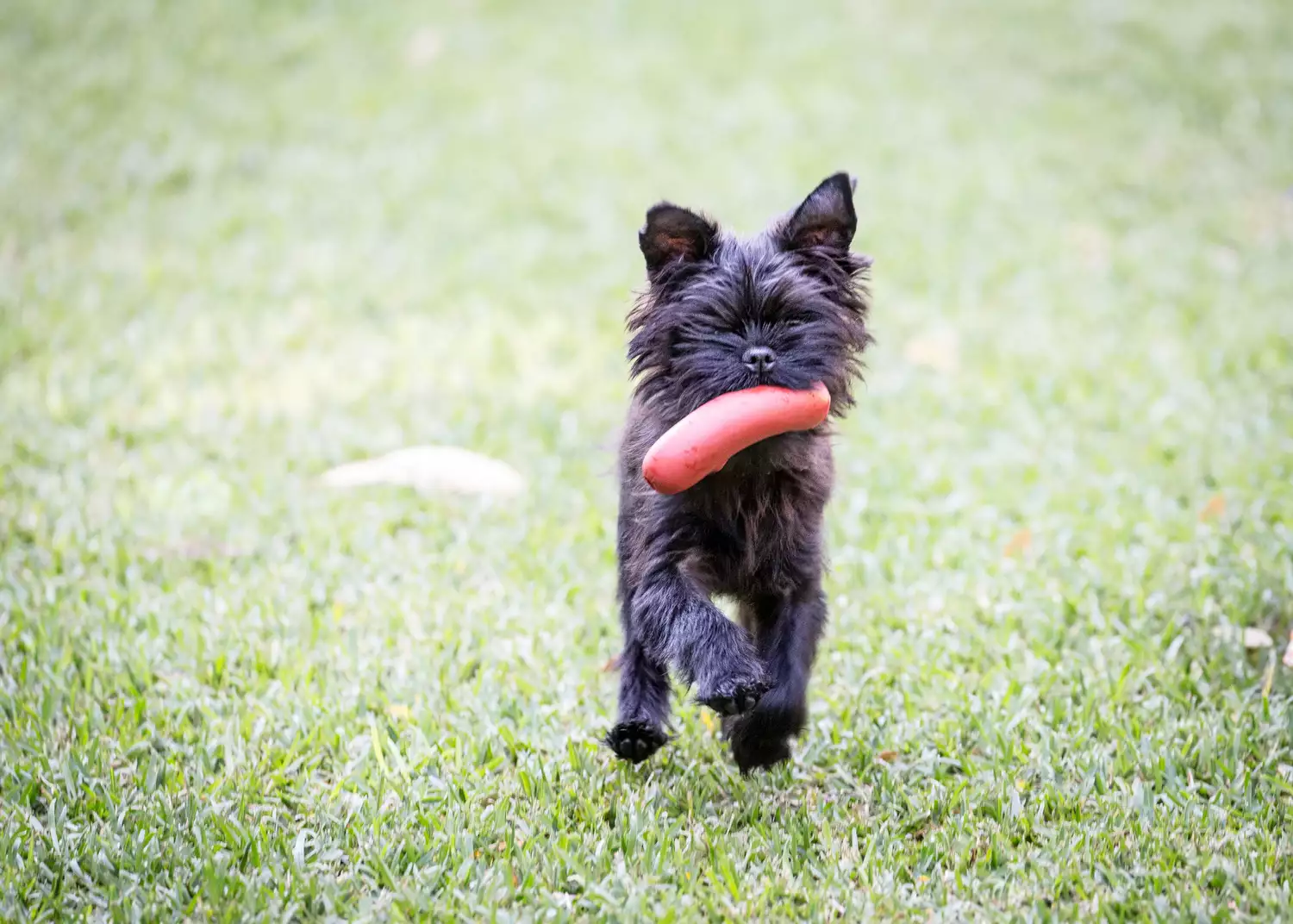
The affenpinscher is a small toy dog breed native to Germany with short- to medium-length, wiry fur and a face that many describe as “monkey-like.” In fact, the breed’s name comes from the German word for "ape" or "monkey."
These dogs usually are black but can come in other colors as well. They have a short nose with shaggier fur around their head that forms a mane. They tend to be very playful and feisty, making for amusing companions.
Learn more about the affenpinscher, including the breed’s history, temperament, and care needs.
Breed Overview
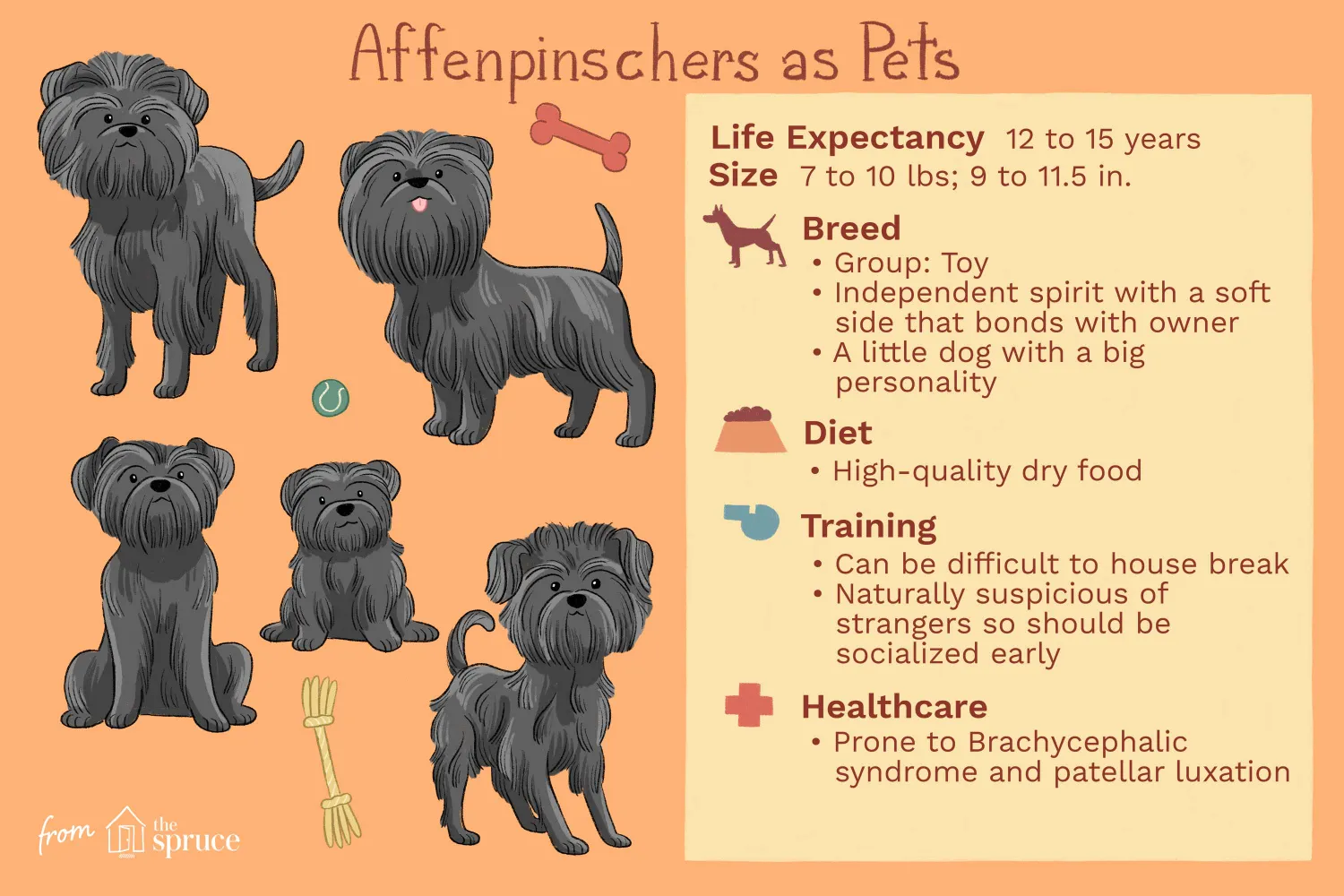
GROUP: Toy
HEIGHT: 9 to 11.5 inches
WEIGHT: 7 to 10 pounds
COAT: Wiry, short- to medium-length
COAT COLOR: Black, black and silver, black and tan, belge (black and reddish-brown), red with a black mask
LIFE SPAN: 12 to 15 years
TEMPERAMENT: Lively, fearless, friendly
HYPOALLERGENIC: Yes
ORIGIN: Germany
Characteristics of the Affenpinscher
The affenpinscher is full of personality and loves to engage in amusing antics. This dog can have a strong-willed temperament and doesn't always want to comply with training, but still tends to be loving with family.
Affenpinschers often don’t like rough handling, such as being squeezed, which might not make them an ideal match for young children.
They’re moderately tolerant of other dogs, especially when socialized together from a young age. But they might not be suitable around smaller household pets, especially rodents, due to their prey drive.
Affection Level | Medium |
Friendliness | High |
Kid-Friendly | Medium |
Pet-Friendly | Medium |
Exercise Needs | Medium |
Playfulness | High |
Energy Level | Medium |
Trainability | Medium |
Intelligence | Medium |
Tendency to Bark | Medium |
Amount of Shedding | Low |
History of the Affenpinscher
Affenpinschers can trace their roots back to Germany in the 1600s. Back then, they were somewhat larger in size and were bred for their expert skills as ratters. They helped to exterminate rodents in stables and in households. And they were beloved family pets as well.
It’s speculated that German pinschers and pugs contributed to the breed. Affenpinschers helped to spur the development of multiple breeds, including the Brussels griffon and miniature schnauzer.
Breed clubs for affenpinschers didn’t arise until the late 1800s. The American Kennel Club first recognized the breed in 1936. And it is still a rare dog breed in the United States today.
Affenpinscher Care
Affenpinschers aren’t high-energy dogs, but they still require a moderate amount of exercise each day. They also need consistent training and socialization to be well-mannered dogs. And they require more than just basic grooming.
Exercise
Aim to provide at least 30 minutes to an hour of daily exercise for an affenpinscher. A couple of brisk walks and playtime should be sufficient. Dog sports and puzzle toys also can serve to provide physical activity and mental stimulation.
Be aware that this breed can overheat easily due to its short nose, so keep outdoor time brief in hot weather.
In addition, don’t underestimate this little dog’s ability to run off quickly (and stubbornly ignore your calls) if they see a rodent to chase while outside. Always keep them on leash or in a securely fenced area.
Grooming
Affenpinschers don’t shed much, but they do need a fair amount of grooming. Use a slicker brush and then a comb at least twice a week to remove loose fur and prevent the coat from matting.
You’ll also have to trim your dog’s coat every couple of months or so. Many dog parents opt for a professional groomer to do the trimming, but you can learn to do it at home as well. Be sure to trim around the eyes to ensure that your dog has a clear sightline.
Baths will be necessary every couple of months or so, as the coat stays fairly clean. Check your dog’s ears at least weekly for any wax buildup, debris, and irritation. And check their nails monthly to see whether they need a trim. Also, aim to brush their teeth every day.
Training
Affenpinschers can have an independent mindset, which in turn makes them a bit stubborn when it comes to training. But they still are bright and eager to learn, especially when you use positive training methods and make training sessions feel like a game to them. Moreover, short training sessions are best to keep their focus.
Aim to start training as young as possible to prevent bad habits from forming. Enroll in a puppy obedience class where your dog can learn basic skills and manners. Also, start socialization from a young age, exposing your dog to different people and situations.
Common Health Problems
Affenpinschers are typically a healthy dog breed, but they still are prone to some hereditary health issues1, including:
Luxating patella: This refers to when a dog’s kneecap slips out of the groove that it should stay in. The dog might keep their knee bent at a strange angle, might lick their knee, and might limp. Surgery can be used to treat it.
Hip dysplasia: This is an orthopedic condition that commonly affects dogs. Because it impacts the development of the hip joint, it results in symptoms like limping, hip pain, and unusual gait.
Heart problems: This breed can inherit a heart defect known as patent ductus arteriosus (PDA), in which the ductus arteriosus doesn’t close when a puppy is born. Another condition that can affect this breed is mitral valve disease, which is degeneration of the mitral valve in the heart.
Eye issues: Eye problems that can affect this breed include cataracts, persistent pupillary membrane, and distichiasis.
Brachycephalic syndrome: Breathing problems and overheating are symptoms of this syndrome, which occurs in flat-faced dogs. Other symptoms are noisy breathing, nasal discharge, and snoring. This can’t be cured but you can avoid problems with the right lifestyle for your dog, and your vet might recommend surgery.
Diet and Nutrition
Always make sure fresh water is accessible to your dog. And feed a quality, nutritionally balanced canine diet. Most dog parents feed two measured meals per day. But you should discuss quantity, as well as type of food, with your vet to make sure you’re meeting your dog’s individual needs.
Monitor treats and other extra food, so your dog doesn’t become overweight. Even gaining an extra pound can be significant for a little dog like an affenpinscher.
Where to Adopt or Buy an Affenpinscher
The affenpinscher isn’t a common breed, but it’s still worth checking local shelters for a dog in need of a home. Also, see whether there is a breed-specific rescue group in your area.
If you’re looking for a breeder puppy, expect to pay $800 to $2,0002, though this can vary widely by bloodline and other traits.
For further information to help connect you with an affenpinscher, check out:
Affenpinscher Rescue of America
Affenpinscher Club of America
American Kennel Club Breeder List
Affenpinscher Overview
Affenpinschers are cute dogs with a lot of personality. They aren’t big shedders and don’t need a lot of exercise every day. But they do have a high prey drive, can suffer from brachycephalic syndrome, and can sometimes be a bit difficult to train.
Pros of Affenpinschers
Minimal shedding
Loyal and affectionate
Lively and playful personality
Cons of Affenpinschers
Doesn't always get along well with kids
Can be stubborn
Requires some involved grooming
More Dog Breeds and Further Research
As you determine whether an affenpinscher is right for you, discuss the breed with vets, owners, rescue groups, and reputable breeders. Try to meet some dogs in person if possible.
If you’re interested in similar breeds, check out:
Miniature Schnauzer
Brussels Griffon
Miniature Pinscher
There’s a whole world of potential dog breeds out there—with a little research, you can find the right one to bring home!



