23 Mesmerizing Dogs with Rare and Beautiful Blue Eyes
Dogs with blue eyes have a mesmerizing, icy glance that can stop you in your tracks. Beyond their striking beauty, these dog breeds captivate due to the rarity of blue eyes.
“Eye color is determined by the amount of pigment (specifically melanin) present in the iris,” Kathleen Bedard, DVM, DACVO, a veterinary ophthalmologist at VCA SouthPaws Veterinary Specialists & Emergency Center says. “This is determined by genetic traits inherited from a dog’s parents.”
Keep reading to discover which dog breeds can have this unique feature.
Why Do Some Dogs Have Blue Eyes?
There are a few reasons why a dog might have blue eyes (or at least one blue eye):
Merle gene: This gene affects coat and eye pigmentation, often resulting in one or both blue eyes (or a mix of blue and brown in the same eye). A dog only needs one copy of the merle gene from one parent to express merle coloring.
Piebald gene: This gene reduces or eliminates pigment in certain areas of the coat, resulting in white patches of varying sizes. It can sometimes lead to one or both eyes being blue. A dog must inherit two copies of the piebald gene (one from each parent) for the effects to occur.
ALX4 gene (aka “the blue eye variant”): A specific genetic mutation found in Siberian huskies that causes blue eyes independent of coat color.
Random genetic mutation: In rare cases, a dog from a breed that typically has brown or amber eyes may be born with one or both blue eyes due to a random genetic mutation affecting eye pigmentation.
Albinism: This condition is very rare in dogs and can cause very light blue or pinkish eyes due to the absence of melanin.
Amanda Chambers, DVM, veterinary consultant for Embrace Pet Insurance, explains that while dogs with two copies of the merle or piebald gene—who are more likely to have blue eyes—face a higher risk of deafness or blindness, the issue stems from the underlying genetics, not the eye color itself. Because of these risks, responsible breeders avoid breeding two merle or two piebald dogs together. “Additionally, since pigment (melanin) is protective against UV damage, there is some concern that dogs with lighter irises are at more risk of developing senile cataract with advanced age and excessive time spent out of doors,” Bedard adds. But Chambers says many blue-eyed dogs are perfectly healthy.
Now, let’s take a closer look at the breeds most likely to have blue eyes and what makes each one special.
01 of 23
Australian Shepherd
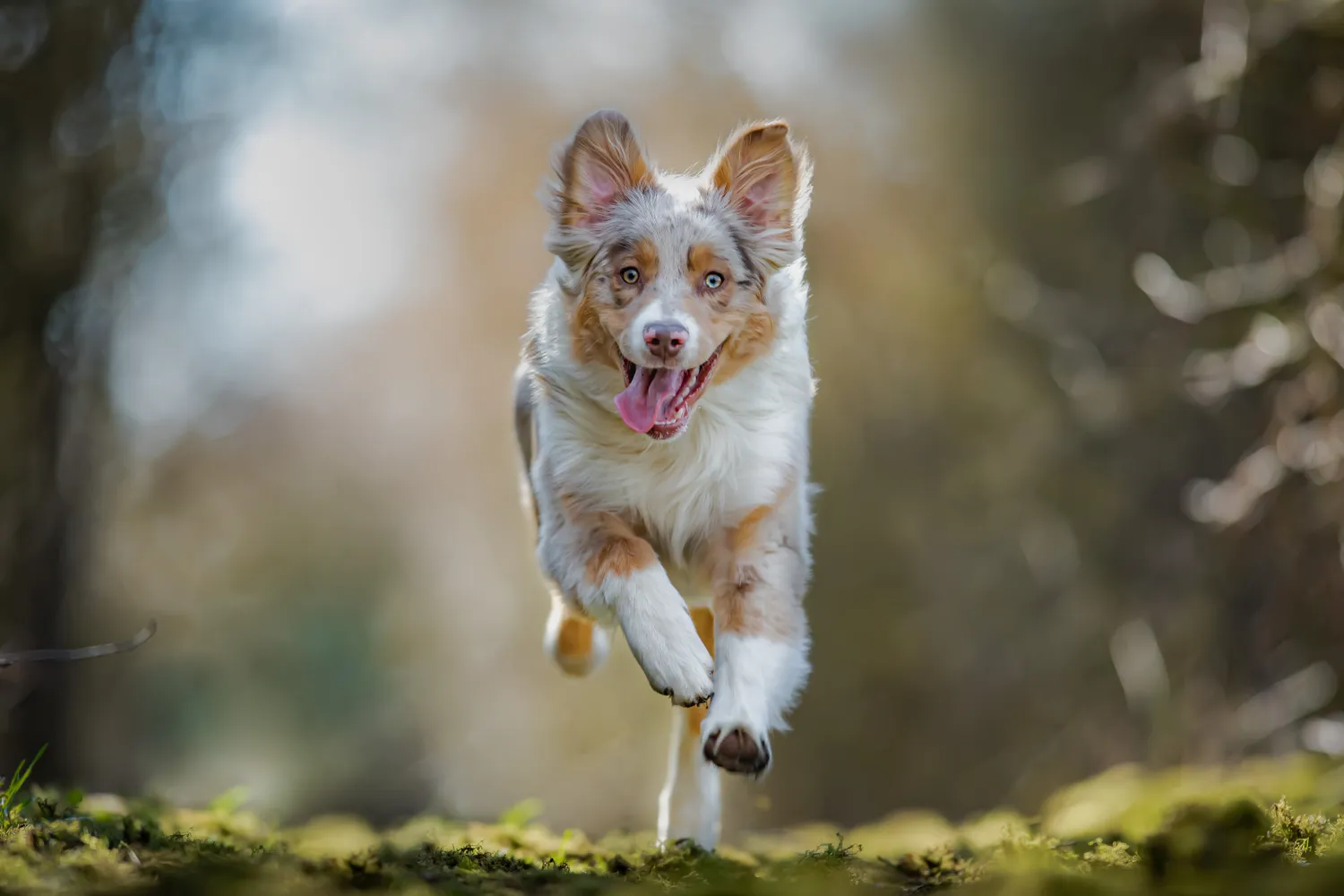
Some Australian shepherds (Aussies) have merle coloring, which creates a mottled or speckled appearance with a mix of lighter and darker areas. Merle Aussies, which carry the merle gene, are more likely to have one or both blue eyes (or sometimes marbled or split-colored eyes).
Australian shepherds thrive in active households where they can exercise, learn tricks, and engage in problem-solving tasks.
Breed Overview
02 of 23
Siberian Husky
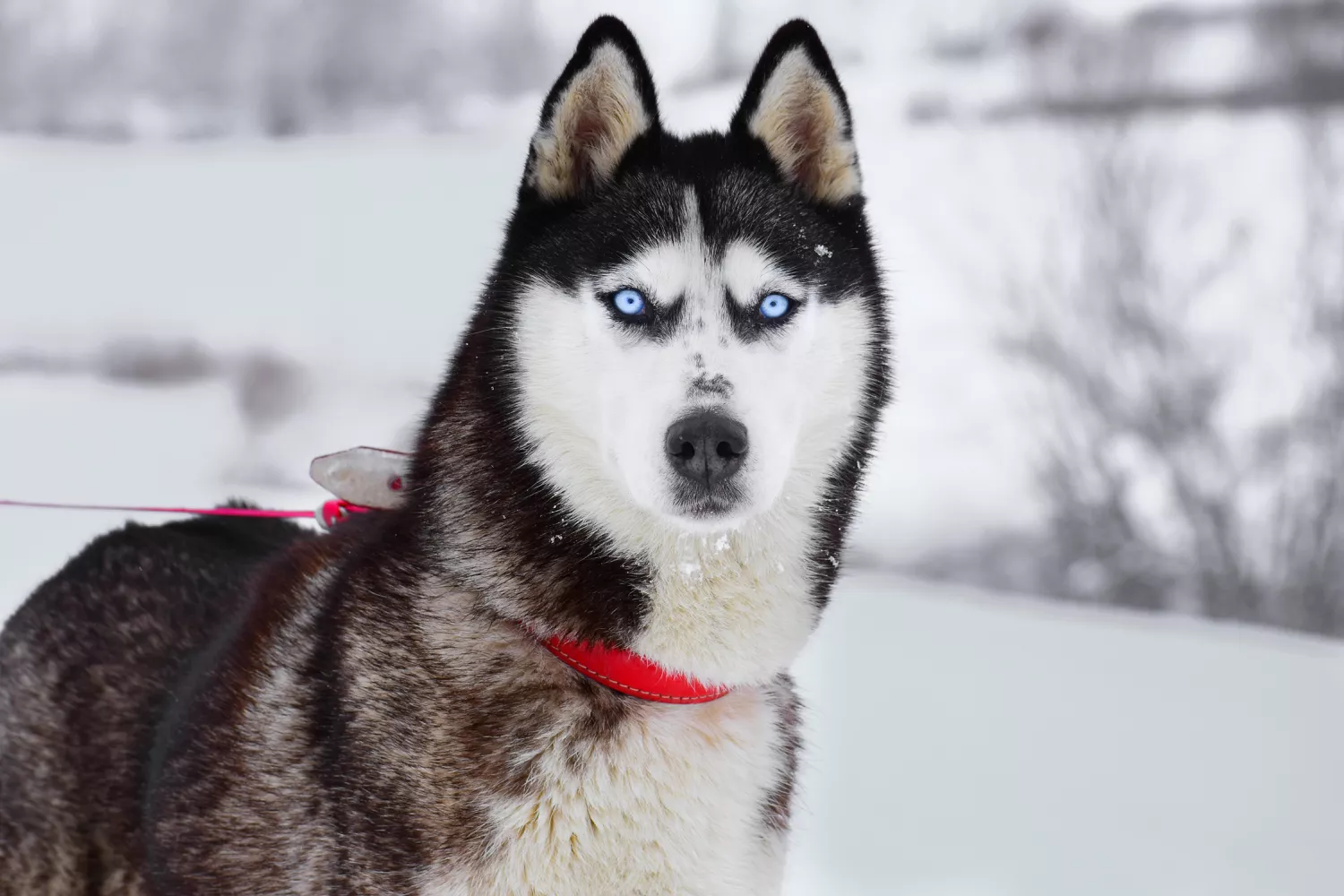
The Siberian husky is one of the most well-known blue-eyed dog breeds, thanks to a specific mutation in the ALX4 gene that gives them striking, ice-blue eyes. Huskies can have one or both blue eyes, or even partially blue eyes.
Siberian huskies are known for their thick double coats, high energy, and endurance. They require plenty of exercise and mental stimulation to be their happiest, best selves.
Breed Overview
101 Best Husky Names: Adventure-Inspired Ideas for Your Pup
03 of 23
Miniature American Shepherd
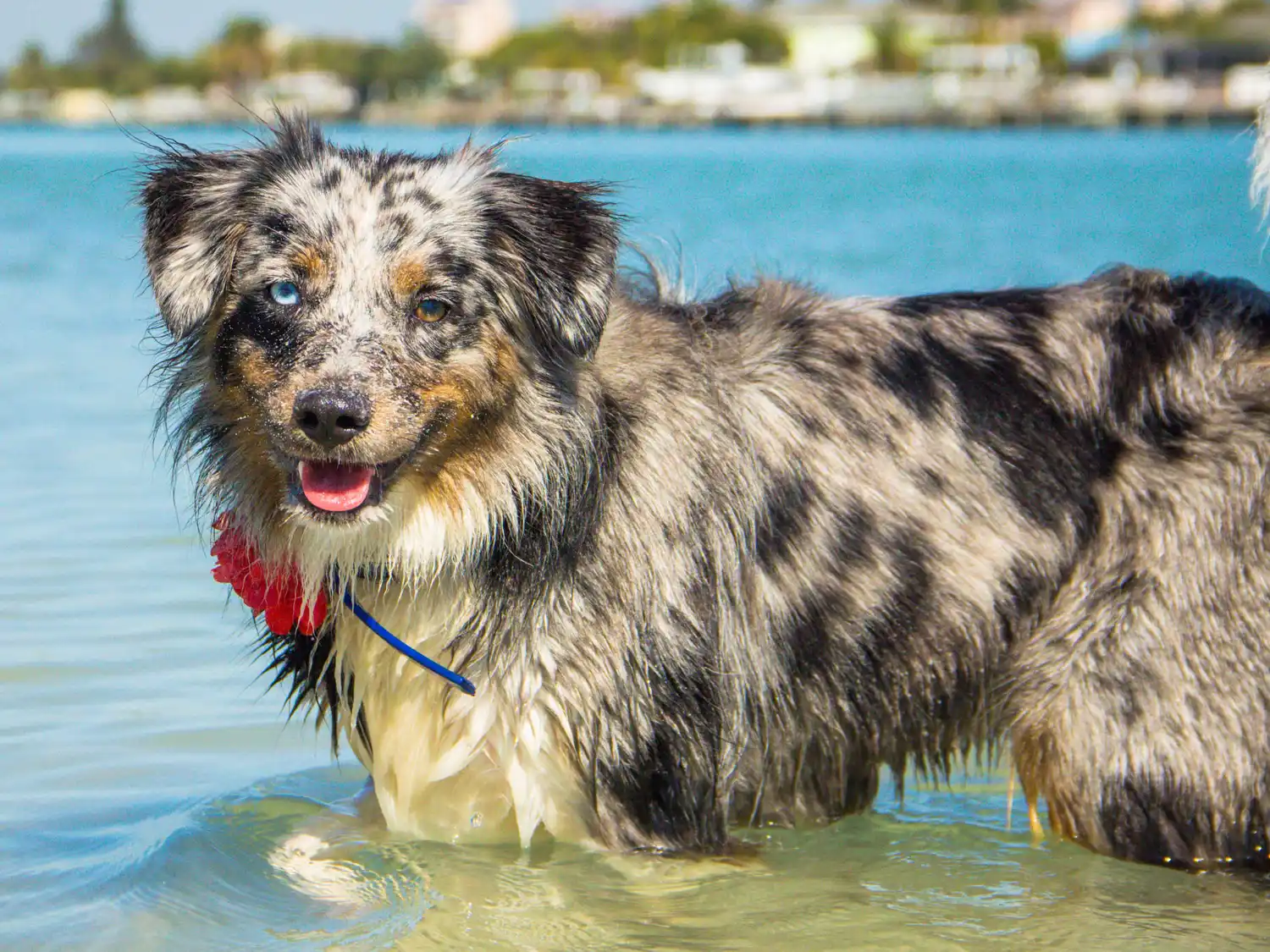
The mini American shepherd (previously called the “mini Aussie”) was bred from the Australian shepherd and possesses the intelligence and athleticism of their larger cousins. The miniature American shepherd frequently inherits blue eyes due to the merle gene. This gene creates a striking mottled coat and can result in one or both blue eyes, or even marbled eyes with a mix of blue and brown.
Breed Overview
04 of 23
Border Collie
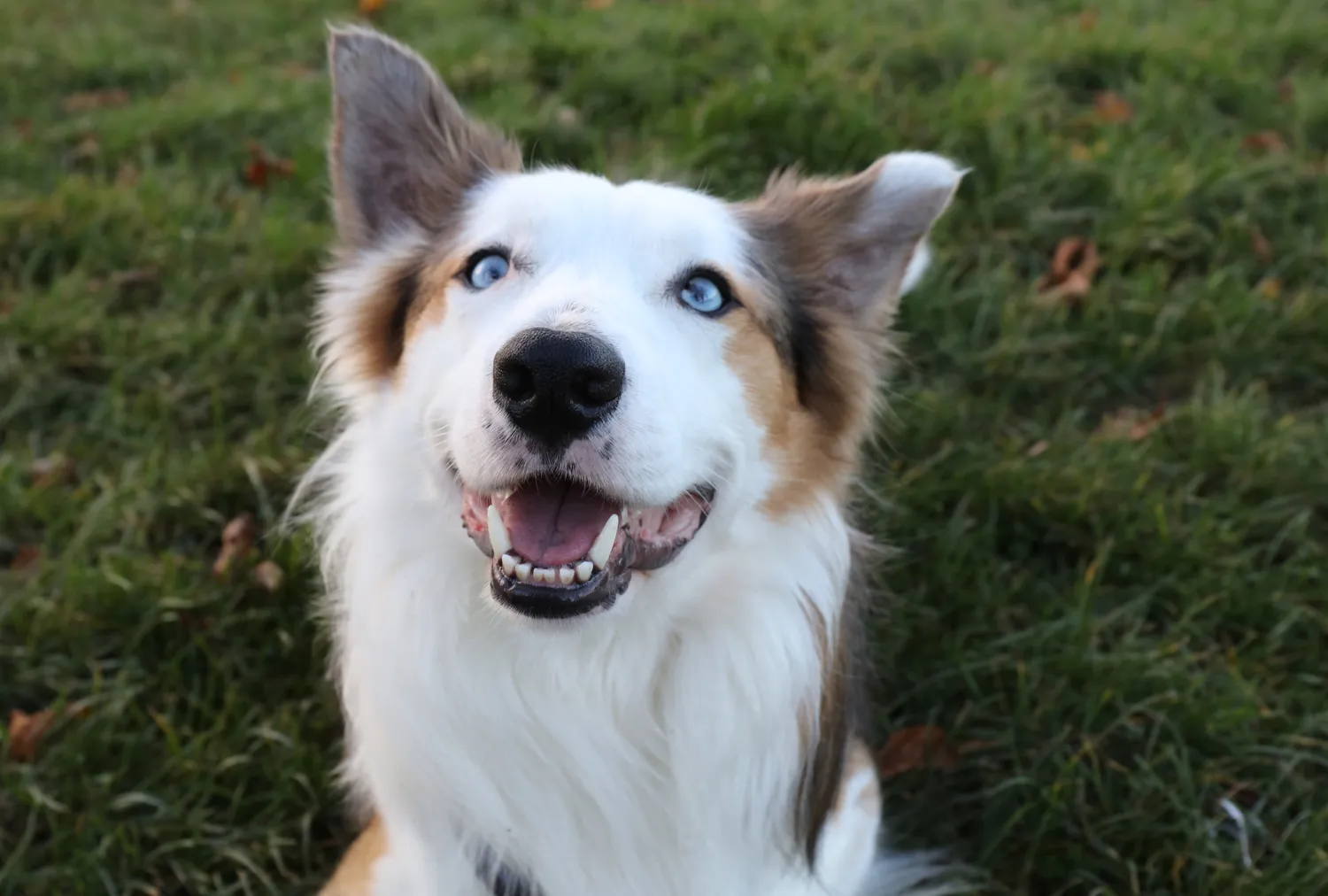
Border collies, one of the most intelligent and trainable dog breeds, can sometimes have blue eyes, particularly when they carry the merle gene. Their problem-solving skills, agility, and incredible work ethic make them ideal for dog sports like agility, obedience, and herding trials. While they make excellent companions, border collies do best in homes that provide them with plenty of mental and physical stimulation.
Breed Overview
05 of 23
Catahoula Leopard Dog

Originally bred for herding and hunting, this rugged, hardworking breed thrives when given a job, making them a great choice for active and structured households. Known for their trademark mottled coat and leopard-like spots, many catahoula leopard dogs have heterochromia (one blue eye and one brown eye) or marbled eyes due to the merle gene.
Breed Overview
06 of 23
Weimaraner
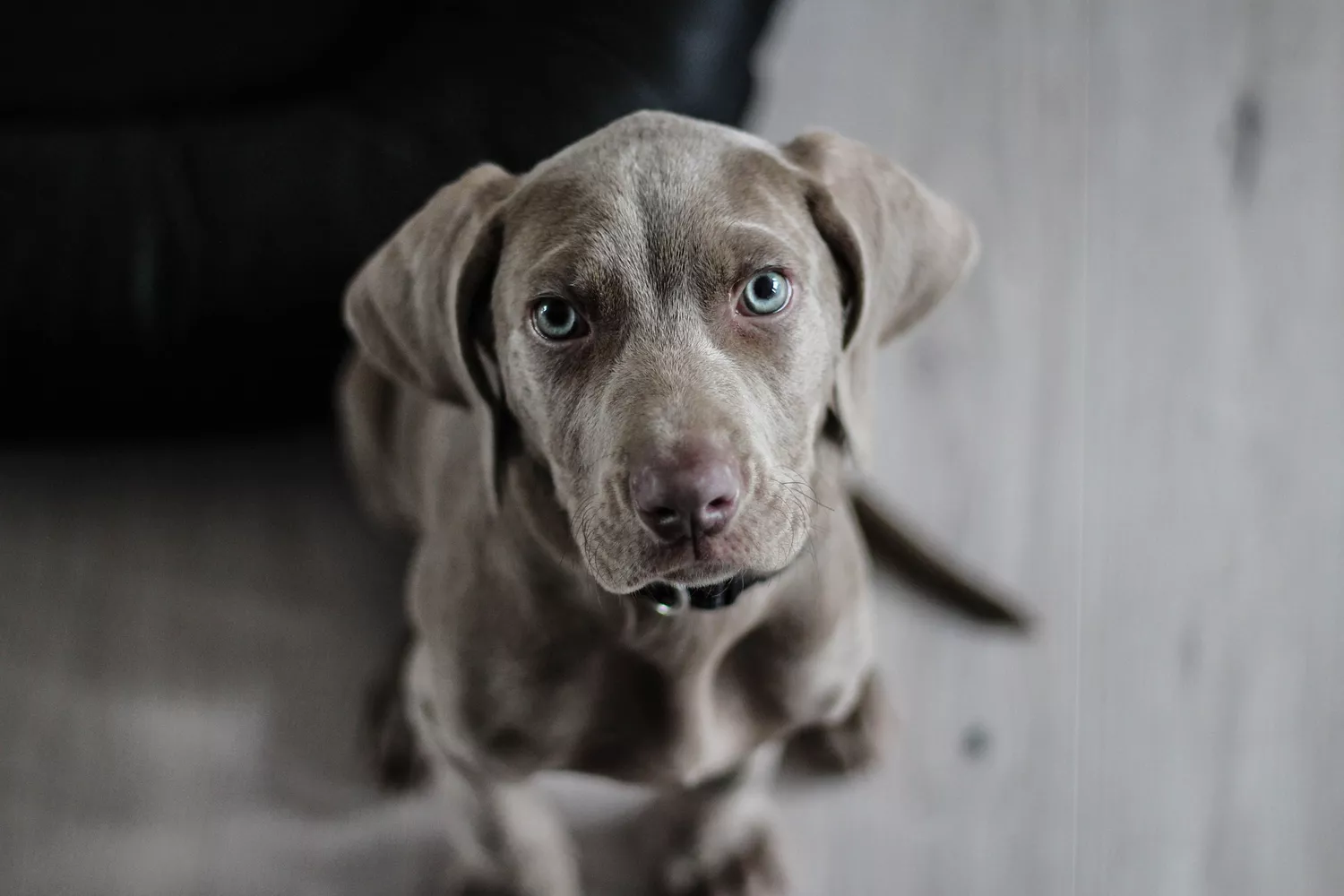
The weimaraner, often called the “Gray Ghost,” is known for its sleek silver-gray coat and uniquely light gray-blue eyes. This breed was originally developed in Germany for hunting large game, and their athleticism, speed, and keen nose make them a top-tier sporting dog breed. When not on the move, weimaraners transform into cuddly companions, often sticking close to their humans like a shadow.
Breed Overview
07 of 23
Cardigan Welsh Corgi
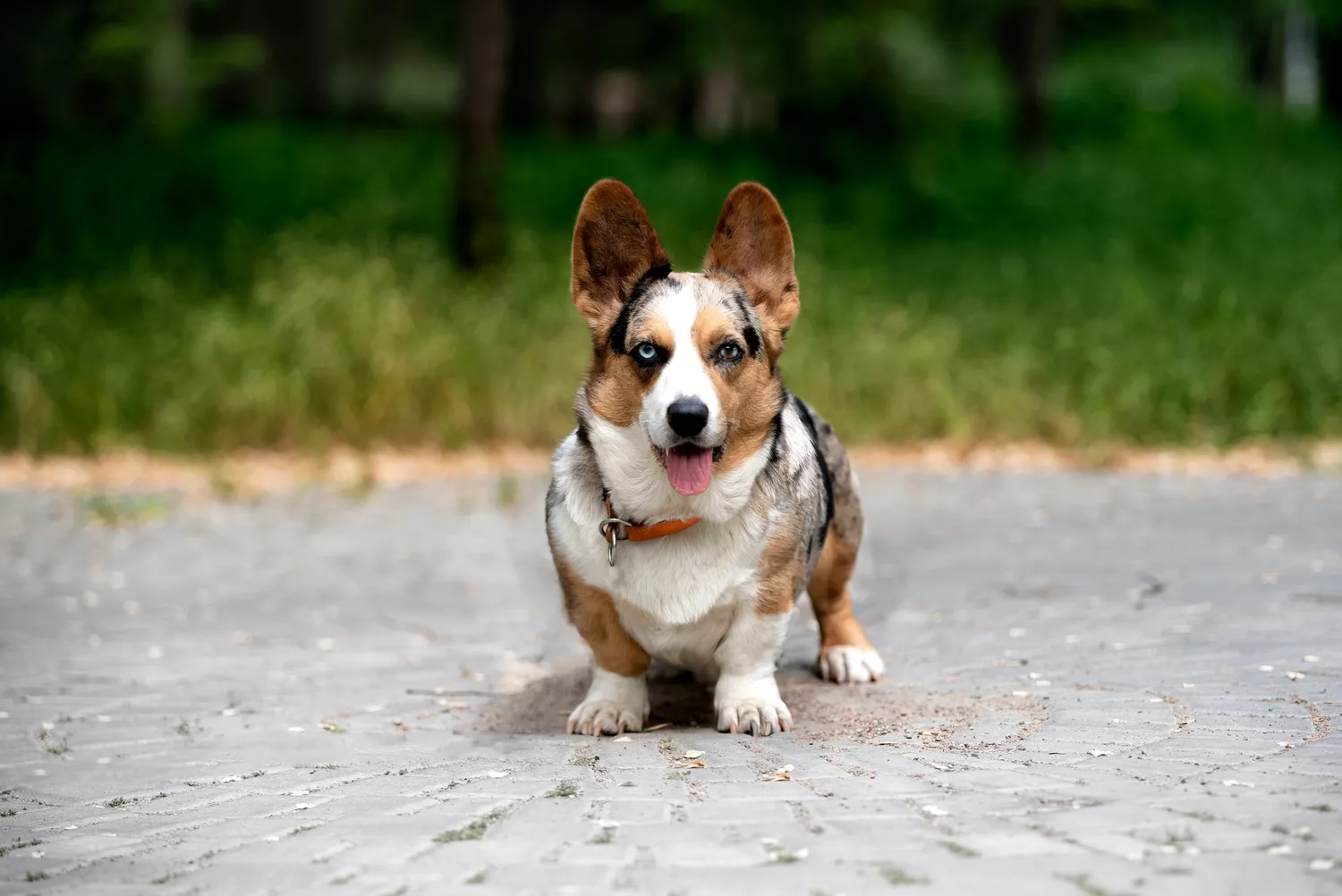
Unlike the Pembroke Welsh corgi, which rarely has blue eyes, Cardigan Welsh corgis—especially those with blue merle coats—may exhibit this striking feature. These long-bodied, short-legged herding dogs are known for their intelligence, playful spirit, and strong work ethic. They are affectionate and loyal companions, forming strong bonds with their families while maintaining an independent and sometimes mischievous nature.
Breed Overview
08 of 23
Great Dane
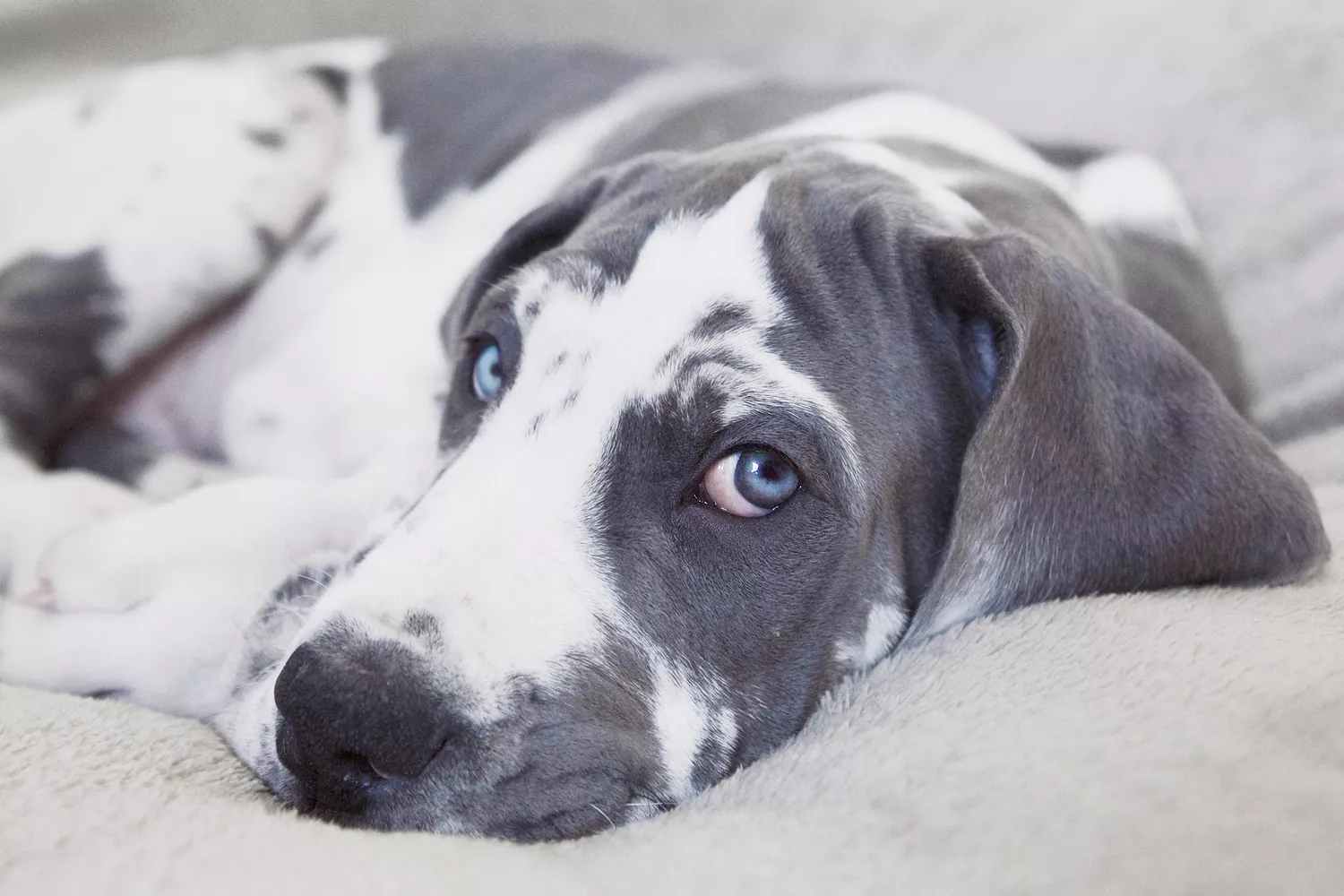
Great Danes can have blue eyes, particularly in those with harlequin or merle coat patterns, where pigment distribution can result in one or both eyes being blue. These “gentle giants“ are among the largest dog breeds, often standing over 30 inches tall at the shoulder. Despite their imposing size, Great Danes are affectionate, friendly, and surprisingly gentle, earning them the nickname “the world’s biggest lap dogs.”
Breed Overview
09 of 23
Dachshund
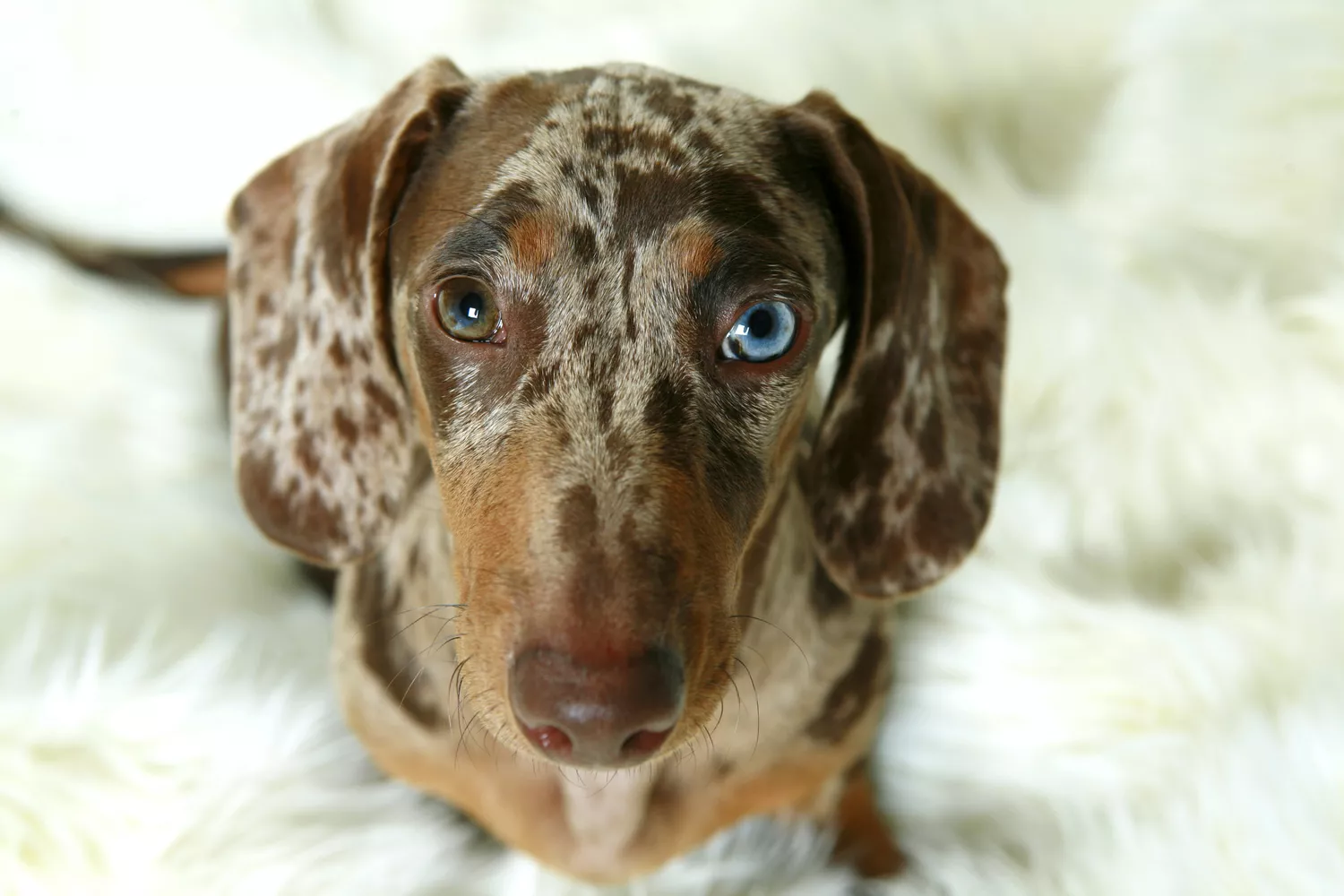
Although blue eyes are rare in dachshunds, they do appear in dapple (merle) varieties, where the patterning can affect eye pigmentation. Despite their small stature, dachshunds are bold, energetic, and full of personality. Originally bred for hunting badgers, they have a keen sense of smell and a determined spirit.
Breed Overview
10 of 23
English Bulldog
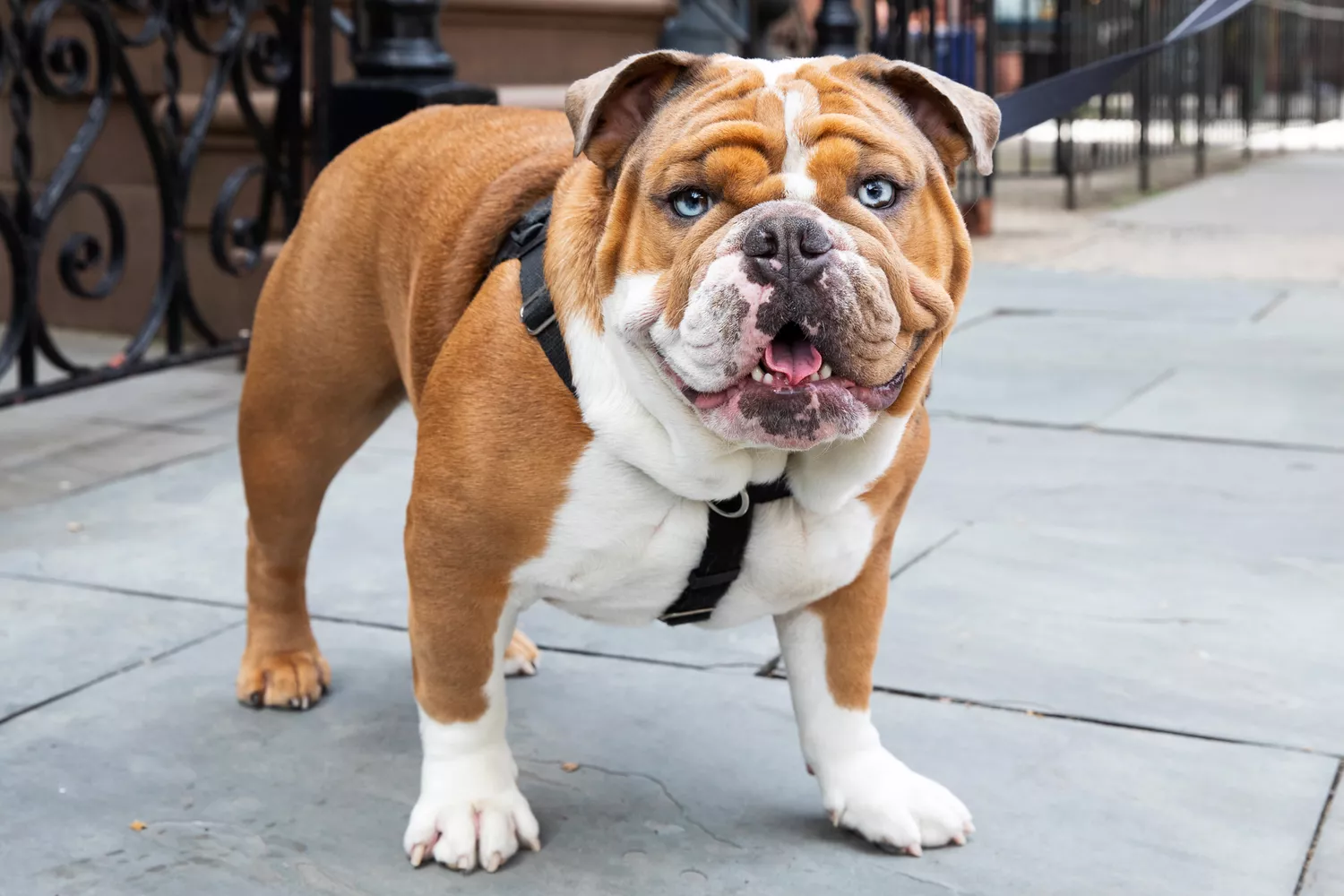
Blue eyes can appear in English bulldogs with merle coats, which are rare and not part of the breed standard. English bulldogs are known for their stocky build, wrinkled face, and distinctive pushed-in nose. Despite their tough appearance, English bulldogs are affectionate, gentle, and often described as couch potatoes.
Breed Overview
11 of 23
Old English Sheepdog
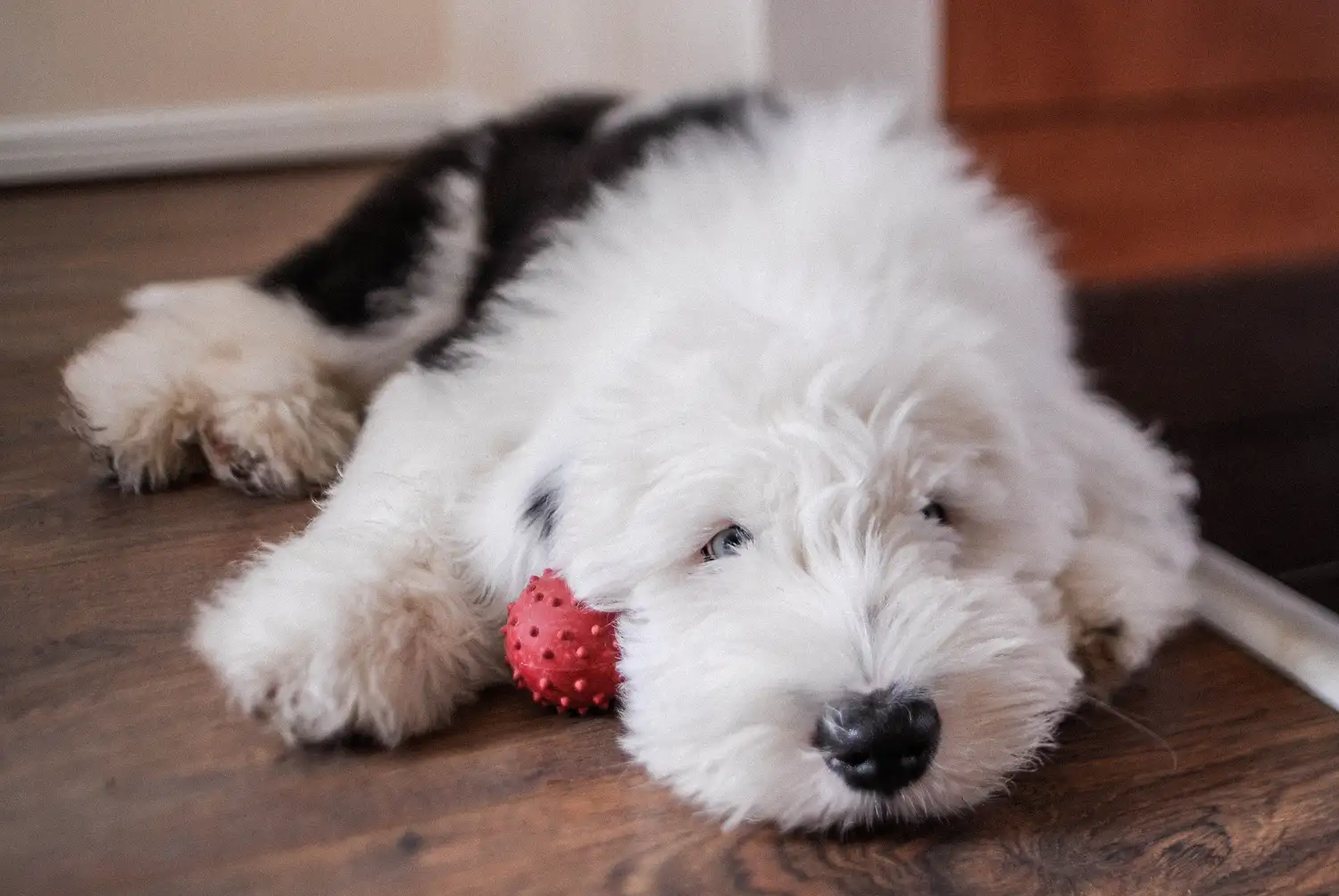
The Old English sheepdog, famous for their shaggy coat and bear-like gait, can occasionally have blue eyes, particularly in dogs with merle or white markings around the face. These gentle giants were originally bred for herding and are highly intelligent, affectionate, and playful. Their thick double coat requires regular grooming to prevent matting.
Breed Overview
12 of 23
Alaskan Malamute
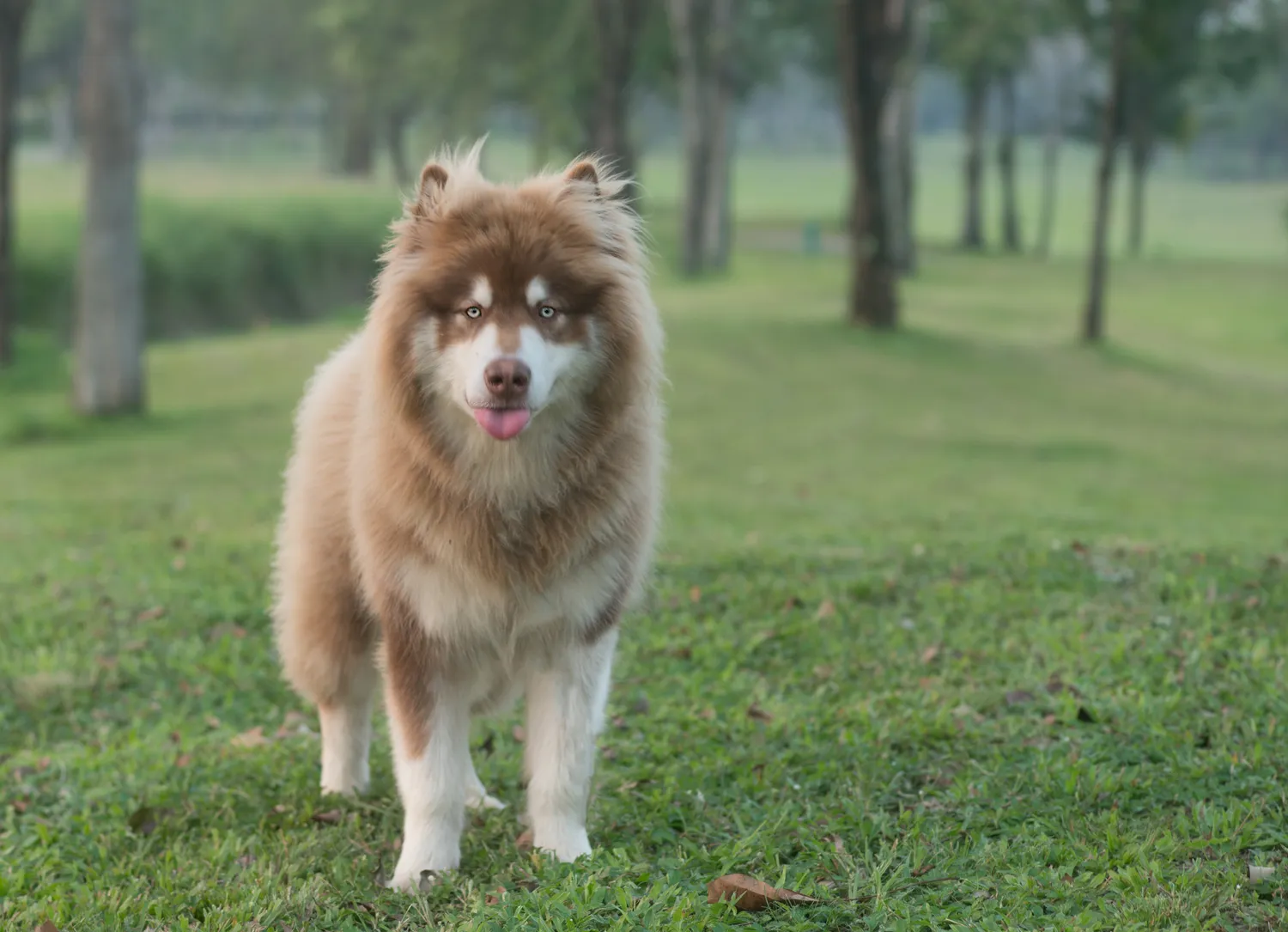
While the breed standard calls for brown eyes, an Alaskan malamute can have blue eyes due to inheriting this trait from another breed (likely a Siberian husky) somewhere along its lineage.
These powerful, wolf-like dogs were bred to pull heavy sleds over long distances and possess incredible endurance. They are highly social, affectionate, and playful but require firm training and a lot of exercise.
Breed Overview
13 of 23
French Bulldog
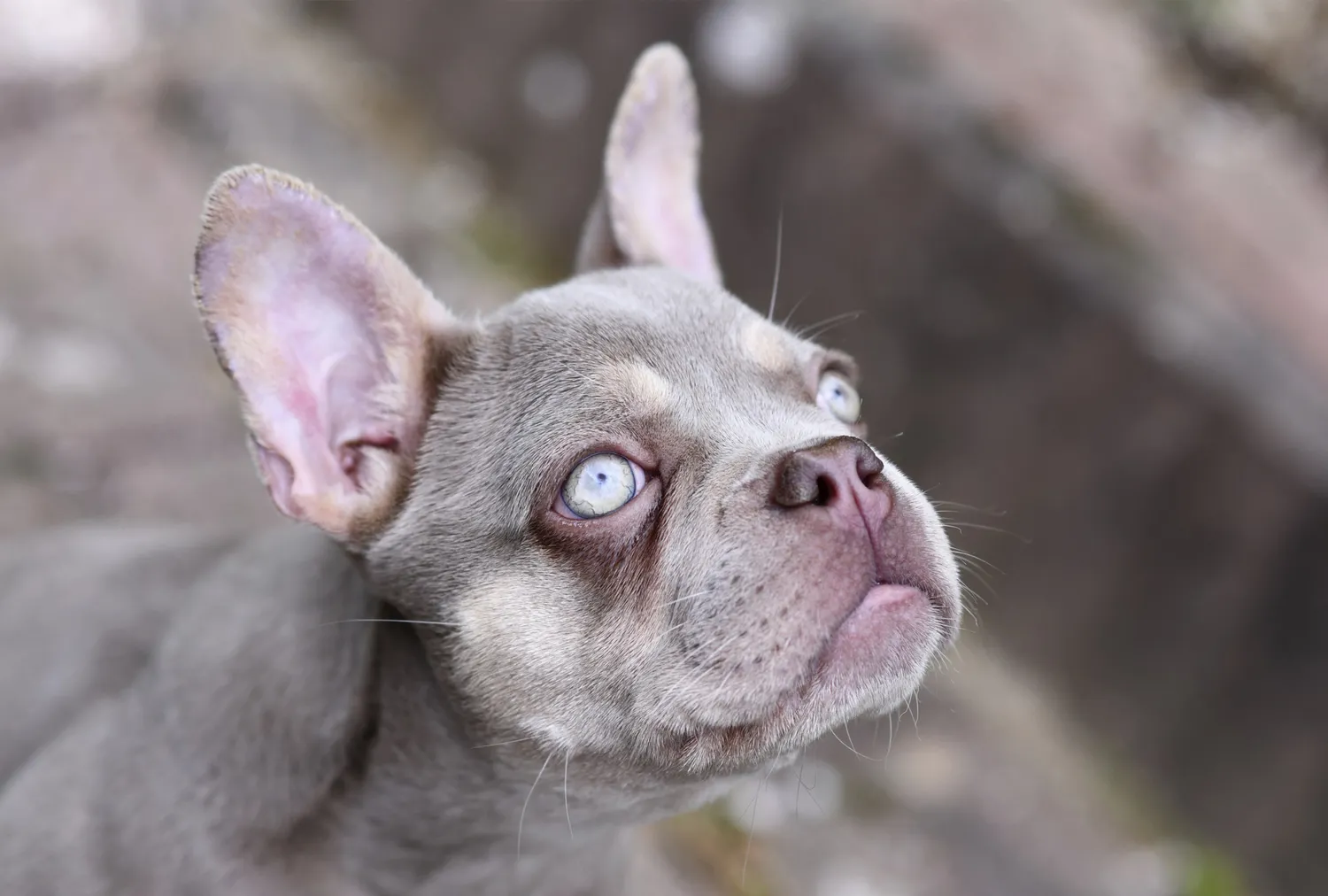
French bulldogs can sometimes have blue eyes, particularly in those with merle or dilute-colored coats.
Frenchies are beloved for their bat-like ears, squishy faces, and affectionate nature. They are fantastic companion dogs, thriving in apartment settings and bonding deeply with their pet parents.
Breed Overview
14 of 23
Chihuahua
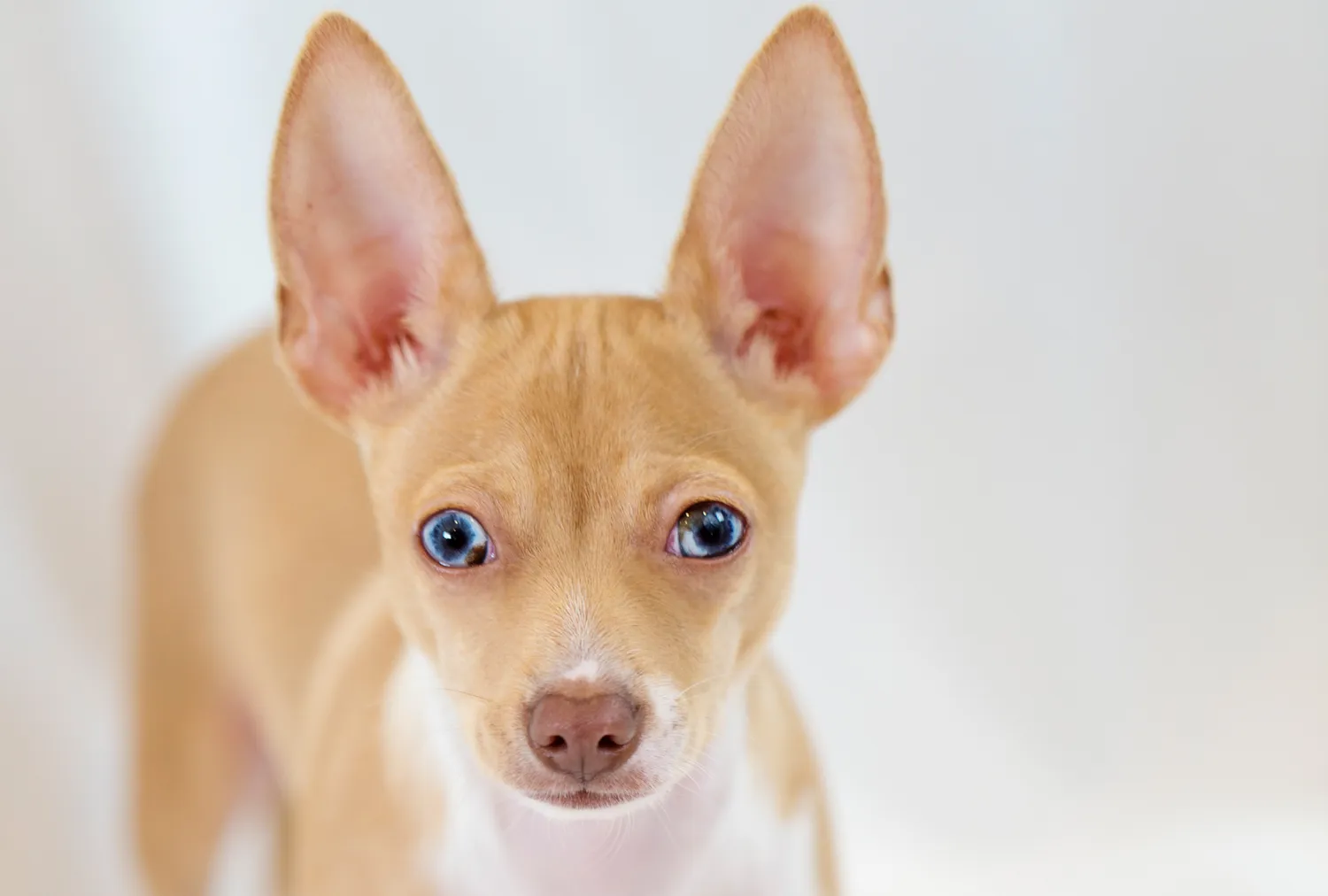
While blue eyes are rare in chihuahuas, they can occasionally occur in those with merle coats. Some dilute-colored chihuahuas (such as blues or lilacs) may also have lighter-colored eyes, though not always blue.
Known for their bold personalities and unwavering loyalty, chihuahuas are tiny but full of energy and confidence. They’re highly affectionate and devoted to their pet parents, thriving in their lapdog roles.
Breed Overview
15 of 23
Alaskan Klee Kai
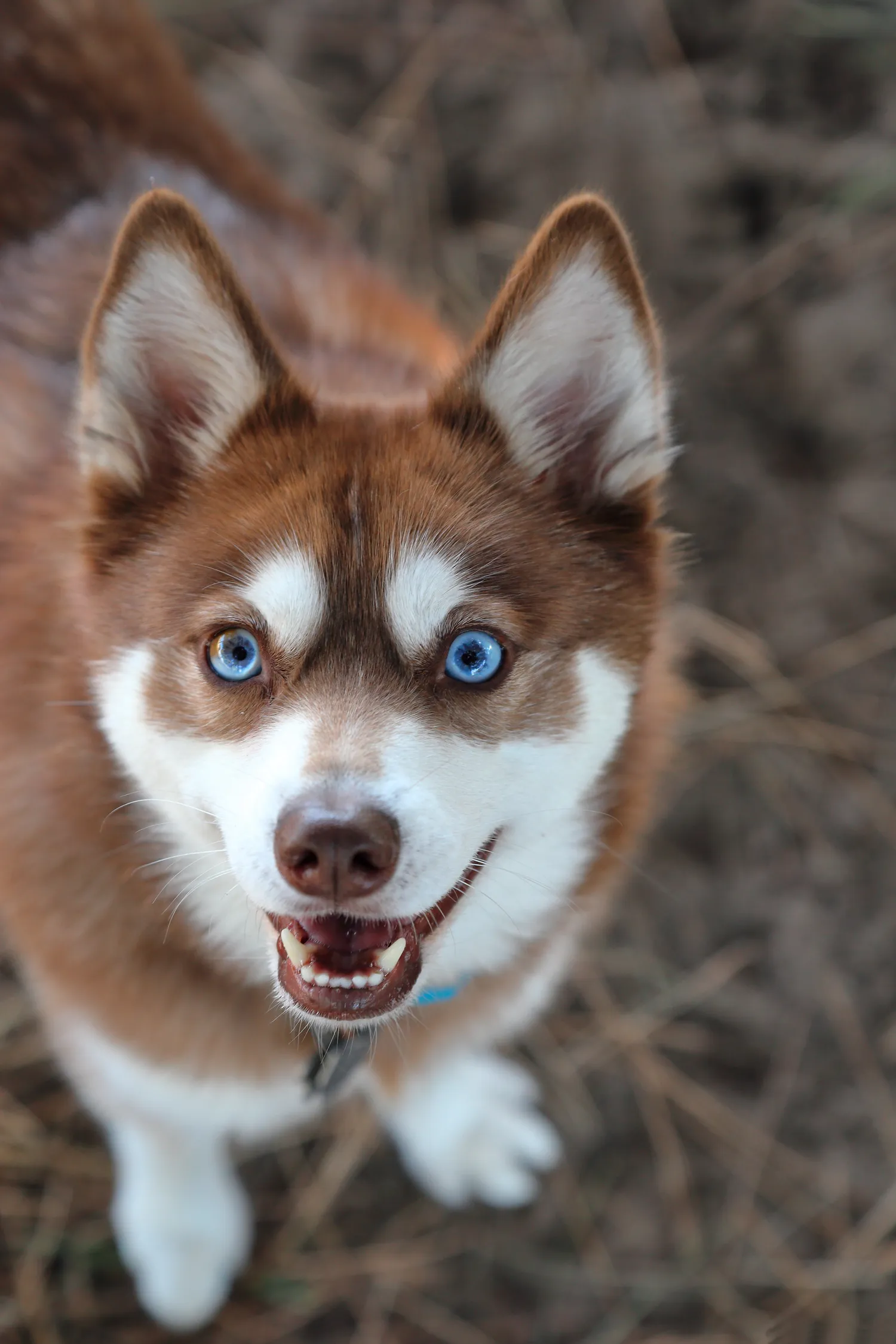
The Alaskan klee kai, a smaller relative of the Siberian husky, often inherits striking blue eyes from their husky ancestry. This breed was developed as a companion-sized version of the husky, retaining the same high energy, intelligence, and independent spirit in a more compact form.
Breed Overview
16 of 23
American Pit Bull Terrier
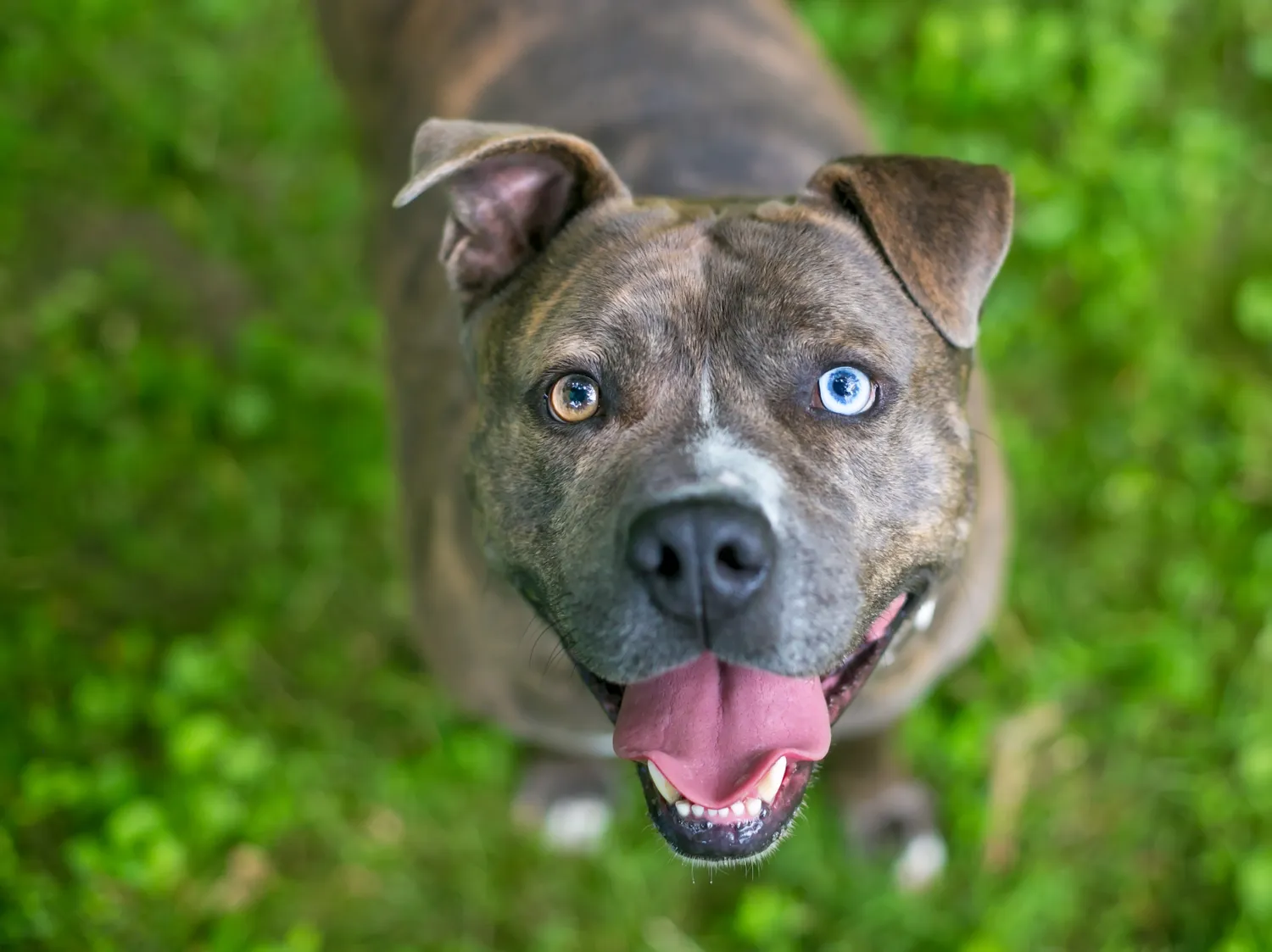
Pit bulls are often born with blue eyes, though their eye color typically changes as they mature. However, some adult pit bulls retain blue-ish eyes, especially those with blue, gray, or brindle coats.
Known for their muscular build and affectionate nature, pit bulls are incredibly loyal and thrive on human companionship. Despite their sometimes unfair reputation, well-socialized pit bulls are loving, playful, and make fantastic family pets.
Breed Overview
17 of 23
Dalmatian
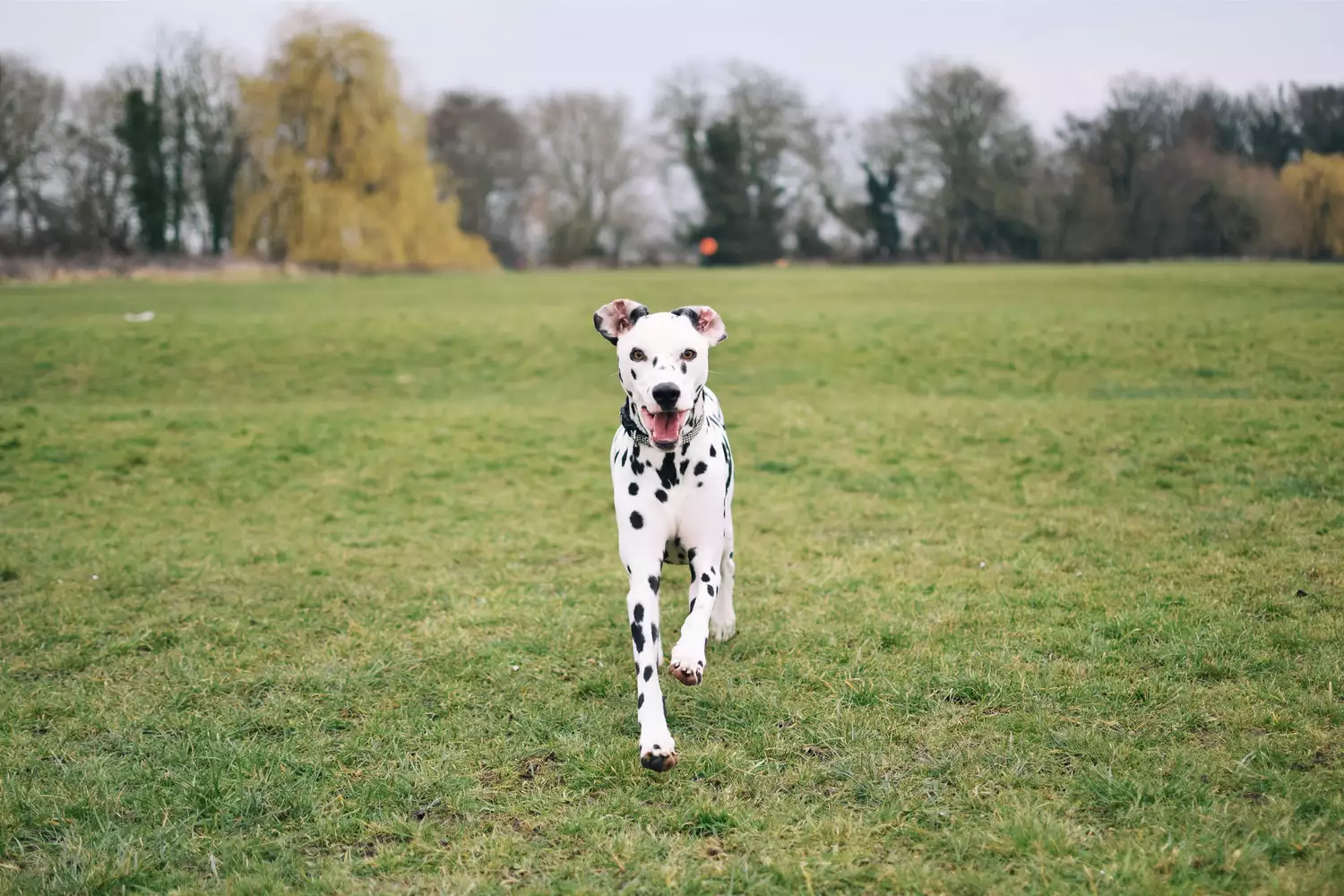
Dalmatians always have two copies of the piebald gene, which is responsible for their distinctive white coat with black or liver spots. This gene can also result in blue eyes. While blue-eyed Dalmatians are striking, the gene responsible is also linked to deafness, so many blue-eyed Dalmatians have hearing impairments.
Beyond their iconic spotted coats, dalmatians are energetic, intelligent, and strong-willed dogs. Originally bred as carriage dogs, they have excellent endurance and thrive in active households.
Breed Overview
18 of 23
Bull Terrier
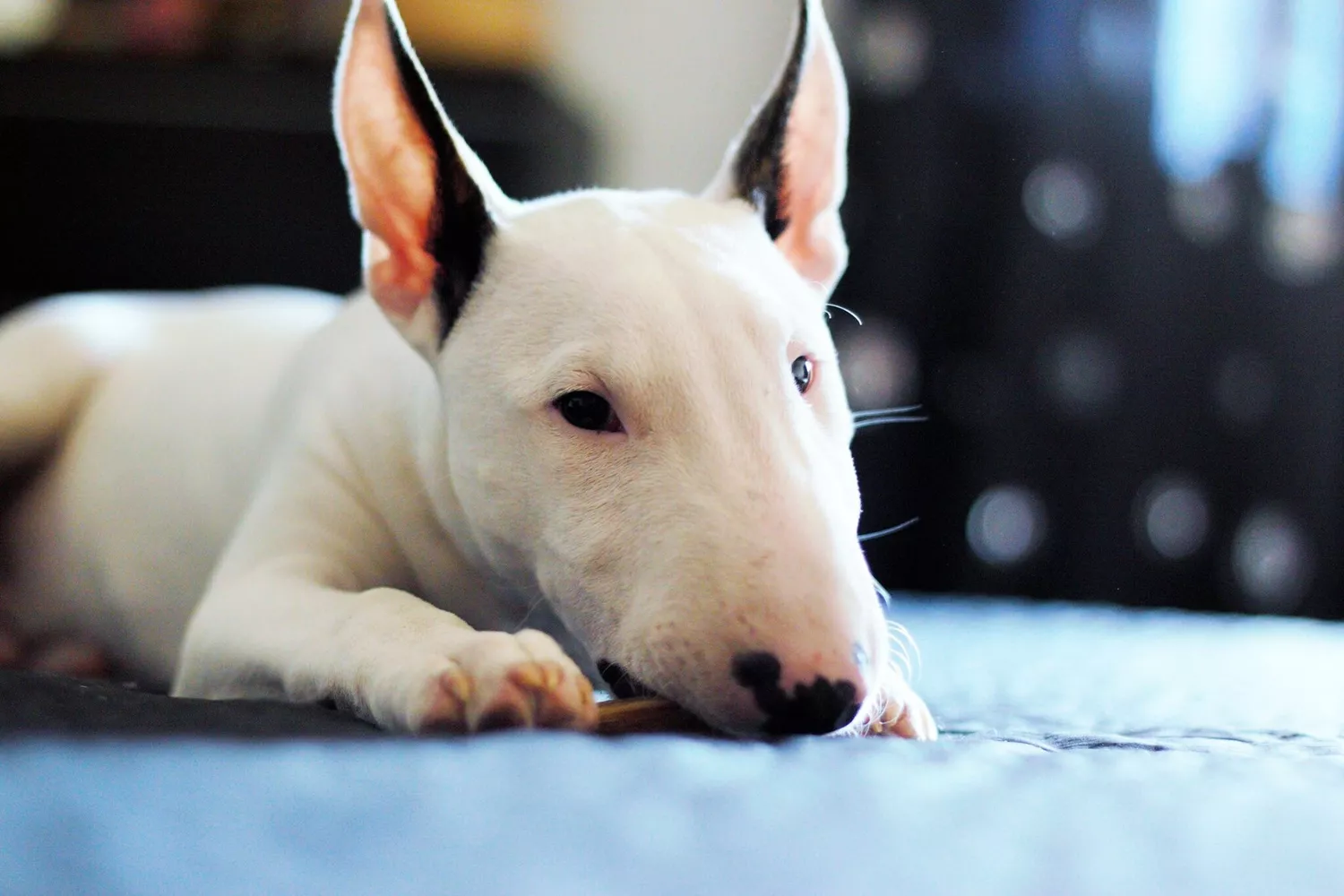
The bull terrier is known for its distinctive egg-shaped head, muscular build, and playful personality. Some bull terriers carry two copies of the piebald gene, which gives them white or predominantly white coats.
This gene can also result in blue eyes, especially in dogs with extensive white markings around the face. Unfortunately, white bull terriers are more prone to congenital deafness.
Breed Overview
19 of 23
Boxer
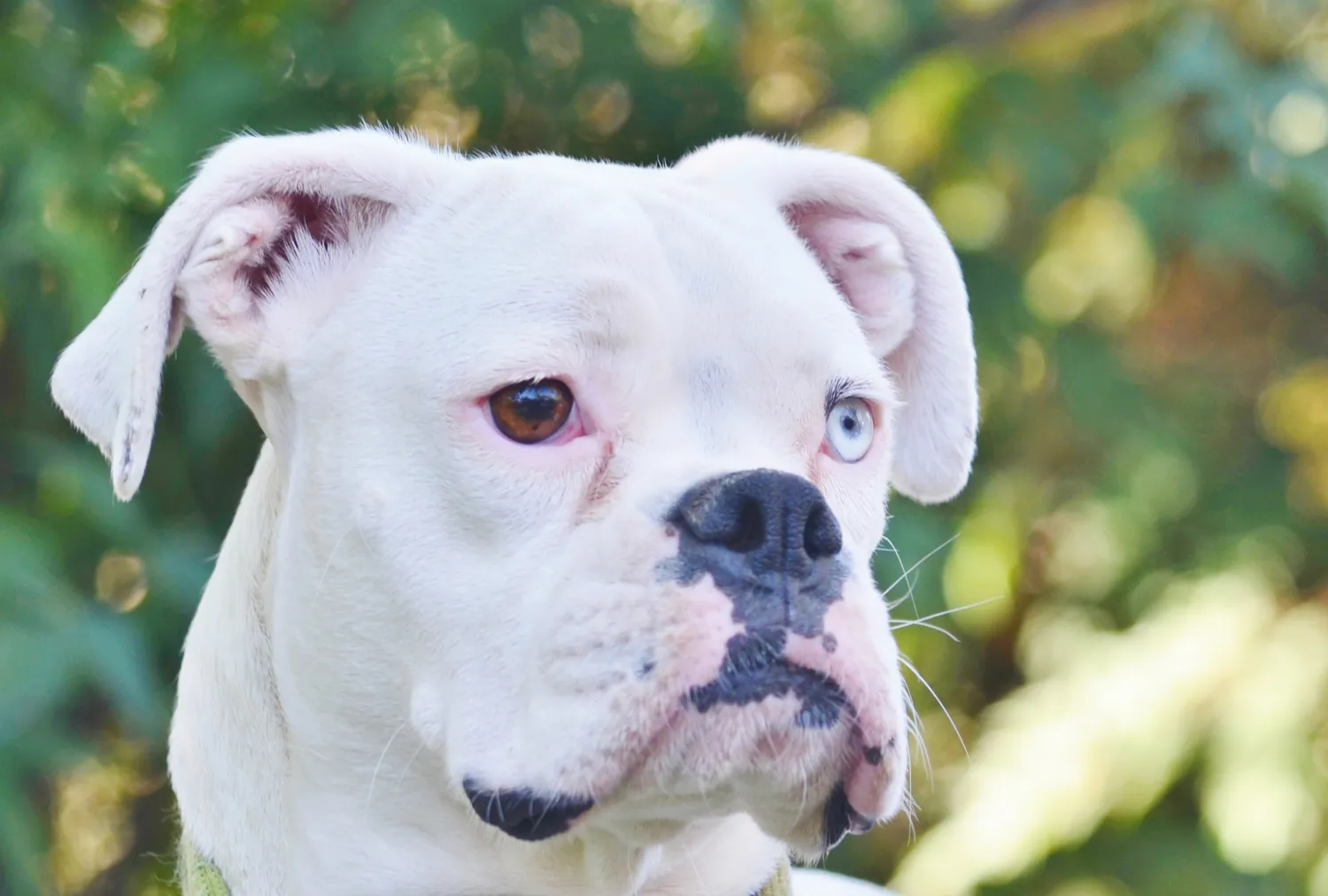
While most boxers have fawn or brindle coats, some carry two copies of the piebald gene, resulting in white or mostly white coats. This gene can also lead to blue eyes, though it is relatively rare in the breed. White boxers are more prone to congenital deafness. Boxers are loyal, intelligent, and protective, making them excellent family companions. Their fun-loving, clownish personality ensures they bring joy and excitement to any home.
Breed Overview
Boxer Dogs: 65 Creative Name Ideas
20 of 23
Boston Terrier

Many Boston terriers carry the piebald gene, which creates their signature black-and-white, seal-and-white, or brindle-and-white markings. In cases where a Boston terrier carries two copies of this gene, they can have one or both blue eyes (and an increased risk for deafness).
The Boston terrier is a small yet sturdy breed known for their charming personality and affectionate nature. While their compact size makes them well-suited for apartment living, they are playful and social dogs who love accompanying their humans on outings.
Breed Overview
21 of 23
Collie
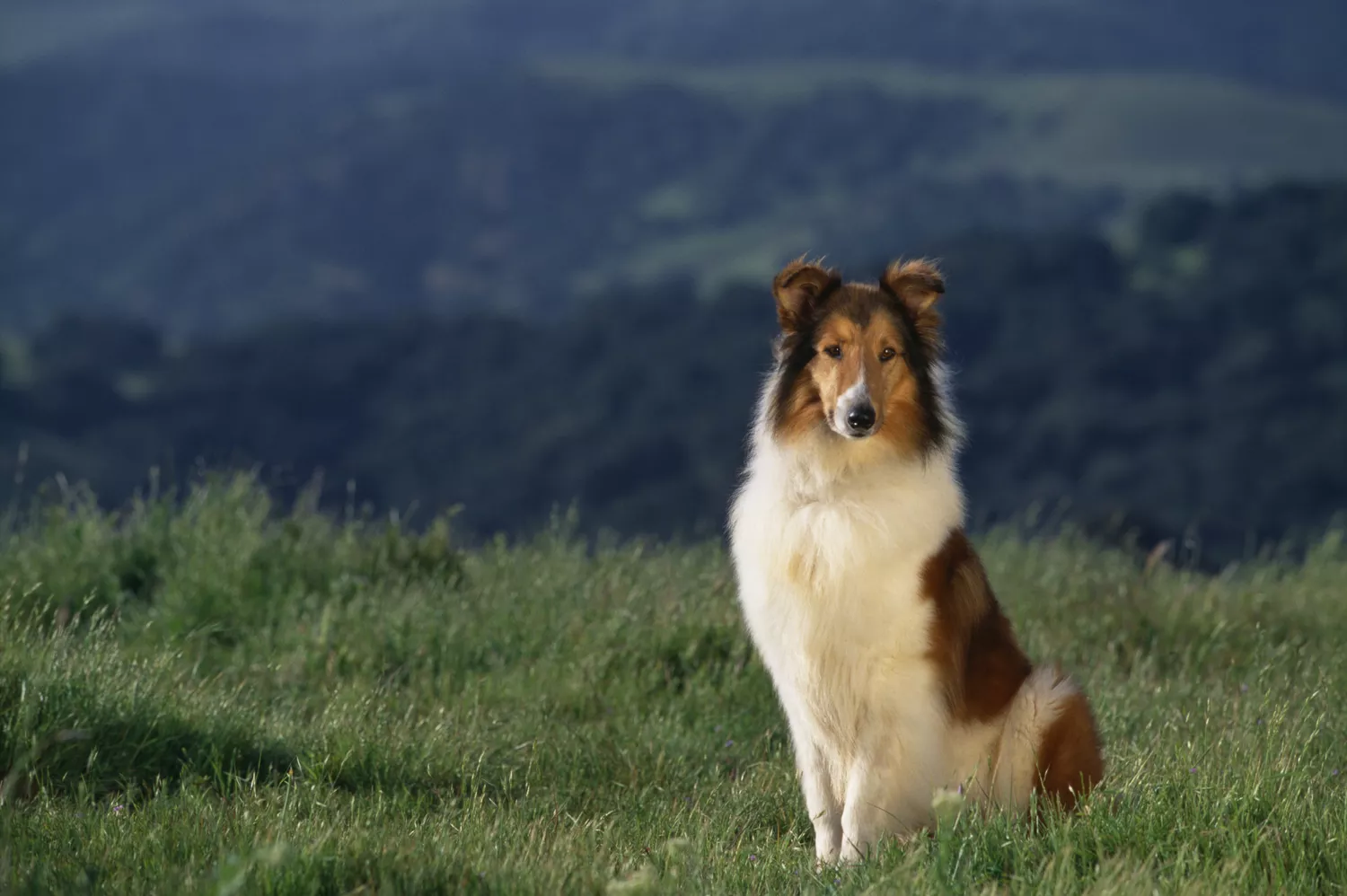
Collies (either smooth or rough) can sometimes have the merle gene, leading to one or both blue eyes, or even a mix of blue and brown in the same eye. These dogs are highly trainable, affectionate, and devoted family companions. Originally bred for herding, they are known for their strong work ethic, loyalty, and protective instincts.
Breed Overview
22 of 23
Pomsky
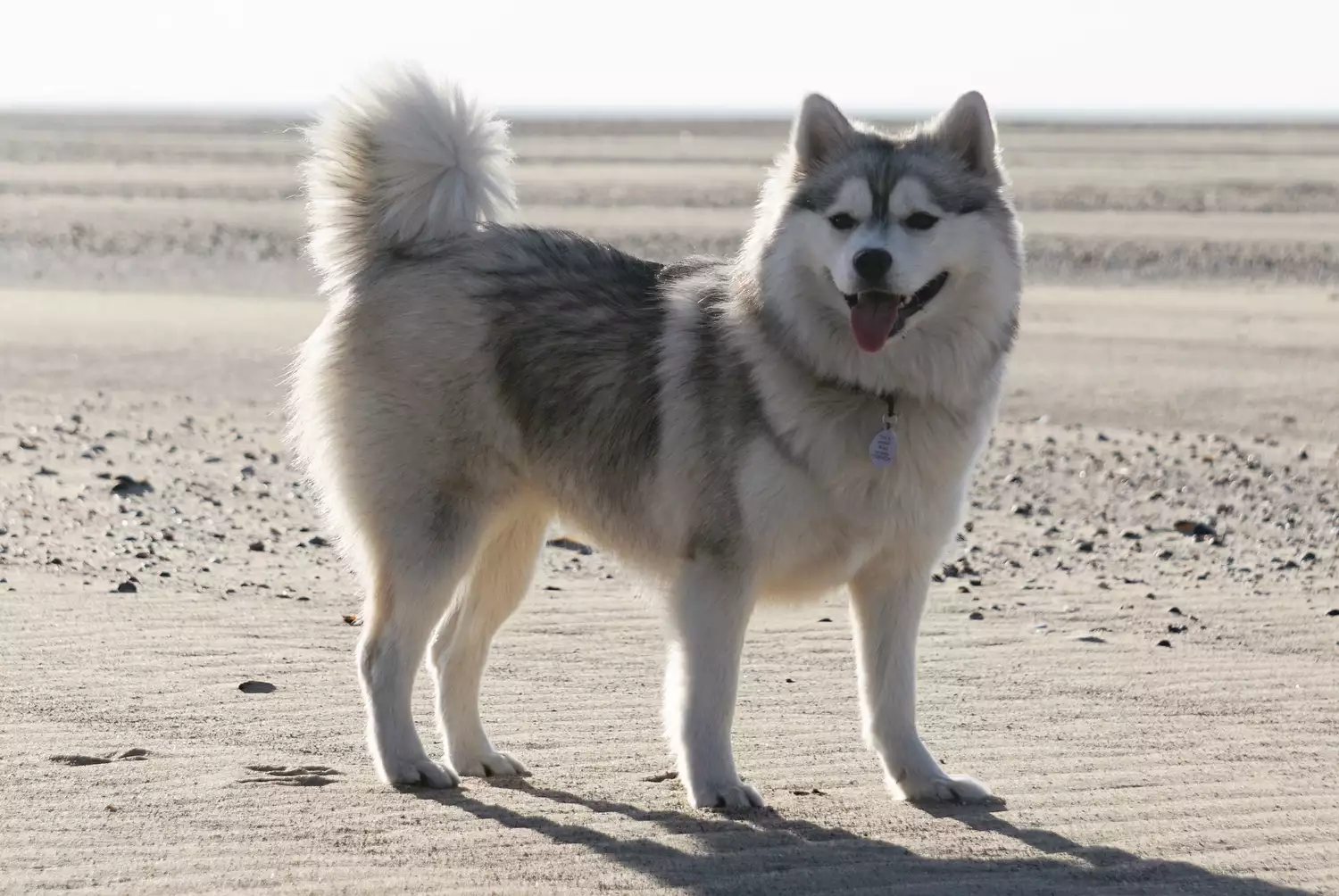
The pomsky is a designer mix between a pomeranian and a Siberian husky. This mix often inherits the striking blue eyes of its Husky parent, thanks to the ALX4 gene, Highly intelligent and full of personality, pomskies thrive in active households where they receive plenty of exercise, mental stimulation, and attention.
Breed Overview
23 of 23
Alaskan Husky
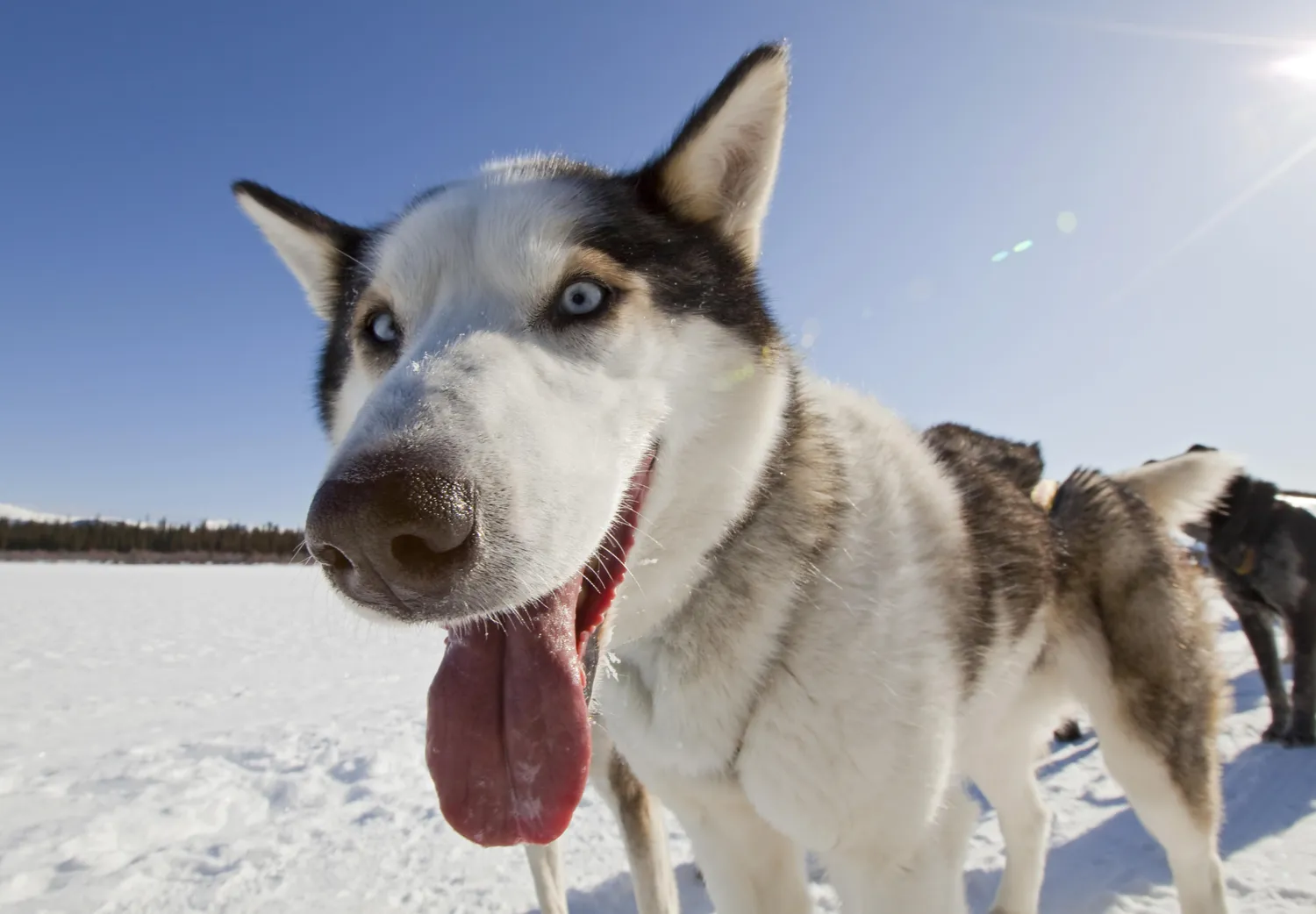
The Alaskan husky, a high-performance sled dog, is not a purebred dog but rather a hybrid breed developed for speed, endurance, and working ability. Alaskan huskies can have brown, amber, or blue eyes, though blue is less common.
Known for their incredible stamina, intelligence, and friendly demeanor, Alaskan huskies excel in sled racing and long-distance mushing. Their affectionate yet energetic nature makes them ideal for active, experienced pet parents who can meet their high exercise needs.



