Saluki: Dog Breed Characteristics & Care
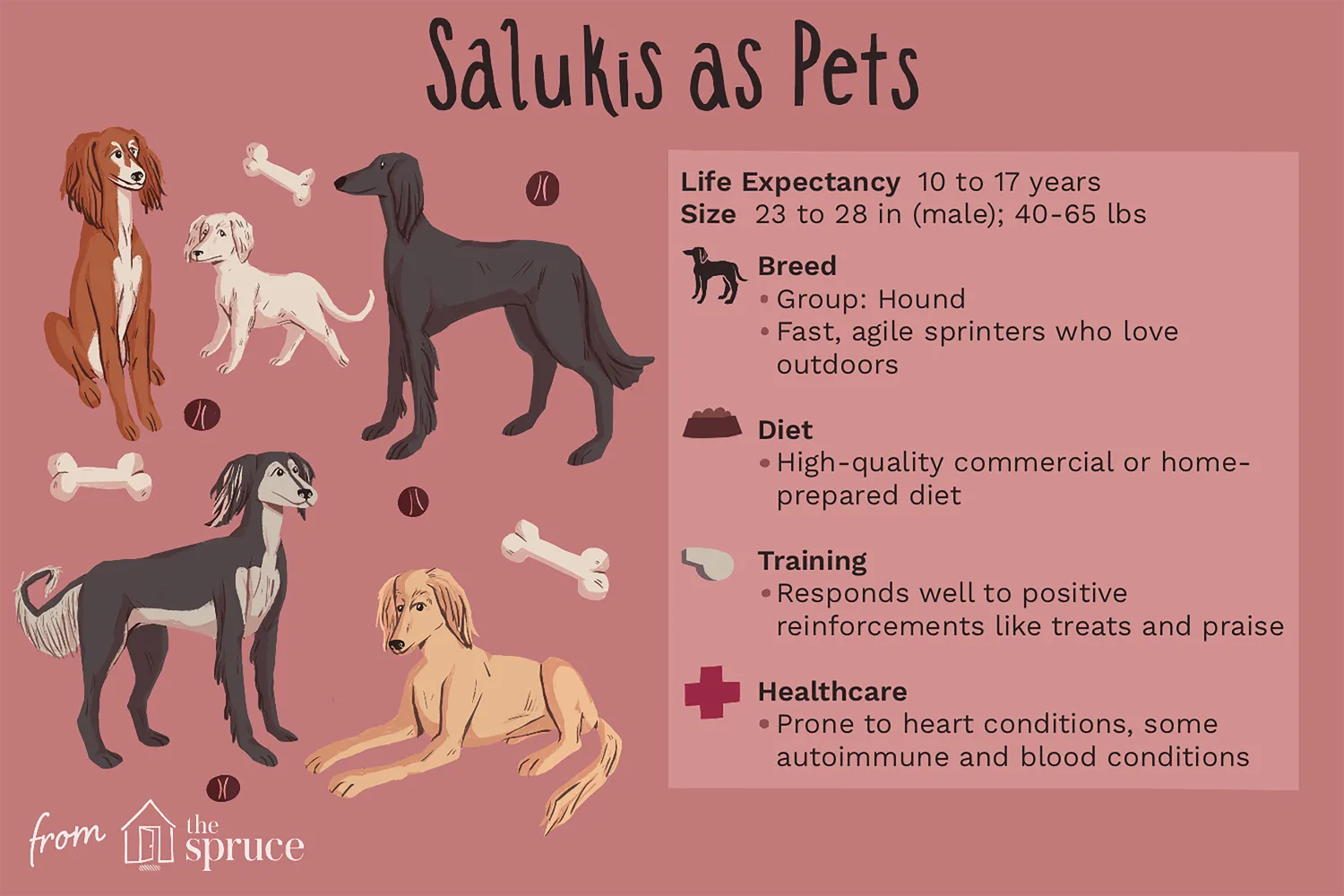
The saluki, one of the world’s oldest breeds, is a medium-sized dog that is known for their slim, muscular, rugged frame built for speed and endurance—these dogs can run up to 43 mph—and their long tail and ears that are typically feathered.
For thousands of years, this breed, known as the royal dog of Egypt, served as the hunting hound of kings. Today, these dogs remain fast, agile sprinters who love a good chase or romp outdoors. They're also gentle and loyal pets with warm, faithful eyes and undying devotion to their families.
Learn about the saluki, including the breed’s temperament, care needs, and history.
Breed Overview
GROUP: Hound Group
HEIGHT: 23 to 28 inches (males); females are smaller
WEIGHT: 40 to 65 pounds
COAT: Feathered or smooth
COAT COLOR: White or cream, fawn, black and tan or grizzle and tan, golden
LIFE SPAN: 10 to 17 years
TEMPERAMENT: Aloof, intelligent, reserved, quiet
HYPOALLERGENIC: No
ORIGIN: Egypt
Characteristics of the Saluki
These beautiful dogs are known to be both reserved and affectionate, and offer companionship to their families. While the saluki isn't overly demonstrative, they will form deep bonds with their humans and are susceptible to separation anxiety when left alone for long periods.
This is a sensitive dog who feels most comfortable in a peaceful home, and they aren’t the right choice if you are looking for a strong watchdog.
Affection Level | High |
Friendliness | Medium |
Kid-Friendly | Medium |
Pet-Friendly | Medium |
Exercise Needs | High |
Playfulness | High |
Energy Level | High |
Trainability | Medium |
Intelligence | High |
Tendency to Bark | Low |
Amount of Shedding | Low |
History of the Saluki
As strong, balanced athletes, salukis have long been revered throughout history for their grace and beauty. Historically referred to as the Persian greyhound, the gazelle hound, or even the "wind drinker," the breed's ancient history can be difficult to trace. However, experts believe the roots of the saluki breed might extend as far back as 7000 B.C1.
Once considered the royal dog of Egypt (as they're sometimes still called), some historians have suggested that this is actually the oldest dog breed, with origins that may trace back to 329 B.C. when Alexander the Great invaded India2. There are depictions of dogs resembling salukis that appear on Egyptian tombs dating 4,000 years ago, and carvings from the Sumerian empire that also feature dogs with a strong resemblance to the saluki.
The saluki and other sighthounds were the favorite pets among kings like Egyptian pharaohs as well as other notable historical figures like Alexander the Great, and are believed to have originated in the Middle East, Egypt, and Asia long before the Egyptian pyramids were built. Some historians believe the breed may take its name from the ancient city of Saluk in Yemen, or possibly from the city of Seleucia in Syria.
Particularly widespread throughout Egypt, these dogs were revered and cherished. In fact, their bodies were often mummified just like those of the ancient pharaohs. Nomadic Muslims, who generally considered dogs to be unclean animals, considered salukis a gift from Allah.
The saluki’s first known presence in England dates back to 1840. The breed wasn’t established until after World War I when many British officers returned from the Middle East with these dogs.
The saluki breed was officially recognized by the American Kennel Club (AKC) in 1927.
Today’s saluki remains true to their ancient ancestors, from their sleek physique and warm eyes to their sophisticated and dignified persona.
Saluki Care
The saluki's high need for activity means they will not do well living in an apartment and without plenty of walks (or runs) and time spent outdoors. Thanks to their speed and natural inclination to chase and hunt deer, squirrels, or any other wildlife, a strong leash, attentive pet parent, and safe, enclosed places to roam outdoors are must-haves for this breed.
Exercise
With a long history of running and tracking animals, this breed makes an ideal pet for runners or active families. The saluki will require daily exercise and walks, totaling two hours a day, for both physical and mental well-being.
Salukis should ideally live in a home with a large fenced-in yard for their safety. Without the proper exercise and stimulation (lots of playtime and plenty of safe toys and bones to chew), salukis are known to be adept at either escaping or becoming destructive.
Supervise your saluki while they play with other animals, including cats, and while they’re playing outside. These dogs have a high prey drive, with an instinct to chase after animals that run, so you’ll want to ensure they don’t go after other pets and wildlife.
Grooming
Salukis can have either a feathered or smooth coat. Either coat will require weekly brushing, though these dogs shed less than other breeds. The breed is also known for being a clean dog that's free from most typical canine odors, requiring infrequent bathing.
In addition to trimming their dog’s nails and brushing their teeth regularly, be mindful about keeping this dog's long ears and tail clean. Try to keep their ears outside of their bowl while eating, and watch for any stuck or lingering dirt on the tip of their tail after a romp. Ears should be cleaned carefully only with ear cleaning products made for dogs.
Training
Considered an independent (and sometimes aloof) breed, many saluki dogs will prove somewhat difficult to train—they like to think for themselves and may need more persuasion than other breeds.
They should also be socialized early in life to ensure they’ll get along with a variety of people and pets. Like most dogs, salukis respond well to positive reinforcements like treats and praise.
Common Health Problems
Salukis are known to be free from many common genetic diseases, and generally can be expected to enjoy a healthy, active life through old age. However, there are a few breed-specific conditions that may affect this dog.
Heart disease and blood conditions: Arrhythmia, enlarged heart, or other defects, as well as some autoimmune and blood conditions, have been associated with the breed.
Cancer: Cancers, including hemangiosarcoma or osteosarcoma, mammary cancers (when not spayed early in life), and lymphoma have been seen in the saluki breed.
Gastric dilatation-volvulus: Because of the saluki's high activity levels and tendency to run vigorously, always take precautions to prevent gastric torsion, also known as bloat. Caused by running and playing too soon after eating, the condition is a life-threatening emergency that requires immediate veterinary intervention.
Progressive retinal atrophy: Salukis are prone to this inherited disease. The dog's rods, cones, and/or the pigmented layer of the eyes will deteriorate, resulting in blindness. It is not painful, but your dog may become disoriented as they lose their sight.
Diet and Nutrition
Salukis may need to eat up to 2.75 cups of food daily, but split this amount up into at least two meals. This breed should perform well on any high-quality, complete and balanced dog food.
The appetite for this breed is known to vary greatly from dog to dog, and some are known to be picky eaters. If you have a saluki with a big appetite, be mindful about overfeeding to prevent weight gain and related issues.
Fresh water should be made available at all times to this large, active breed.
Where to Adopt or Buy a Saluki
Saluki dogs are rare in the U.S., however there may be more available puppies and rescues overseas in the Middle East.
If you are lucky enough to find a breeder in the U.S., expect to pay between $1,000 to $3,000 for a purebred puppy. Before working with a breeder, do your research to make sure the mom and pups are well taken care of.
To begin your search for a saluki, try these organizations, which include breeder information and also rescue efforts for this breed:
Saluki Club of America
Dogs for Life Foundation (Saluki)
Saluki Rescue International
AKC Marketplace
Saluki Overview
Salukis are affectionate dogs who can make great family pets, but they need a lot of exercise and plenty of room to run around so they can let their energy out and have fun every day. They can also be challenging when it comes to training and socialization, so they aren’t a top choice for first-time dog parents.
Pros of Salukis
Devoted and loving to family
Great running and hiking companion
Healthy breed that lives a long life
Cons of Salukis
Not a good choice for apartment living
Needs a ton of daily exercise
Independent and may be tough to train
6 Ancient Egyptian Dog Breeds and Their Fascinating Histories
More Dog Breeds and Further Research
When determining if the saluki is the right dog for you, be sure to research all aspects of the breed and consult other saluki pet parents, breeders, and rescue groups to learn more. If you think it may be difficult to locate a dog from this breed, check out these other, similar dogs.
Greyhound
Spanish Galgo
Whippet
There’s a whole world of potential dog breeds out there—with a little research, you can find the right one to bring home!



