Basenji: Dog Breed Characteristics & Care
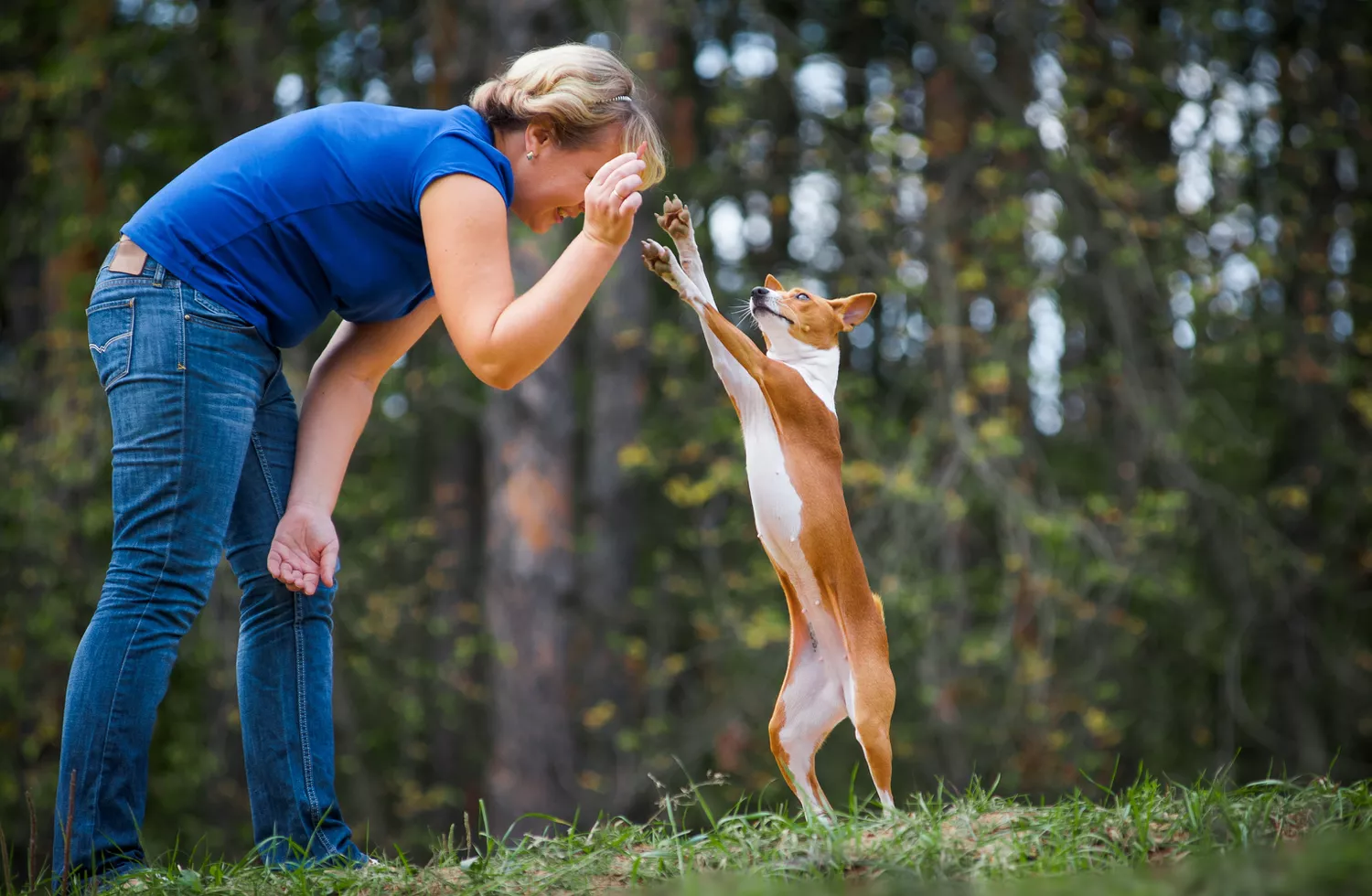
The basenji is a small hound dog breed from central Africa known for its short, smooth coat that neither sheds heavily nor has a strong odor. These dogs feature upright ears, almond-shaped eyes, a wrinkled forehead, and a curled tail over their back. Their build is square and athletic.
Often called the “barkless dog,” basenjis produce yodel-like sounds due to the unique structure of their vocal cords. Although they are relatively quiet, they need plenty of exercise and mental stimulation. Active owners suit them best.
Breed Overview
Group: Hound
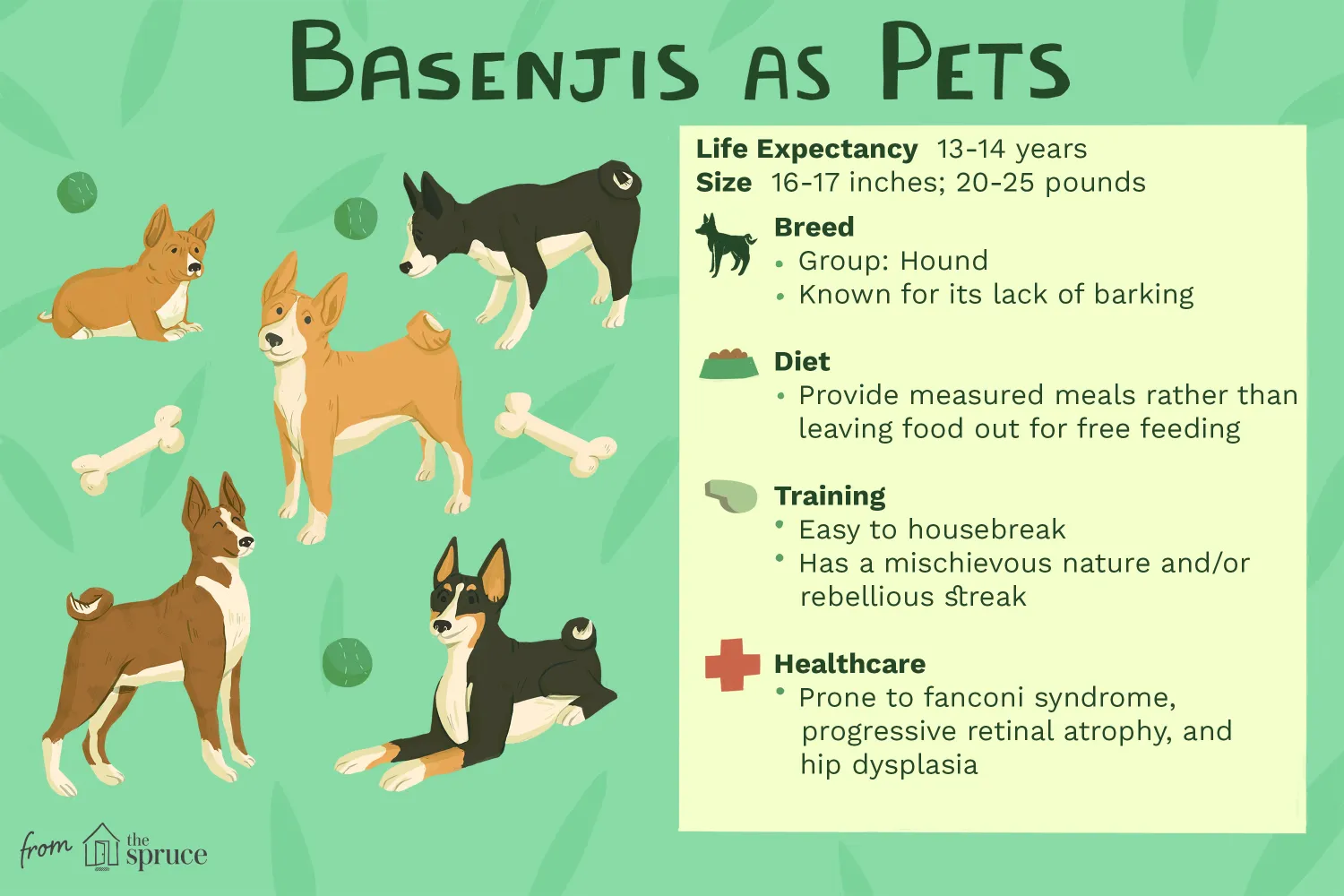
Height: 16 inches (female), 17 inches (male)
Weight: 22 pounds (female), 24 pounds (male)
Coat: Short, smooth
Coat Color: Black and white; black, tan, and white; brindle and white; or red and white with/without brindle markings
Life Span: 13 to 14 years
Temperament: Independent, intelligent, quiet
Hypoallergenic: Yes
Origin: Democratic Republic of the Congo
Characteristics of the Basenji
Basenjis are often described as having a catlike personality, marked by independence and a tendency to be aloof, particularly with strangers. They tend to choose favorite family members and groom themselves like cats. Their high energy and intelligence mean they need stimulation to avoid boredom.
Affection Level | Medium |
Friendliness | Medium |
Kid-Friendly | Medium |
Pet-Friendly | Medium |
Exercise Needs | High |
Playfulness | Medium |
Energy Level | High |
Trainability | Low |
Intelligence | Medium |
Tendency to Bark | Low |
Amount of Shedding | Low |
History of the Basenji
The basenji is an ancient dog breed. In fact, some of the first domesticated dogs resembled the basenji. Its likeness appears on ancient Egyptian artifacts, as well as Babylonian and Mesopotamian artwork.
The ancestors of modern basenjis lived as semi-feral dogs in Africa's remote areas for centuries, which kept the breed largely unchanged by crossbreeding. In the region now known as the Democratic Republic of the Congo, people trained basenjis as hunting dogs, valuing them for their acute vision, keen sense of smell, intelligence, fearlessness, and athleticism.
Basenjis arrived in the United States in the early 1900s, and breeding programs were slow to start. The American Kennel Club officially recognized the breed in 1944, though they remain uncommon in North America.
Basenji Care
Basenjis have minimal grooming needs, but early and consistent training and socialization are vital for developing a well-mannered dog. Be prepared to spend ample time each day exercising your basenji.
Exercise
Basenjis should get at least a couple hours of exercise per day. When they don’t burn their high levels of mental and physical energy, they might engage in destructive behavior, such as unwanted chewing. Long walks, running, hiking, and exuberant play sessions all are ideal ways to exercise a basenji. Plus, they can excel in dog sports, including agility and tracking.
Always keep your basenji on a leash or in a securely fenced area when outside. Their high prey drive may lead them to chase small animals or other perceived prey. Basenjis are skilled fence climbers, especially with chainlink fencing. Ensure your fence is tall and solid enough to contain them.
Grooming
Brush your basenji’s coat weekly with a soft-bristle brush or grooming mitt to remove loose fur and distribute natural oils, maintaining a clean coat. Basenjis usually don't require frequent baths unless particularly dirty. Check their ears weekly for dirt, wax buildup, or abnormalities. Additionally, inspect their nails monthly to determine if trimming is needed, and aim to brush their teeth daily.
Training
Basenjis, while intelligent, can exhibit stubbornness in training due to their independent and occasionally mischievous nature. They might fully understand commands yet elect not to comply.
Start training from an early age to help give your dog a well-mannered foundation and prevent bad habits from forming. Always use positive-reinforcement training, and be consistent in your commands; don’t let bad behavior slide. Also, keep training sessions short and varied, so your dog doesn’t lose interest.
Additionally, start socializing your basenji early. While typically reserved with strangers, they can become more comfortable through positive social experiences. They tend to do moderately well with other dogs but may view smaller household pets, like cats, as prey.
Common Health Problems
Overall, this is a healthy dog breed. But basenjis are still prone to some hereditary health issues1, including:
Hypothyroidism
IPSID, an inflammatory bowel disease
Hip dysplasia
Fanconi syndrome, a kidney disease
Progressive retinal atrophy
Diet and Nutrition
Ensure fresh water is accessible to your basenji at all times. Feed them a quality, nutritionally balanced canine diet. Typically, providing two measured meals per day is recommended, but consult your veterinarian about the appropriate type and quantity. Your dog's needs may vary based on age, size, activity level, and other factors.
Where to Adopt or Buy a Basenji
While basenjis are not a common breed, checking animal shelters and rescue groups for a dog in need of a home is worthwhile. See if you can be placed on a breed waitlist. Expect to pay between $800 to $2,500 for a puppy from a reputable breeder.2
For further information to help connect you with a basenji, check out:
Basenji Club of America
Basenji Rescue and Transport
American Kennel Club Marketplace
Basenji Overview
Pros
Quiet
Low shedder
Good for active owners
Cons
High prey drive
Can be stubborn about training
Becomes bored and potentially destructive easily
More Dog Breeds and Further Research
Before bringing home a basenji, make sure to do thorough research to ensure that the breed is right for your lifestyle. Talk to basenji owners, rescue groups, veterinary professionals, and reputable breeders to learn more. Spend some time around basenjis, too, if possible.
If you’re interested in similar breeds, check out:
Akita
Shiba inu
Rhodesian ridgeback
Podenco
There’s a whole world of potential dog breeds out there—with a little research, you can find the right one to bring home!



