Plott Hound: Dog Breed Characteristics & Care
The Plott hound is a medium-large hound dog breed from the United States with a short, shiny coat that’s typically brindle. The dog’s ears are medium-length and hang down, and their eyes are usually brown or hazel. Their skin lacks the droopiness and folds of many other hound dog breeds, such as the bloodhound.
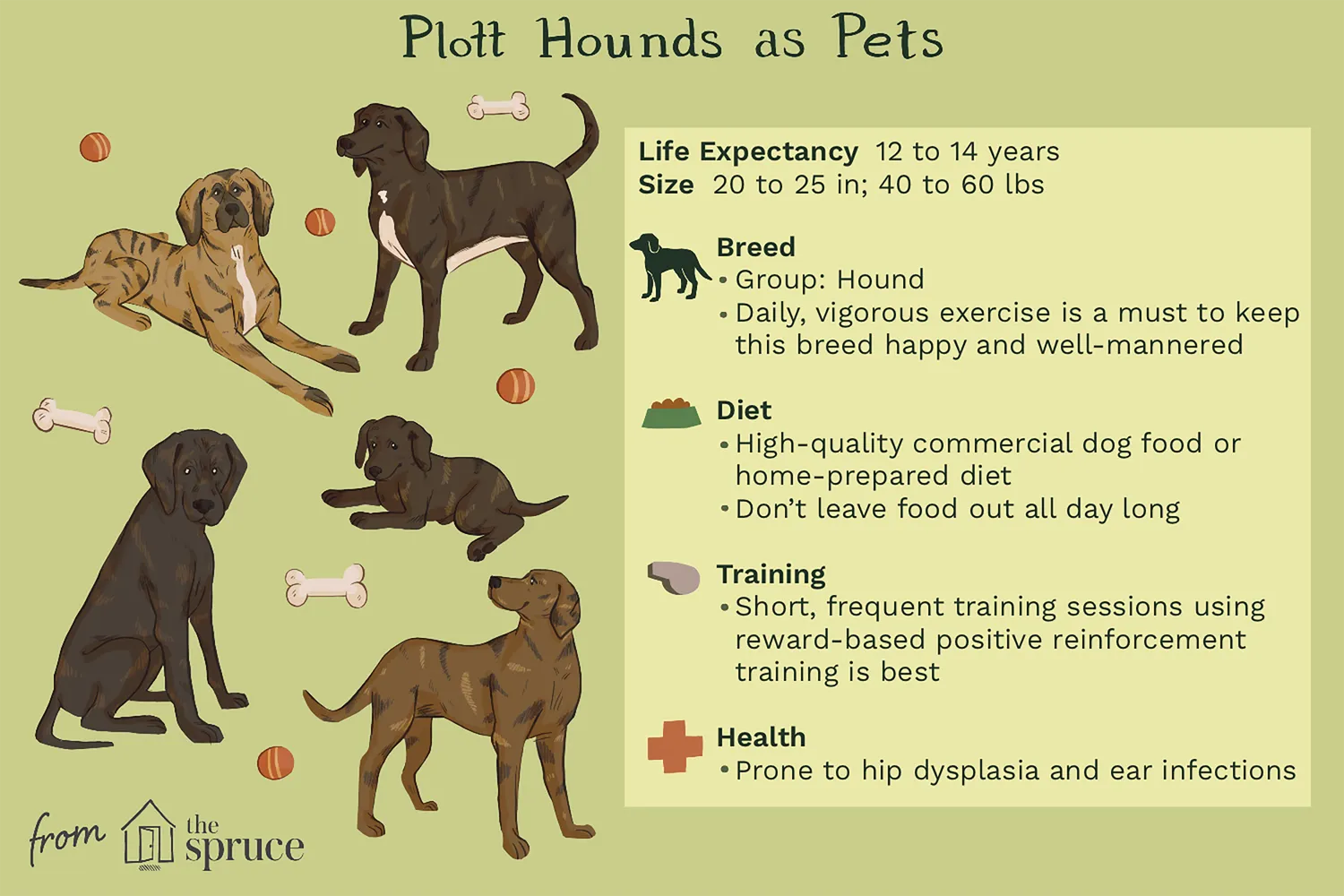
The Plott hound boasts a muscular build with long legs, providing speed and stamina. Known for their loyalty and eagerness to please, they are also dedicated and fearless hunters.
Learn more about the Plott hound, from their care needs to their temperament.
Breed Overview
Group: Hound
Height: 20 to 23 inches (females); 20 to 25 inches (males)
Weight: 40 to 55 pounds (females); 50 to 60 pounds (males)
Coat: Short, smooth
Coat Color: Any shade of brindle, black, buckskin, or maltese with/without black saddle, gray muzzle and jaw, white chest and feet, or brindle trim
Life Span: 12 to 14 years
Temperament: Loyal, alert, active
Hypoallergenic: No
Origin: United States
Characteristics of the Plott Hound
Plott hounds generally have a devoted and protective temperament with their family, though they can be wary of strangers. With proper socialization they can get along with other dogs, but they might view smaller household pets as prey. High energy also helps to shape this breed’s personality, and this dog prefers an active lifestyle.
Affection Level | Medium |
Friendliness | Medium |
Kid-Friendly | Medium |
Pet-Friendly | Medium |
Exercise Needs | High |
Playfulness | High |
Energy Level | High |
Trainability | Medium |
Intelligence | High |
Tendency to Bark | High |
Amount of Shedding | Medium |
History of the Plott Hound
Unlike many hound breeds that have their roots in the United Kingdom, the Plott hound has German ancestors. In the mid-1700s a German named Johannes Plott came to North Carolina with five Hanover hounds, a German dog breed that’s known for its impeccable nose.
The Plott family used these dogs to hunt big game, such as wild boar and bears. They eventually bred their Hanover hounds with local hunting dogs, which allowed the Plott hound to take shape. The breed is known not only for scent hound abilities but also a loud, musical bay that can be heard over a great distance.
As of 1989, the breed is the state dog of North Carolina. The American Kennel Club first recognized it in 2006.
Plott Hound Care
Plott hounds are smart and energetic, which means they need lots of daily activity to be happy and well-adjusted. Their grooming requirements are basic. And they should receive training and socialization from an early age.
Exercise
Plan to give your dog at least one to two hours of vigorous exercise every day. A bored Plott hound without an outlet for their energy might become destructive or engage in other undesirable behaviors.
Engaging in activities like long walks, running, cycling, and play sessions helps expend this breed's energy. Additionally, dog sports such as tracking and agility offer both mental and physical challenges. Puzzle toys also provide essential mental stimulation.
Make sure to keep your Plott hound on a leash or in a securely fenced area when outdoors. The breed’s high prey drive can cause them to take off running after perceived prey, and your dog might not always listen to your recall commands.
Plott hounds require rigorous daily exercise and must be kept on a leash or in a securely fenced area due to their high prey drive, which can lead to them taking off after perceived prey.
Grooming
The Plott hound’s short coat stays relatively clean and only needs basic grooming. Brush weekly with a soft-bristle brush or grooming mitt to remove loose fur and distribute skin oils.
Shedding can increase seasonally, often in the spring and fall, during which you'll have to brush more frequently to keep up with the loose fur.
Bathe your dog every month or so, depending on how dirty they get. But make sure to check their ears at least weekly to see whether they need cleaning, as wax and debris can build up especially in pendant dog ears. Also, dry the ears well whenever they get wet.
In addition, check your dog’s nails roughly once a month to see whether they’re due for a trim. And aim to brush their teeth every day with a canine toothpaste.
Training
Plott hounds can be somewhat stubborn when it comes to training. Begin training and socialization ideally when your dog is a puppy to prevent bad habits from forming.
Always use positive reinforcement training methods, such as treats and praise. Keep training sessions fun and varied to hold your dog’s attention.
Aim to expose your dog to different people, other dogs, and various locations from a young age. Having lots of positive experiences can help to curb wariness of strangers.
Common Health Problems
Overall, the Plott hound is a healthy dog breed. But this dog is still prone to some hereditary health issues1, including:
Hip dysplasia: This is an orthopedic condition that adversely affects the development of the hip joints. It can cause mobility issues and pain, and should be addressed by a veterinarian.
Ear infections: These infections can develop in the outer ear and progress to the inner ear. Symptoms include, but are not limited to: odor from the ear, blood on the ear, a head tilt, and scratching at the ear. There are many causes, and a vet can prescribe the right medication.
Diet and Nutrition
Always have fresh water accessible for your Plott Hound. And feed them a high-quality diet with balanced nutrition. It’s typical to feed two measured meals per day to make sure your dog is getting the proper amount.
Always discuss both the quantity and type of food with your vet to ensure that you’re meeting your dog’s individual needs. Diets can vary based on age, activity level, and other factors.
Where to Adopt or Buy a Plott Hound
For a Plott hound puppy from a responsible breeder, expect to pay around $300 to $700 on average.2
The Plott hound isn’t an exceptionally common dog breed, but it is still possible to find one available for adoption. So check your local animal shelters, and see whether there are any breed-specific rescue groups in your area as well.
For more information to help you find a Plott hound, check out:
American Plott Association
Plott Rescue
Plott Hound Overview
The Plott hound is a high-energy dog that’s best for active families. These playful dogs have a high tendency to bark, and also have a high prey drive, so these are some of the things to consider when determining if this breed is right for you.
Pros of Plott Hounds
Good running companion
Low-maintenance grooming
Generally loyal and loving with family
Cons of Plott Hounds
Requires rigorous daily exercise and mental stimulation
Not suitable for apartments
High prey drive
More Dog Breeds and Further Research
As with any breed, do thorough research on the Plott hound before bringing one home to make sure they will fit with your lifestyle. Talk to Plott hound owners, rescue groups, reputable breeders, and veterinary professionals to learn more.
If you’re interested in similar breeds, check out:
Bluetick Coonhound
Catahoula Leopard Dog
Redbone Coonhound
There’s a whole world of potential dog breeds out there—with a little research, you can find the right one to bring home!



