English Bulldog Guide: Characteristics, History, and Care Essentials
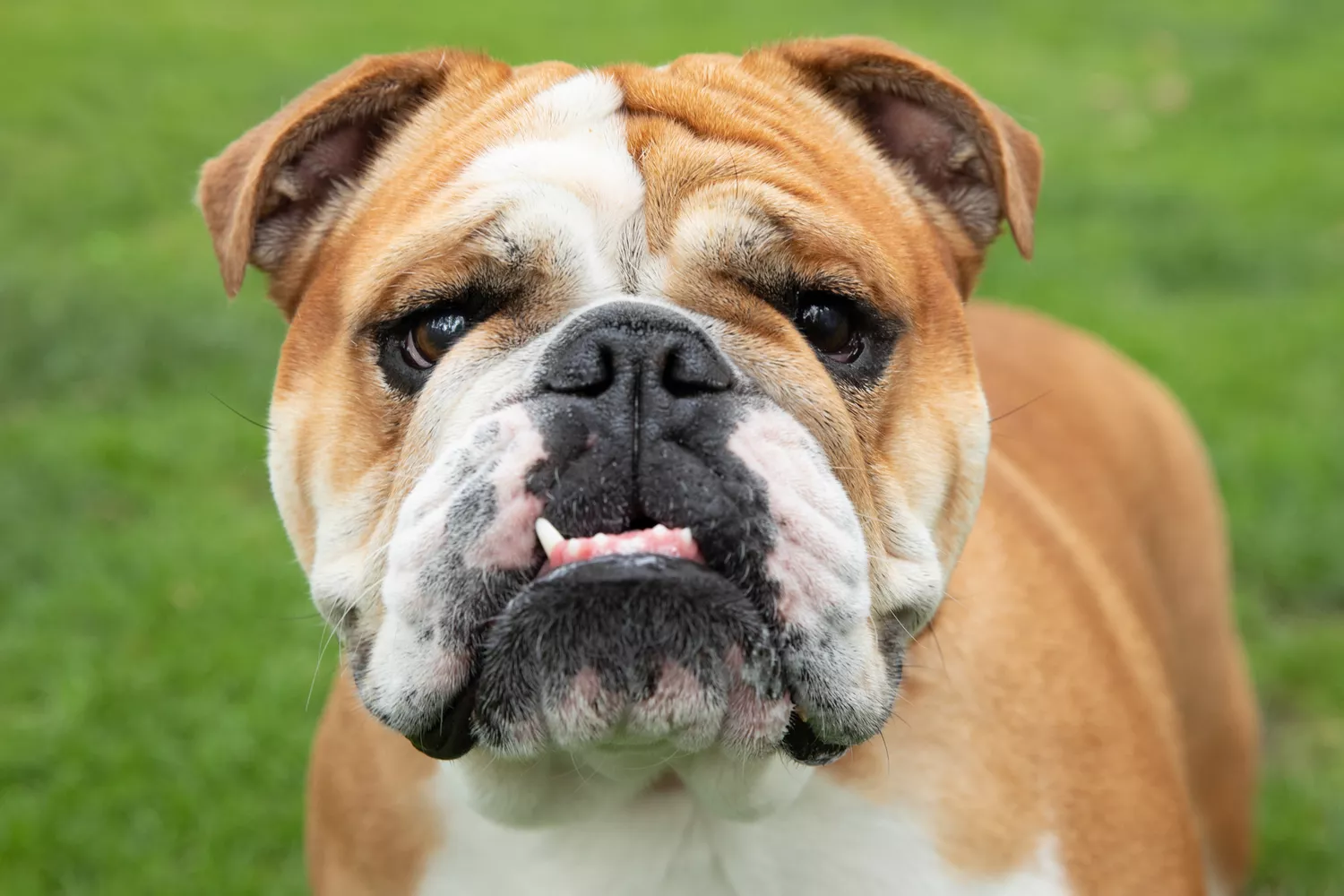
The English bulldog is a medium-sized dog from England known for their trademark gloomy face, wide shoulders, and endearing rolling gait. This is quite possibly one of the most recognized breeds in the world.
Learn more about the bulldog, including their history, temperament, and care needs.
Breed Overview
GROUP: Non-Sporting
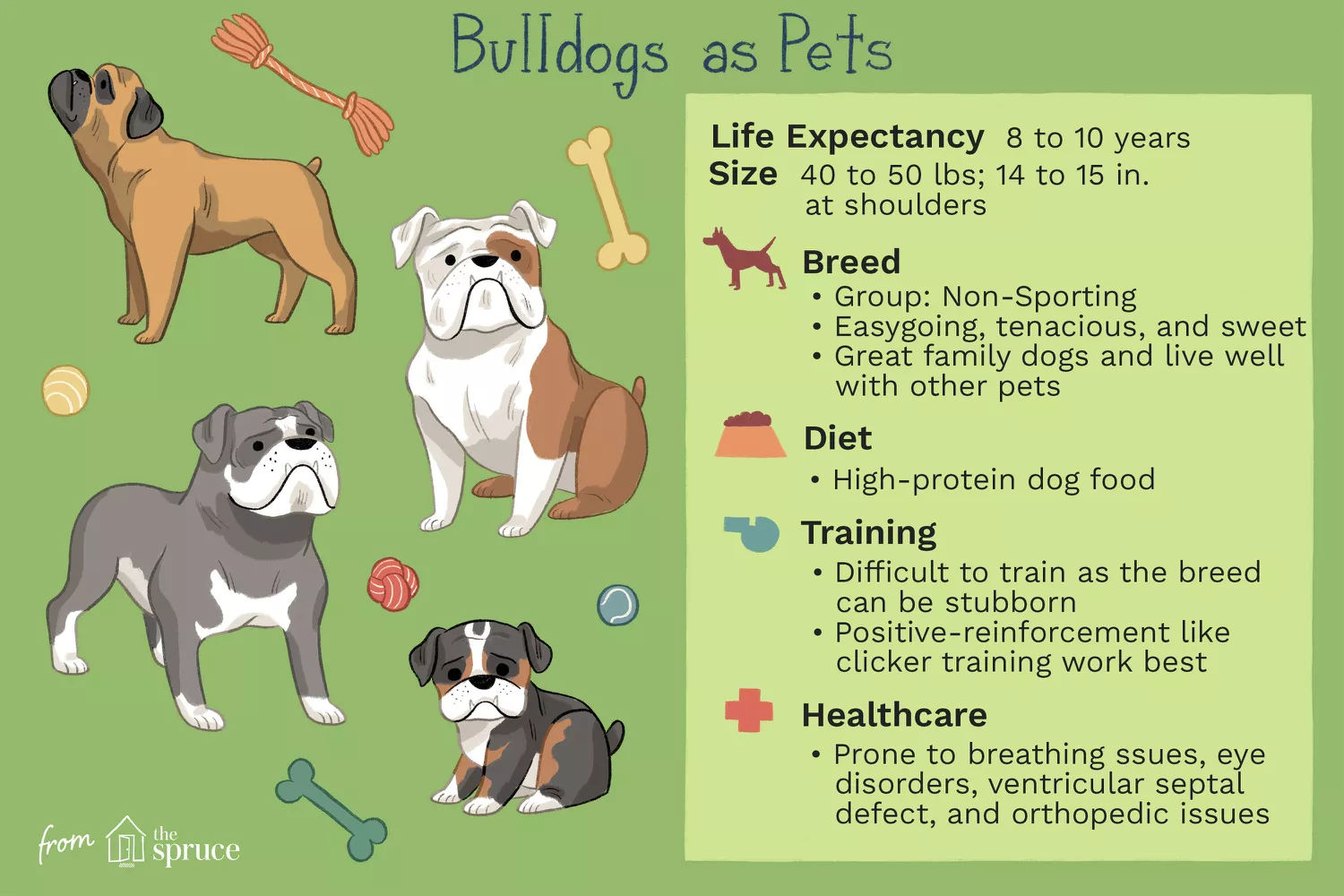
HEIGHT: 14 to 15 inches
WEIGHT: 40 to 50 pounds
COAT: Straight, short, fine-textured, smooth, and glossy
COAT COLOR: Red, white, fawn, or fallow (pale brown), or any combination of these colors, with or without such patterns and markings as brindle, piebald, ticking, black masks, or black tipping
LIFE SPAN: 8 to 10 years
TEMPERAMENT: Willful, friendly, gregarious, docile
HYPOALLERGENIC: No
ORIGIN: England
Characteristics of the Bulldog
Bulldogs are extremely popular in both England and North America. Despite that furrowed brow and grumpy-looking scowl, bulldogs are amiable and sweet-natured companions.
They are great family dogs and they get along with adults and kids alike. Bulldogs usually coexist peacefully with other pets, although some dogs of the same sex might not get along.
Bulldogs live happily in large homes or apartments. Their main concern is that they are inside with the family. They are dignified but funny, courageous but easygoing, and tenacious but sweet—the bulldog is simply like no other breed.
Thanks to their extreme facial construction, bulldogs snort, snuffle, grunt, snore, slobber, and drool.
Affection Level | Medium |
Friendliness | Medium |
Kid-Friendly | High |
Pet-Friendly | Medium |
Exercise Needs | Low |
Playfulness | Low |
Energy Level | Low |
Trainability | Low |
Intelligence | Medium |
Tendency to Bark | Low |
Amount of Shedding | Medium |
History of the Bulldog
In 13th-century England, the bulldog was used as a fighting dog in a gruesome sport known as bullbaiting. During this period, bulldogs looked and acted very differently than they do today. In particular, they were much fiercer—not suitable pets in the least.
After blood sports like bullbaiting were outlawed in England, bulldogs were out of a job, but some bulldog lovers sought to save the breed. With some judicious breeding, the bulldog was toned down into the slow, ambling, sweet, and loving pet we know and love.
Today, bulldogs are often used as mascots for sports teams, further proving just how popular these dogs have become.
Bulldog Care
Bulldogs are a bit more challenging to keep clean than other breeds because of their skin folds and drooling. Also, certain precautions need to be taken to ensure they don’t overexert themselves or overheat because this is a brachycephalic breed.

Exercise
Bulldogs are sometimes labeled as lazy, and while it’s true that bulldogs are one of the more sedate breeds, some enjoy more vigorous activities than just lying on the couch.
Bulldogs like daily walks—no more than 20 to 30 minutes, though—and some crave more brisk exercise like off-leash fetch or romping at the dog park. Some superstar bulldogs even excel at competitive dog sports like obedience and agility.
Swimming is not a good activity for bulldogs, so they shouldn’t be let in the water, and you should keep an eye on them when they’re near a body of water, whether it’s a pool or a lake. Their flat face and heavy body, combined with their short legs, make them poor swimmers.
When exercising and training your bulldog, keep important considerations in mind. The bulldog is extremely susceptible to heatstroke. Take extra precautions with your bulldog to avoid overheating on warm days. Don’t exercise a bulldog outdoors in the heat, and stay indoors with air conditioning if possible. Use fans, shade, and cooling pads, and provide access to cool drinking water.
Grooming
The bulldog’s short coat is easy to care for. Brief brushing sessions two or three times a week will get rid of any loose hairs and leave the coat looking and feeling great.
The deep wrinkles require special care—clean them using a cotton swab or cotton ball dipped in hydrogen peroxide and follow up with an application of cornstarch to keep them dry. You can clean the wrinkles a few times a week, but you can do so more often, such as daily, depending on your dog.
Clean the ears once a week with a pet-safe ear cleanser and trim the nails weekly as well. Bathe your bulldog monthly or when they get dirty. And brush their teeth regularly to help keep their teeth and gums healthy.
Training
Bulldogs can be difficult to train, as the breed can certainly be stubborn, but you only have to look to one of the famous skateboarding or surfing bulldogs to see that they are definitely capable of learning. You just need to find the right motivation.
Positive reinforcement methods like clicker training work best. Use tasty treats, as these dogs are often motivated by food, and keep sessions short to maintain the bulldog’s attention.
Resource guarding and becoming possessive over their food can be a problem. Proper training, and letting your bulldog eat alone if you have other pets, can help prevent or resolve this.
Common Health Problems
It’s no secret that the bulldog is not the healthiest dog breed. Some common health issues seen in bulldogs include:
Breathing problems: Because this breed has brachycephalic syndrome, it is susceptible to stenotic nares and an elongated soft palate.
Skin infections: This breed is susceptible to skin problems, such as pyoderma, which is a bacterial skin infection, and skin fold dermatitis. Check your dog’s skin often to look for signs of irritation or changes in the skin or fur, such as redness or flaky skin, and consult a veterinarian for treatment.
Eye disorders: This breed is prone to keratoconjunctivitis sicca (dry eye), entropion, ectropion, cherry eye, and distichiasis.
Ventricular septal defect: This birth defect results in a hole in the wall separating the lower heart chambers.
Orthopedic disorders: This breed is prone to canine hip dysplasia, shoulder luxation, elbow dysplasia, and patellar luxation.
Ingrown tail: Other names for this problem include screw tail and corkscrew tail. It refers to an inherited condition where the vertebrae form an abnormality that spirals downward, resulting in anal obstruction or other serious challenges.
Underbite: Many bulldogs have underbites, meaning the teeth are misaligned and the lower jaw juts out. This can lead to dental issues.
Due to the multitude of health problems that occur commonly in the breed, vet bills can be quite high throughout the lifetime of a bulldog—a serious consideration when deciding to become a bulldog parent.
Diet and Nutrition
Bulldogs love to eat. Their love of food can cause some to eat more than they should and put on too much weight, which adds stress to their joints. Work with your veterinarian to determine how much your bulldog should be eating daily, and feed measured meals at scheduled times.
Leaving food out all the time (free feeding) or eyeballing the amounts instead of using a measuring cup can cause your dog to eat too much and pack on the pounds.
Where to Adopt or Buy a Bulldog
Many adult bulldogs are available for adoption through various rescue and adoption groups.
Bulldogs are unique in that they nearly always give birth via cesarean section due to the construction of their bodies. This means bulldog puppies can be pricey. Expect to pay an average price of $2,500—or between $1,500 to $4,000—for an English bulldog pup.
If you have your heart set on a bulldog, the best way to locate a breeder or rescue is to contact the following sources:
Bulldog Club of America
Bulldog Rescue Club of America Network
Bulldog Overview
Bulldogs can make loyal companions for individuals and families. They do require a lot of your attention when it comes to keeping them clean, healthy, and at the right weight, but they aren’t complicated pets when it comes to exercise.
Pros of Bulldogs
Full of personality
Can live in any size dwelling, from a small apartment to a big house
Capable of fun agility skills, like skateboarding
Cons of Bulldogs
Prone to health problems, such as breathing issues, eye disorders, and orthopedic problems
Drools, snorts, and passes a lot of gas
Territorial about their food
10 Cute Bulldogs and Facts That Will Win Your Heart
More Dog Breeds and Further Research
Before you decide to bring a bulldog into your home, be sure to do plenty of research. Talk to other bulldog pet parents, reputable breeders, and rescue groups to learn more about day-to-day life with this breed.
If you’re interested in the bulldog, you may like to read about similar breeds. Look into these dogs and compare the pros and cons:
American Bulldog
Bull Terrier
Pug
There’s a whole world of potential dog breeds out there—with a little research, you can find the right one to bring home!



