Pekingese (Peke): Dog Breed Characteristics & Care
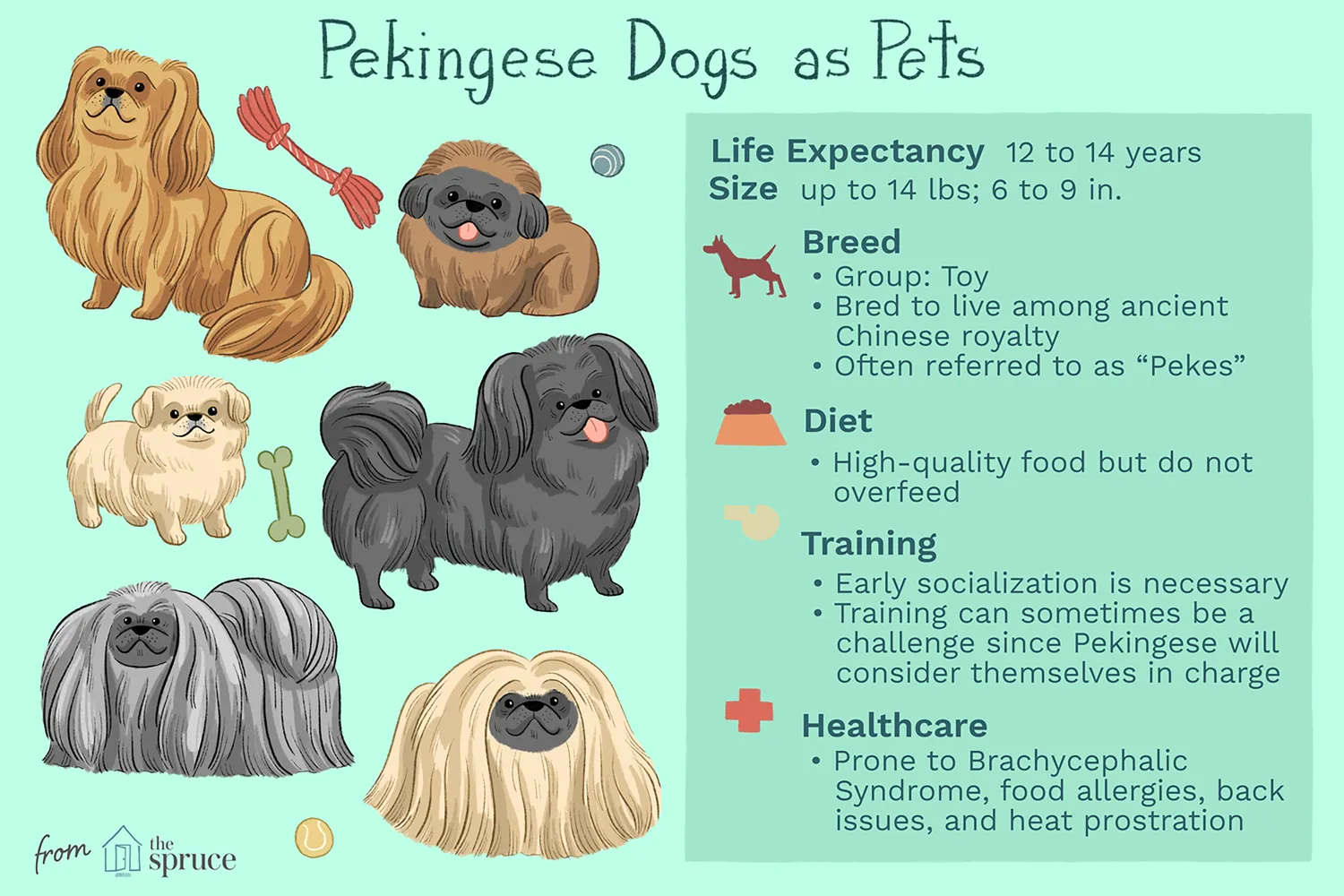
The Pekingese (Peke) is a toy dog breed originally bred to live among ancient Chinese royalty. Primarily known for their low body, short snout, large eyes, and obvious V-shaped facial wrinkle, this compact, stocky dog is also famous for their “lion’s mane" of long hair.
Learn more about the Pekingese’s history, care needs, temperament, and health.
Breed Overview
GROUP: Toy
HEIGHT: 6 to 9 inches
WEIGHT: Up to 14 pounds
COAT: Long, thick double coat
COAT COLOR: Variations of gold, red, or sable, but occasionally colors including black and tan, white, cream, sable, and gray
LIFE SPAN: 12 to 14 years
TEMPERAMENT: Opinionated, aggressive, stubborn, affectionate, intelligent, good-natured
HYPOALLERGENIC: No
ORIGIN: China
Characteristics of the Pekingese
A Pekingese is an independent and alert toy dog and a charming lapdog companion, but this breed is stronger and braver than its compact appearance might suggest.
Among the favorite characteristics of the Pekingese is their friendly, social, and affectionate personality—and the fact that they can appear so dignified, “opinionated,” and walk with a seemingly effortless rolling gait. However, this dog has an assertive side to their personality.
Affection Level | High |
Friendliness | High |
Kid-Friendly | Medium |
Pet-Friendly | Medium |
Exercise Needs | Low |
Playfulness | Medium |
Energy Level | Medium |
Trainability | Low |
Intelligence | High |
Tendency to Bark | Medium |
Amount of Shedding | High |
History of the Pekingese
The Pekingese is one of several compact breeds that were created for the ruling classes of ancient China. In fact, a Chinese legend says the Pekingese was actually created by the Buddha when he shrunk a lion down to the size of a small dog.
Another bit of folklore states that in order for a lion to wed his beloved—who happened to be a marmoset, or type of monkey—he had to beg the patron saint of animals, Ah Chu, to reduce him to the size of a pigmy while still retaining the heart and character of a lion. The offspring of that union was said to be the dog of Fu Lin, or the Lion Dog of China.
Throughout history, the Pekingese have been referred to as “lion dogs,” “sun dogs,” and even “sleeve dogs,” since they were often toted around in the voluminous sleeves worn by members of the imperial household.
Because of the ancient history and folklore surrounding the breed, its true beginnings are still unknown, but experts believe that the Pekingese was likely bred down to toy size from a larger dog by Chinese emperors. The earliest-known record of the breed can be traced back to the 8th-century Tang Dynasty. Their humans have historically known these regal, sophisticated dogs to be eternally loyal and walk with a dignified gait.
Chinese nobles were known to breed flat-faced lapdogs for many centuries, including Pekes as well as the shih tzu and pug. The original Pekingese were kept completely pure and considered sacred—stealing one of these coveted regal dogs would result in a punishment by death. Treated as royalty, the dogs even had palace servants to tend to their every need—which may be why today’s Pekingese can often have an independent, stubborn, and self-important demeanor.
It wasn’t until the 1860s when Pekes first made their debut in the western half of the world. When British troops invaded Peking during the Opium Wars, the royal family opted to kill their Pekes when the Brits stormed the emperor’s summer palace. The British intended to loot the palace and set it on fire, and the royal family didn’t want to see their beloved pets fall into enemy hands.
However, when a British captain discovered the emperor’s aunt dead by suicide, her five surviving Pekingese dogs were returned to England as a gift for Queen Victoria. The breed quickly grew in popularity among the Queen's subjects, and ownership of a Pekingese dog became a sign of privilege and wealth across the country.
In 1894, a dog named Pekin Peter was reportedly the first Pekingese to be exhibited at a British dog show; at the time, the breed was often called a Chinese pug or a Pekingese spaniel.
As the year 1900 approached, Pekes were starting to arrive in America—they were originally registered by the American Kennel Club (AKC) in 1906, and the Pekingese Club of America first became an AKC member in 1909. The breed made headlines a few years later when a Pekingese was one of only three dogs to survive the sinking of the Titanic.
Pekingese Care
A Pekingese is always very alert and aware of surroundings, and can make a great watchdog. Early socialization will also be necessary in order to ensure that your Peke will get along with other pets in the household, as this is a breed that prefers to be surrounded by the company of humans (and other Pekingese).
Exercise
This breed does enjoy participating in games and canine sports, but only at its own pace. A Peke's walks should be kept at a leisurely pace to prevent overheating or difficulty breathing. Plan on a couple of walks a day that add up to about 30 to 60 minutes total.
Because of the Peke's thick coat and flat face, they prefer cooler temperatures. Heat prostration can be fatal for this breed, so it’s crucial that the Pekingese is kept in well-ventilated, air-conditioned rooms when living in warmer climates. Walks and outdoor playtime should be kept very limited when it’s excessively hot.
Pekes are low to the ground and have a hard time with frequent climbing on furniture and steps, which is why it's always a good idea to invest in ramps to help your dog maneuver around the home.
Grooming
A Peke's coat requires a fair amount of maintenance. Longest at the neck and shoulders, the thick double coat of the Pekingese will require at least one lengthier weekly brushing to help remove hairs and prevent matting.
Your Peke will also appreciate an occasional bath. You can also choose to keep their Peke’s coat trimmed short to ease the burden of grooming. Pekingese do shed seasonally, and mats or tangles should be worked out gently.
As with every dog, trim nails regularly, stay on top of dental care by frequently brushing teeth, and consistently clean your pet's ears to avoid infections.
Training
Because Pekes lived in palaces for centuries, they can be serenely independent, just like the emperors who owned them. As a result, training these dogs can sometimes be a challenge.
Many Pekingese will consider themselves in charge, so you will have to persuade them to follow commands.
Not surprisingly, this breed responds best to positive reinforcement. Harsh approaches to discipline can lead to a Peke developing defensive or even aggressive behavior.
Common Health Problems
Though the Pekingese tends to be a healthy, sturdy breed, there are certain health issues associated with this dog, including the following conditions:
Brachycephalic syndrome: This condition causes breathing issues and possibly snoring.
Corneal abrasions: Because a Pekingese doesn't have a long muzzle, there’s no natural barrier to protect their round, bulging eyes, so the breed is susceptible to eye issues like corneal abrasions.
Skin dermatitis: The excessive amount of wrinkling on the face can cause problems with skin fold dermatitis as well as other irritations and infections, so the folds should always be kept clean and dry.
Intervertebral disc disease: In addition to a slipped disc from moving in the wrong direction when jumping, Pekes can develop IDD, a condition where the cushioning gel in the spinal disc deteriorates and causes the spine to compress.
Liver shunt: Pekes are prone to liver shunt, a disorder where blood vessels bypass the liver, preventing the proper flushing of toxins and nutrient absorption to occur.
Diet and Nutrition
The Pekingese breed is associated with some minor health problems that revolve around food allergies to ingredients like corn, wheat, filler, ash, and sometimes chicken. This flat-faced breed may also suffer gastrointestinal problems because they inhale a lot of air while eating. However, Pekingese should perform well with any high-quality dog food.
As a less active breed, Pekinese can be susceptible to weight gain, so it’s important to ensure they are not overfed and aren’t offered too many treats.
Fresh, cool water should always be available, particularly because this breed does not tolerate heat well.
Where to Adopt or Buy a Pekingese
Pekingese is a popular dog breed. It's always best to check your local animal shelters and breed-specific rescue groups for a Peke in need of a home.
If you choose to work with a reputable breeder, the costs can vary widely, but expect to pay around $1,500 but more likely $4,000 to $5,000 per Peke pup.
Here are a few resources to help you start your search.
Pekingese Rescue Network
Pekingese Rescue Me!
AKC Marketplace
Pekingese Overview
The adorable little Pekingese is packed with personality and is a lot of fun. This is the perfect breed if you’re looking for a friendly lapdog, but these dogs can be challenging to train and you need to take proper care of them to avoid certain health concerns.
Pros of Pekingese
Charming and social lapdog
Great choice for apartments
Vigilant, vocal mini guard dog
Cons of Pekingese
Not great with kids
Strong-willed and difficult to train
Prone to breathing issues
12 Best Low Energy Small Dogs
More Dog Breeds and Further Research
When determining if the Pekingese is the right dog for you, be sure to research all aspects of the breed and consult other Peke owners, breeders, and rescue groups to learn more. Check out these other similar dog breeds:
Japanese Chin
Shih Tzu
Chihuahua
Pug
There’s a whole world of potential dog breeds out there—with a little research, you can find the right one to bring home!



