Cherry Eye in Dogs
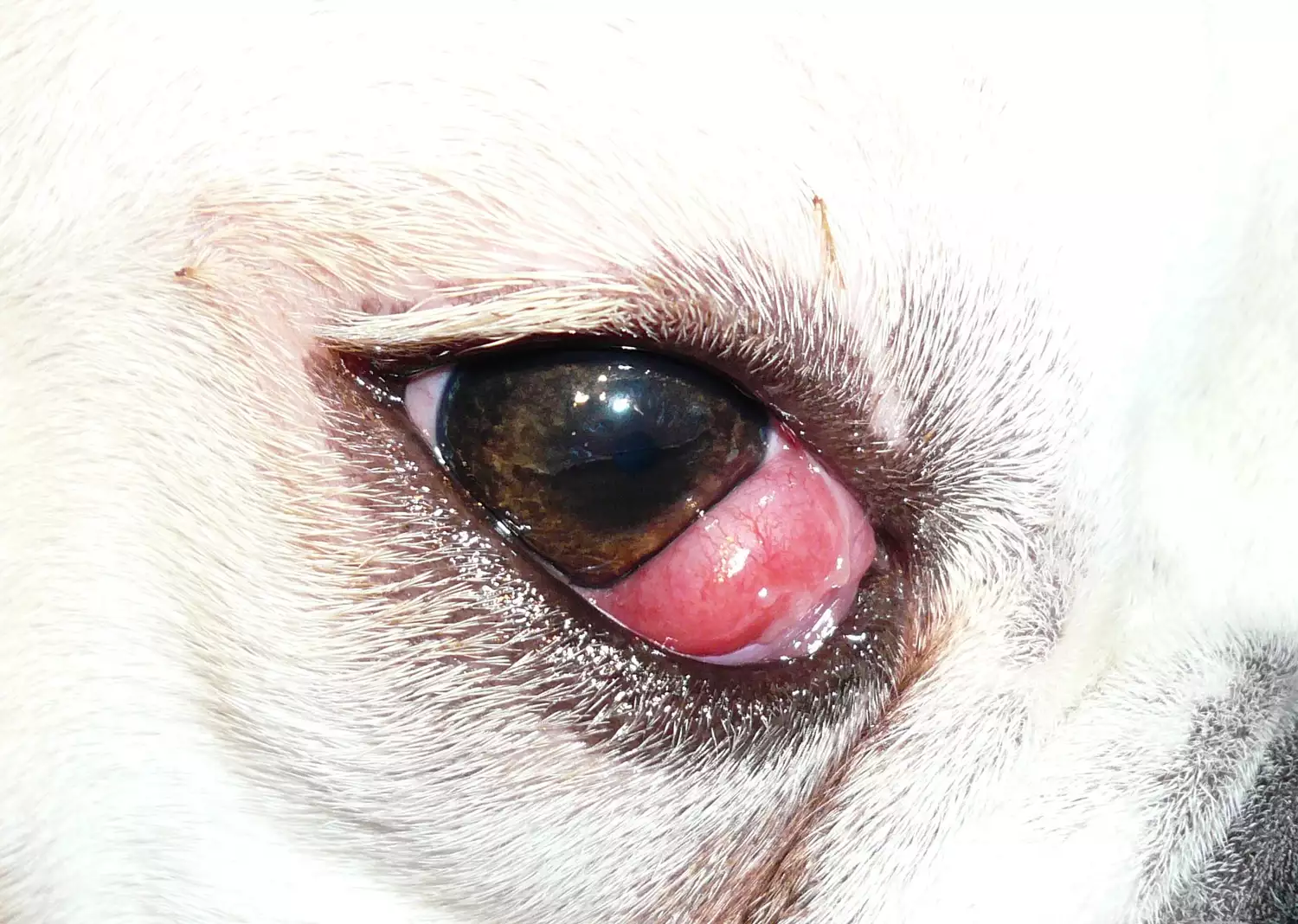
If you notice a pink or red growth in the corner of your dog's eye, it is likely the result of a prolapsed gland, more commonly known as cherry eye. Cherry eye is a condition in which the ligaments that keep the tear gland under the eyelid start to break down, and the gland prolapses or "pops out."
Cherry eye isn't always painful, but your dog may exhibit symptoms of discomfort that could worsen the condition. For example, dry eye is symptomatic of cherry eye and, if untreated, could lead to permanent vision impairment. Surgery is the only effective cure for cherry eye. The exact cause is unknown, but certain breeds are more prone to the condition due to their genetic makeup. Breeds with flat faces, known as brachycephalic breeds, are predisposed to cherry eye. Especially affected breeds include American cocker spaniels, shih tzus, and beagles.
What Is Cherry Eye?
Cherry eye is the result of a prolapsed nictitating membrane, also known as the third eyelid. This membrane serves as a protective layer for your dog's eye and contains a tear gland. The tear gland is kept in place by ligaments, but when those ligaments break down, the gland can prolapse and "pop out," creating the appearance of a red, cherry-like growth in the corner of your dog's eye. Cherry eye can come and go, or it can be constant in your dog's eye. It can develop in one or both eyes, and many dogs with a cherry eye in one eye will develop it in the other.
Symptoms of Cherry Eye in Dogs
Cherry eye presents as a pink or red mass that grows at the corner of the eye. Typically, a cherry eye will be easily identifiable, even without other symptoms. Still, your dog may exhibit signs of discomfort from cherry eye, and its pain level may indicate increasing severity of the mass.
Symptoms
Pink or red bulge in eye
Pawing or rubbing at the eye
Unable to close eye
Dry eye
Pink or Red Bulge in Eye
The clearest indicator of a prolapsed tear gland is the presence of a bulge in the corner of your dog's eye. Even if uncomfortable symptoms don't appear to accompany the mass, pay a visit to your vet to discuss treatment options.
Pawing or Rubbing at the Eyes
Cherry eye might cause your dog to paw at the growth site. Usually, this is a result of itchiness rather than pain. Prolonged eye-scratching is dangerous because your dog may inadvertently damage its cornea.
Unable to Close the Eye
The growth in your dog's eye may be large enough to make it so that your dog cannot fully close its eye. This is uncomfortable for your dog, and it can cause or exacerbate dry eye.
Dry Eye
The inflamed third eyelid inhibits tear production, which causes inadequate lubrication in your dog's eye. The diminished tear production resulting from the prolapsed tear gland will often lead to dry eye. If untreated, dry eye can permanently impair your dog's vision.
What Causes Cherry Eye in Dogs?
The exact cause of cherry eye in dogs is not fully understood; however, it is largely attributed to weak connective tissue in the eye. Some dog breeds are more prone to developing cherry eye than others.
Genetics
Cherry eye is more common in some breeds than others. American cocker spaniels, shih tzus, beagles, Lhasa apsos, Pekingese, Maltese, basset hounds, Rottweilers, Neapolitan mastiffs, shar-peis, Boston terriers, Saint Bernards, and English bulldogs have a higher likelihood of developing cherry eye than other breeds. It is suspected that some dog breeds have weak connective tissue, making them more vulnerable to prolapse.
Age
While cherry eye can develop at any age, it's more prevalent in dogs under 2 years old.
Other Infection
If another infection is compromising the health of your dog's eye, cherry eye may develop more readily.
How Do Vets Diagnose Cherry Eye in Dogs?
If you suspect that your dog has cherry eye, your vet can examine your dog's eye to determine if a prolapsed gland has occurred. Fortunately, the diagnosis of cherry eye is straightforward, as the growth is easily identifiable.
Treatment & Prevention
Surgery is the only curable therapy for cherry eye, but your vet may begin treatment by prescribing topical anti-inflammatories or suggesting at-home remedies. Non-surgical treatment may relieve your dog of some discomfort but usually won't be enough to prevent a re-prolapse. Surgery for cherry eye will be performed by an ophthalmologist and usually involves permanently suturing the prolapsed gland back down below the eyelid. If your dog has surgery to replace the tear gland and it re-prolapses, your vet may recommend removing the affected gland.
You can only pursue surgery if the tear gland is actively prolapsed. If your dog's cherry eye comes and goes, your vet may choose to wait until it becomes more permanent before performing surgery.
After surgery, your vet will monitor your dog's eye for normal tear production to ensure the sutured or replaced gland is still functioning.
Cherry eye in dogs isn't preventable. The best way to protect your dog from discomfort and complications of cherry eye is to regularly check its eyes and monitor for signs of the development of a mass.
Prognosis for Dogs With Cherry Eye
In the weeks following surgery, your dog will likely recover fully and the gland will return to normal function. It’s normal for the eye to appear inflamed for one to two weeks while healing, and can be relieved with topical and oral antibiotics. Your vet will examine your dog's eye in the weeks following surgery and will likely continue to monitor the eye during all appointments going forward.
If your dog's cherry eye goes untreated, serious complications may occur. Untreated cherry eye can lead to conjunctivitis, ocular discharge, and dry eye. Chronic dry eye can lead to serious infection which could result in a ruptured eye. Even if cherry eye doesn't appear to be bothering your dog, it's essential to treat it quickly before it worsens.



