Savannah Cat: Breed Profile, Characteristics & Care
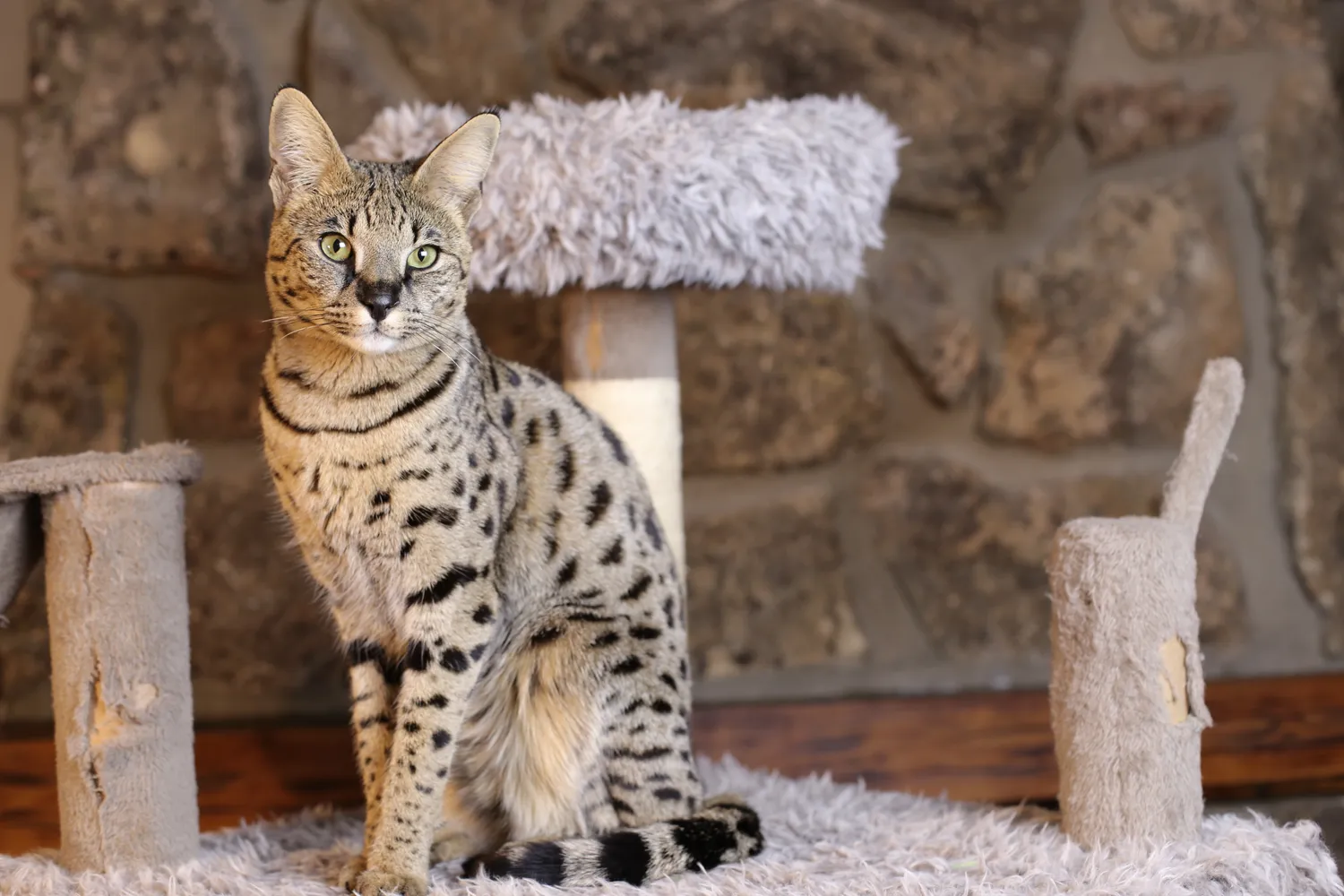
The Savannah cat is a hybrid cat breed a cross between the African serval and a domestic cat. Named after the serval's habitat, their beauty reflects the splendor of Africa's golden plains. Like their wild cousin, the Savannah cat is tall and lean, with long legs, big ears, and a spotted coat.
Discover more about living with this highly active and intelligent cat breed and check if they're legal to own in the United States.
Breed Overview
Personality: Affectionate and social with owners, pets, and older children; intelligent and trainable
Weight: 12 to 25 pounds (depending on the generation)
Length: 20 to 22 inches (depending on the generation)
Coat Length: Short to medium hair
Coat Color: Tawny, black/brown spotted tabby, black/silver spotted tabby, or black smoke with a solid or tabby pattern
Coat Patterns: Spotted, striped, or solid
Eye Color: Amber or green
Lifespan: Up to 20 years
Hypoallergenic: No
Origin: Africa (serval), varied locations (domestic cat)
Savannah Cat Characteristics
The Savannah cat is an excellent companion in the right home. Sociable with people and pets, they are highly intelligent and always greet their owners with friendly head bumps. A Savannah cat may follow their owner around like a dog, often described as "Velcro cats." They aren't cats that sleep all day or cuddle on your lap; they need a home that provides plenty of exercise and playtime.
Savannahs generally get along well with other cats and dogs, and they are good with older children (toddlers might be overwhelmed by their large, playful nature). When buying a Savannah cat, choose a breeder who socializes the kittens in a home with pets and kids, ensuring they are not shy or fearful of these interactions.
Affection Level | High |
Friendliness | High |
Kid-Friendly | High |
Pet-Friendly | High |
Exercise Needs | High |
Playfulness | High |
Energy Level | High |
Intelligence | High |
Tendency to Vocalize | Medium |
Amount of Shedding | Medium |
History of the Savannah Cat
The first known Savannah cat was born in 1986, and fittingly, the kitten and the breed were called Savannah. The cat seemed to have the perfect combination of wild and domestic traits from the parents.
In the early 1990s, Patrick Kelley, founder of Savannahcat.com, heard about the breed and enlisted the help of Joyce Sroufe, founder of A1Savannahs, to help him develop the Savannah breed into what we know today. Thanks to their efforts, The International Cat Association recognized the Savannah as a breed in 2001.
Savannah Cat Care
Savannah cats require significant exercise and attention, far more than typical house cats. They can even be trained using clickers and leashes.
Exercise
The long legs and athletic grace of Savannah cats make them keen jumpers, often landing on high surfaces. Provide a tall cat tree or other safe climbing opportunities. Expect your Savannah to target high places such as cabinet tops, shelves, and refrigerators. It's a quirk many owners come to love; ensure no breakable items or hazards are in your cat's path.
Similar to servals, many Savannahs love playing in the water. Fill a kiddie pool and allow the cat to explore at their pace (do not put the cat directly into the pool). An enclosed area around the pool provides outdoor fun without escape risks. Ensure shade on hot days, as you may also find them exploring bathtubs or showers.
In addition, Savannah cats will often accept wearing a harness and accompanying their owners on outdoor walks. Provide appropriate outlets for scratching to save your furniture, like scratching posts.
Grooming
The Savannah cat has a short coat that's easy to maintain. Brush your cat weekly to prevent hairballs and trim their nails regularly to dull sharp tips for indoor living. Brush your cat's teeth frequently and schedule veterinary cleanings.
Training
Savannah cats are often described as dog-like for their love of playing fetch and trainability. You can clicker-train them as you would a dog to do tricks and obey commands.
Common Health Problems
Savannah cats are generally healthy and should be given the same veterinary preventative care visits and treatments as other domestic cats. However, they are more prone to hypertrophic cardiomyopathy than fully domestic cats. This heart condition causes thickening of the heart's left ventricle, which can lead to heart failure.
Hybrid male sterility is expected until the F4 generation.
Appearance
The Savannah cat is tall and lean with long legs and a long neck. Its parent breed, the serval, is known as the "giraffe cat" due to these traits. Their large ears are positioned high and more rounded than those of most domestic cats.
The Savannah's coat varies from light tawny to smoky black, typically with black spotted patterns and occasional bars. Some Savannah cats might be solid black without spots.
Diet and Nutrition
Savannah cats have similar nutritional requirements to domestic cats. Experts often recommend a mix of commercial dry food or wet food and raw or cooked meat. Some experts feel the breed needs more taurine and may recommend a taurine supplement. Provide access to fresh, clean water at all times.
Talk to your vet for nutritional guidance for your specific cat, and track their food intake and weight to prevent obesity and other health problems.
Where to Adopt or Buy a Savannah Cat
You might find a purebred Savannah cat through a breeder, but these cats are a rare find. If you would rather adopt from a rescue organization, check out the Savannah Cat Rescue.
Types of Savannah Cat
Savannah cat types are expressed as filial generations, indicating how many generations a cat is from the serval parent, ranging from F1 to F8.
Savannah cat has one serval and one domestic cat parent, making it 50% serval. These cats are the largest and least affectionate, being closer to wild animals than later generations. They weigh up to 25 pounds and stand about 16 to 18 inches tall. They're less suitable for households with small pets or kids and are the most expensive (up to $20,000).
An F2 Savannah has a serval grandparent, similar in size and temperament to an F1 but slightly more affectionate and less wary of new interactions. They’re more suitable for family life and cost less (up to $11,000).
An F3 cat has a serval great-grandparent, weighing up to 20 pounds and around 17 inches in height. They still look wild, but their personalities are tamer and even more affectionate than F2s.
An F4 Savannah cat's size and temperament are more predictable. At this level, at least one great-great-grandparent was a serval.
A Stud Book Traditional Savannah cat is at least four generations removed from its serval ancestor and has only Savannah cat parents for at least three generations, with no additional outbreeding with domestic cats.
Males usually remain infertile until the sixth generation from the serval ancestor. Females are typically fertile from the first generation.
Savannah Cat Overview
The Savannah cat is a fantastic family pet with wild appeal. They are beautiful, striking animals that are large, playful, and enjoy interacting with kids and other pets. However, acquiring a Savannah cat isn't easy due to their scarce breeders and high price. Additionally, state laws may ban them or require ownership permits.
Pros of the Savannah Cat
Affectionate and social with pets and children
Highly intelligent and trainable
Extremely loyal to their owners
Cons of the Savannah Cat
Relatively rare and expensive
Prone to heart disease
Banned in some states
Not a good fit for first-time owners or those looking for a lazy cat
More Cat Breeds and Further Research
If you’re interested in similar breeds, check out:
Ocicat
Toyger
Egyptian Mau
Otherwise, check out all of our other cat breed profiles.



