Turkish Van: Cat Breed Characteristics and Care
The Turkish van is a rugged, large-bodied cat that originated in the Middle East. It is all-white with colored markings on the face and tail only. This type of color pattern is so distinctive that when it appears in other cat breeds it is often called a “van” pattern.
These active and athletic cats enjoy climbing, jumping, and exploring. While they occasionally seek cuddles, Turkish Vans typically roam the house, following their owners in search of adventure.
A distinctive trait of the Turkish Van is its affection for water, earning it the nickname "swimming cat."1
Breed Overview
Personality: Affectionate, energetic, adventurous, and playful
Weight: Up to 20 pounds
Length: Up to 30 inches
Coat Length: Medium-length hair
Coat Colors: White with colored markings on the head and tail (red, black, blue, tabby, tortoiseshell, or any other color other than Himalayan pattern and colors)
Coat Patterns: Bicolor
Eye Color: Amber, blue, or odd-eyed (each eye a different color)
Lifespan: Up to 17 years
Hypoallergenic: No
Origin: Middle East
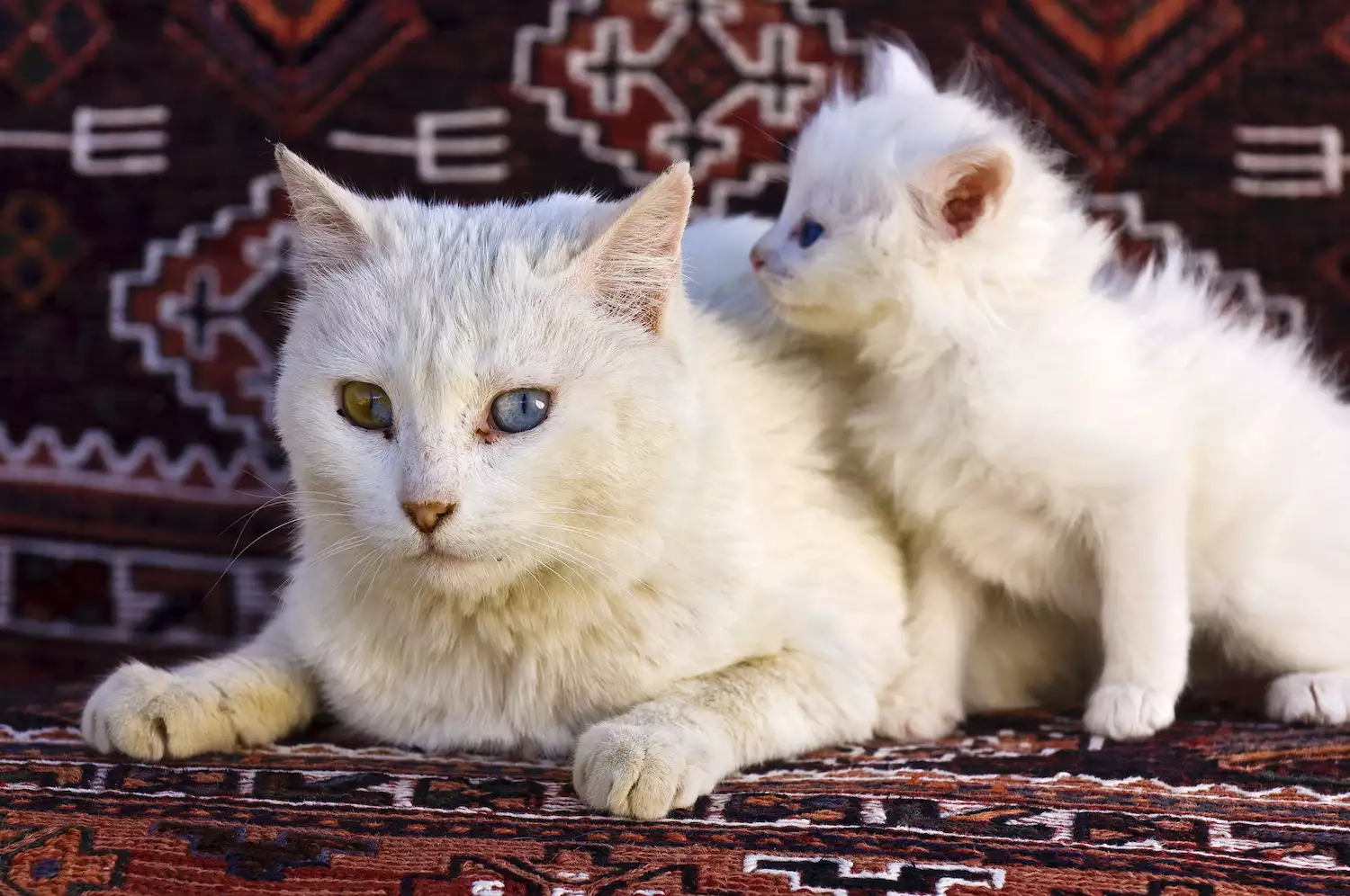
Turkish Van Cat Characteristics
Turkish Van cats are friendly, outgoing, and affectionate, particularly with their human families. Their balanced temperament allows them to get along well with other cats, dogs, and respectful children.
These mostly white, large cats mature at the age of three to five years. Born with their distinctive “van” coloration on the ears, head, and tail, their coats are silky and medium-length.
Affection Level | High |
Friendliness | High |
Kid-Friendly | High |
Pet-Friendly | High |
Exercise Needs | High |
Playfulness | High |
Energy Level | High |
Intelligence | High |
Tendency to Vocalize | Medium |
Amount of Shedding | Medium |
History of the Turkish Van Cat
The Turkish Van is an ancient breed, rare even within its native regions of central and southwest Asia, now known as Iran, Iraq, Turkey, and parts of the former Soviet Union. The breed derives its name from Lake Van and the city of Van in Turkey, where the original cats were known as "Van cats."
The first Turkish Van arrived in England in 1955. Initially known simply as the Turkish Cat, the breed was later distinguished as the Turkish Van, avoiding confusion with the Turkish Angora.
The Turkish Van was introduced to the United States in 1982 and is now recognized by the Cat Fanciers' Association and The International Cat Association.
Turkish Van Cat Care
The Turkish Van sheds heavily seasonally, revealing a shorter summer coat that helps it stay cool. Increased brushing may be necessary during shedding periods, but a weekly routine is usually sufficient to keep the coat sleek and soft throughout the year. Its unique texture resists matting naturally.
Turkish Van cats enjoy playing, climbing, and exploring. Offer ample climbing and perching opportunities, and invest in interactive toys like feather wands and puzzles. Many enjoy retrieving toys such as small balls and toy mice.
Unlike most cats, Turkish Vans love water play. Consider supervised sessions in the sink or bathtub to indulge this interest.
Common Health Problems
Turkish Vans are large cats, maturing slowly, typically taking three to five years to reach their full weight of up to 20 pounds. Generally, they are a healthy and long-lived breed.
Solid white Vans, known as Turkish Vankedisi, are prone to deafness and are not considered show quality. Responsible breeders avoid breeding them.
Appearance
The Turkish Van's semi-long, soft coat is often compared to cashmere. It adapts seasonally due to development in a region with extreme temperatures.
To keep warm, the winter coat becomes longer and thicker, often with tufts between the toes and feathering on the ears, legs, feet, and belly, while the facial hair remains short. Mature Turkish Vans have a full neck ruff and bushy tail.
Although the Turkish van and Turkish angora look similar, they are distinct breeds that developed independently of one another. The Turkish angora is smaller and finer-boned than the Turkish van and comes in more colors and patterns.
Diet and Nutrition
As large cats, it's crucial not to overfeed Turkish Vans. Maintaining a lean physique is essential to preventing health problems. Their high activity level allows for free feeding without necessarily gaining weight. Consult your veterinarian or breeder for specific dietary recommendations.1
Where to Adopt or Buy a Turkish Van Cat
If you’re thinking about buying a Turkish van kitten, a great place to meet local breeders is a cat show. Cat shows are a fun place to see many different cat breeds all in one place.
Some Turkish Vans or mixes, often adults, may be in rescues. Explore local cat-specific rescue groups or shelters. You might find a rescue cat that resembles a Turkish Van in appearance and behavior.
Breeders typically keep kittens with their mother for 12 to 16 weeks, after which they are ready for adoption.
Turkish Van Cat Overview
The Turkish Van is ideal for active families who enjoy interactive pets. This large, silky-haired cat is playful, even enjoying swimming or water play. Though not typically a lap cat, it is affectionate, welcoming pets and occasional handling. This breed's medium-length coat requires minimal brushing, apart from the spring shedding, and it generally remains healthy without major predisposed health issues.
Pros
Affectionate and friendly
Playful and engaging
Gets along well with other pets
Cons
Generally not a lap cat
Moderate shedding
Doesn’t do well if left alone for long periods of time
22 Bizarre Cat Behaviors Explained: Unravel the Mystery of Your Feline
More Cat Breeds and Further Research
If you’re interested in similar breeds, check out:
Maine Coon
Norwegian Forest Cat
Siberian Cat
Otherwise, check out all of our other cat breed profiles.



