4 Week Old Kitten Feeding Schedule: From Birth to Eight Weeks
In their first year, kittens grow rapidly, much like human babies. They need plenty of food to support this fast development. Both the quality and quantity of their food affect their growth and health.
Adhering to a consistent feeding routine allows you to monitor your kitten's progress. This involves tracking their weight, observing their energy levels, coat condition, and overall demeanor. Adjustments to the feeding schedule may be necessary as the kitten grows, ensuring their evolving nutritional needs are met.
A structured feeding schedule provides a framework for monitoring growth and fosters healthy eating habits. It discourages overeating or underfeeding and promotes a balanced diet for long-term health. Additionally, a regular feeding routine helps establish a bond between you and your kitten as they learn to associate meal times with your presence and care.
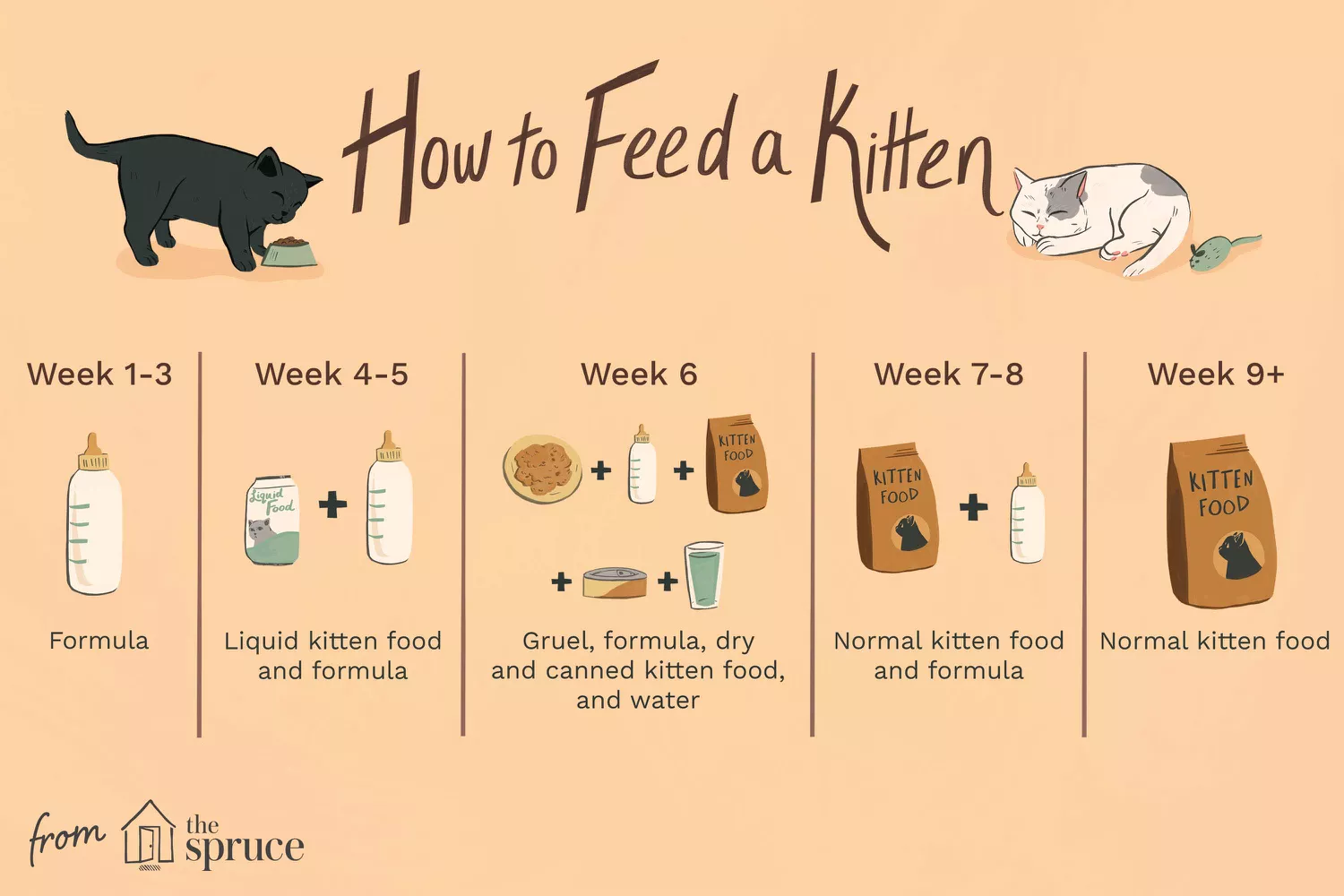
Since a kitten's needs change with age, we included an overview for the first eight weeks of their life.
Week One Feeding Schedule
A kitten typically weighs about 3 to 3.7 oz. at birth but will gain weight rapidly from nursing. For the first several weeks of life, a newborn kitten will depend entirely on its mother to provide it with food.
Its eyes and ears are sealed shut when it's born, so it will rely on the pheromones its mother gives off to find milk and warmth. Most kittens do just fine without human intervention, but if a kitten needs to be bottle-fed, either because the mother cat is absent, ill, or rejects the kitten, you'll want to weigh the kitten regularly to make sure its weight reflects the healthy and normal growth rate of a kitten.
A kitten will nurse for about 45 minutes at a time every 2 to 3 hours for the first week of life. The rest of the time will be spent sleeping. Kittens that are bottle-fed should consume about a tablespoon, or 15 ml, of special kitten formula at each feeding. This is very time consuming for someone who is bottle-feeding a newborn kitten, so if at all possible, try to keep the kitten with its mother or a surrogate lactating cat who can nurse it.
By the end of the first week, kittens' ear canals open, and if they are eating appropriately, they should weigh about 4 oz. Monitor weight gain with a gram scale, such as the kind used for weighing food in the kitchen.
Weeks Two and Three Feeding Schedules
A 2 to 3-week-old kitten needs to be fed every 2-3 hours, and it should consume at least 1/2 tablespoon of formula or milk during each meal. If a kitten is nursing from its mother, you'll have to depend on how much the kitten weighs to know whether or not it is consuming enough food.
Between days 8 through 18, its weight should increase to about 10 oz., and it will begin to crawl around shortly after its eyes open.
By the end of week 3, a kitten should be able to stand up and begin to interact with its littermates. Playing, ear-biting, wrestling, and exploring behaviors are important parts of socialization and are typical during this time.
Weeks Four and Five Feeding Schedules
During weeks 4 and 5, kittens slowly increase how much food they consume in a meal. Feedings will occur less frequently, and a bowl of formula or other liquid kitten food should be made available. By the end of week 5, they should only be nursing three times a day, but at each meal, they should be consuming about 3 tablespoons of milk or formula.
A kitten should weigh about 14 to 16 oz. by the time it is 4 to 5 weeks of age if it is eating enough food.
Towards the end of week five, start offering more food from a saucer than it is consuming from nursing. The food should graduate from being a liquid to eventually more of a gruel by using less and less water with canned kitten food over the course of a couple of weeks. This will be a messy stage of a kitten's life since it usually ends up walking in the food, but it is a necessary step to begin weaning it off of its mother's milk.
Week Six Feeding Schedule
By six weeks, a kitten should be eating the gruel four times a day and nursing less. The gruel should become less watery, and dry kitten food, along with a bowl of water, can be introduced. Be aware that feeding dry food only is a concern for cats as they often don't get enough water. So, while dry food is convenient, wet food is a better long-term option.
At the end of week six, decrease meal times to only three times a day. If you have multiple kittens, be sure to provide a few bowls of canned and dry kitten food so the kittens do not become food-aggressive. Always have fresh, flowing water available to encourage kittens to drink, especially if feeding dry foods.
Weeks Seven and Eight Feeding Schedules
Limited nursing sessions should still be allowed until the kittens are two months old, assuming they are all eating the kitten food that is offered to them three times a day.
The mother cat may need to be separated from kittens that are relentlessly trying to nurse more than they should, but by the end of week eight, a kitten should weigh about two pounds from the combination of limited nursing and eating regular kitten food.
Feeding a Kitten Over 8 Weeks of Age
Once a kitten has surpassed eight weeks, feed them twice a day with normal kitten food. Solid food should not be an issue for kittens of this age, but they may still try to nurse on occasion.
Between eight and ten weeks of age, a kitten should be fully weaned and preparing to leave its mother if you plan to find the kitten a new home. The first vaccinations are typically administered at about eight weeks of age, so when the kittens have a vet visit, you'll know if they have been growing appropriately.



