Cat Anal Gland Problems and What to Do About Them
Is your cat licking their rear end or scooting across the carpet? Anal gland issues might be the cause. These glands release fluid during bowel movements, and when blocked, they cause discomfort. Discover the causes, signs, and vet treatment for this problem.
Signs of Cat Anal Gland Problems
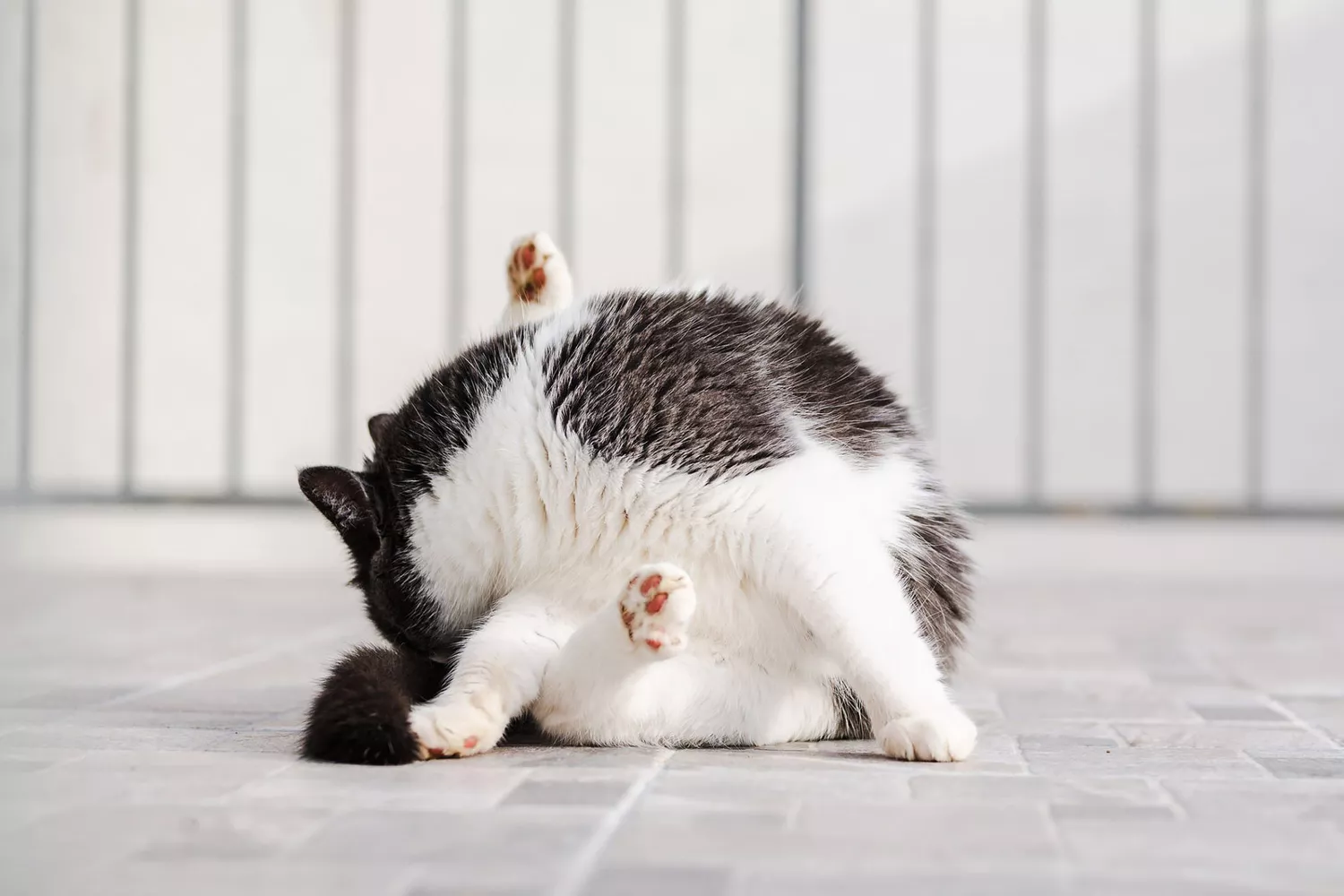
The most common sign of anal gland trouble in cats is licking and biting at their bottoms. Though they don't do it as frequently as dogs, cats may also scoot or drag their butts along the ground.
"If their anal glands are painful, cats may avoid using the litter box, cry, and hide," Angela Hoover, LVT, regional technician director for VCA Hospitals, says. "But cats can behave that way for any kind of discomfort or anxiety. The most telling sign of an anal gland problem is a foul odor. That coupled with licking and biting is the biggest red flag."
What Causes Anal Gland Problems in Cats?
When a cat has a bowel movement, the anal muscles press against the outside of the glands while firm stool puts pressure on the glands from the inside. This squeezes liquid out of the glands through two pinhole openings located outside the rectum in the four o'clock and eight o'clock positions, Hoover says.
Anal gland issues arise when diarrhea or soft stools fail to exert enough pressure to empty the glands. Over time, blocked glands thicken with fluid, possibly clinging to diarrhea and causing clogging. In rare instances, a rectal tumor may be the culprit.
How to Treat Anal Gland Problems in Cats
The earlier you catch the problem, the easier it is to treat, Hoover says. "If you notice your cat licking and biting and take them in right away, veterinary staff can empty the anal glands and your cat will be fine afterward."
Cat Anal Gland Expression
Cat anal gland expression involves manually squeezing the anal glands to release fluid. It's best handled by veterinary professionals, Hoover advises. The openings are tiny, and if they're expressed incorrectly, you could do more damage than good. Also, most cats are testy when it comes to being handled for medical treatments.
Anal Gland Infections
"If it's a situation where your cat has been hiding and you didn't realize there was a problem the anal glands can become infected," Hoover says. In that case, your vet will empty the glands and prescribe antibiotics to kill bacteria.
More severe anal gland infections, such as ones that cause the glands to rupture (creating a new hole near the rectum) require more intense treatment. Your vet may need to sedate your cat to flush out the anal glands with antiseptic wash, Hoover explains. Your kitty will get antibiotics and a cone to wear so they don't lick the area.
Recurrent Anal Gland Infections
If your cat struggles with repeated anal gland blockages and infections, there is a lasting treatment. Anal glands can be removed without any long-lasting effect, Hoover says, since they don't serve a necessary function. This is a major surgery with a long recovery, so it's typically reserved for severe cases.
Can You Prevent Anal Gland Problems in Cats?
There isn't a specific way to stop anal gland problems from occurring in your kitty. But feeding your cat a good diet may help them have regular stools.
Diarrhea or constipation can increase your cat's risk of anal gland problems. "If your cat has diarrhea for a day or two, you're probably not going to see a problem," Hoover explains. "But if they've had diarrhea for a week, they could be at higher risk. There's been more time for fluid to build up and become thicker, making it more difficult to get out."
If your cat has a change in his bowel movements, just keep an eye out for signs of an anal gland problem. "I think the most important thing is for you to know what's normal for your cat," Hoover says. "That way if they start acting abnormally—vocalizing at times that aren't normal, licking, chewing, hiding, or avoiding the litter box—you know you need to have your pet checked out."



