Bolognese Dog (Bolo): Breed Characteristics & Care
The Bolognese dog (also known as the Bolo) is a toy Italian dog with small eyes, floppy ears, and a unique curly, ruffled white coat that grows upward on the top of the head. More than just another fluffy white lap dog, this breed is known for its especially calm demeanor.
The Bolognese dog might remind you of the bichon frise, and with good reason—they’re closely related and are sometimes called the bichon Bolognese. These dogs are also cousins to the Maltese, Havanese, coton de Tulear, and lowchen. While they aren't suited to all types of families, if you're looking for a companion to stay loyally by your side, the Bolognese might be just right for you.
Learn all about the Bolognese dog’s care needs, history, and more.
Characteristics of the Bolognese
The serene Bolognese dog can be a wonderful family pet, known for a docile personality and loving nature toward humans. As a companion dog in the truest form, this breed chooses a favorite human and wants to be close to them in every moment.
Bolos also get along with other dogs and enjoy playtime whenever it's available. However, for pet parents that aren't active throughout the day, this breed's laid-back temperament also makes them content to stay inside and relax.
The Bolognese may not be suited to all households with young children—with a small frame, this dog can easily become overwhelmed by bursts of affection from an enthusiastic child. But when children know how to interact with the dog respectfully, the Bolo is happy to coexist and play together.
Bolognese dogs are affectionate toward their families, and they enjoy being around people so much that they're prone to separation anxiety when left alone.
History of the Bolognese
Descended from bichons, the Bolognese dog originated in Bologna, Italy in the 11th century. The breed was loved by nobility and was a frequent gift between noble families during the Renaissance (particularly between Italian and Belgian royalty). When nobility started to die out, the breed almost went extinct.
It wasn't until the 1980s that an Italian breeder named Gian Franco Giannelli, along with a few other European breeders, helped to restore the Bolognese dog breed to its present-day popularity.
The breed was brought to England, where it was first shown in Imported Register classes in 1990. Bolos have been showing at the Crufts dog show since 2002. The breed isn't registered with the AKC yet, but it can still be recorded for breeding and competition purposes.
Bolognese Care
Like all dog breeds, the Bolognese requires some mental engagement and physical exercise every day, but these dogs are usually easygoing. They need to be moderately active and require basic training to stay happy and well-mannered. In the grooming department, Bolos are known for being a bit high-maintenance thanks to their long, curly coats.
Exercise
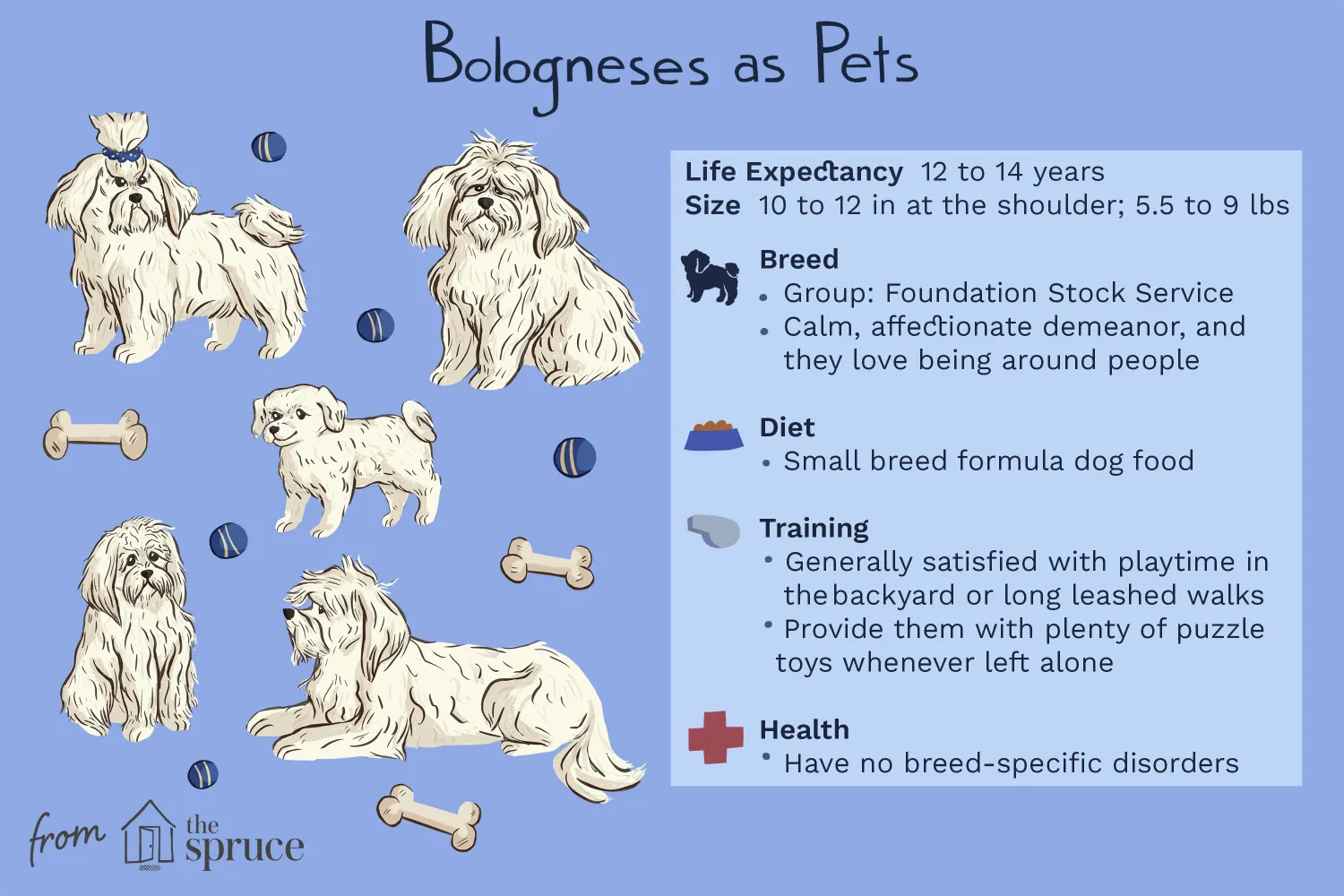
Bolognese dogs aren’t bred to be athletes—they're generally satisfied with running around the backyard or going on leashed walks. Exercising for about 30 minutes once to twice per day should be plenty to keep this breed fit.
These dogs are recommended for people that are home often and able to provide them with plenty of attention, and playtime at the house is a great way to keep your Bolognese dog active and engaged without overexertion.
Because of their tendency to develop separation anxiety, these dogs are not suitable for people who work outside of the house full-time. You should be sure to provide them with plenty of puzzle toys and other methods of entertainment whenever they are left alone.
Bolos are usually quite friendly, though, and can thrive in a doggie daycare that has a good setup for small dogs. This is a good option while you are on vacation or away for the day every so often, but it isn't best for a full-time plan.
Grooming
Like many other long-haired dogs, the Bolognese dog requires significant grooming.
Some pet parents prefer to keep this breed's coat trimmed short to prevent the need for daily brushing, but haircuts will be necessary often to maintain a short length. If you let your Bolo's hair grow out, plan to brush the coat every day to avoid matting and odor.
Since these dogs don't shed profusely, they're a good option for people with mild to moderate allergies, but long white hairs will still shed around the house in small amounts.
Along with caring for the coat, brush this dog's teeth, trim their nails, and check their ears for dirt and buildup. Clean the ears and brush the teeth on a regular basis to prevent infections.
Training
The Bolognese dog can begin basic obedience training in puppyhood at about 8 weeks of age.
This intelligent breed tends to pick up on training quickly, but keep lessons interesting. Use positive reinforcement methods in short sessions, offering rewards like treats, affection, and playtime for desirable behavior.
Common Health Problems
As a relatively rare breed, Bolos are usually healthy without inherited medical problems. Though their gene pool is small, it’s mostly maintained by very dedicated breeders. Before purchasing a Bolognese puppy, ask the breeder for proof of a patella exam and CERF (eye) exams at a minimum. These dogs can be prone to:
Luxating patella: This is a condition that causes the kneecap to slip out of its groove. It should be treated by a veterinarian because it can cause pain and mobility problems.
Eye problems: This breed can be prone to eye issues like progressive retinal atrophy (PRA) and cataracts, both of which cause vision loss. Veterinary checkups can help spot problems in their early stages.
It’s important to research responsible breeders who do extensive health testing for their puppies. Proper breeding practices include more than just taking the parents and the puppies to the vet; routine exams don’t always catch genetic diseases. By receiving clear test results and clean bills of health for the litter's parents, you'll help increase the chances of your Bolognese dog living a long, healthy life.
Diet and Nutrition
Like all dog breeds, your Bolognese should be fed high-quality dog food appropriate for their nutritional needs at different stages of life. Small-breed formulas are recommended, but your veterinarian can help you narrow down the best options and create a healthy portion plan based on your specific dog's age, weight, and activity level.
Keep an eye on your dog's weight and avoid overfeeding, which can cause health problems down the road. Use your hands to check for a healthy weight—since these dogs have thick coats, it can be hard to see their waistlines. Feel for the hipbones and ribcage, ensuring that you can reach them without digging through any fat (and that they aren't sticking out, either).
If your dog becomes overweight, consult your veterinarian about the best options to reach healthy goals. Exercising and playing more often, feeding fewer treats, and using puzzle feeders are all helpful ways to help your dog burn some energy.
Where to Adopt or Buy a Bolognese
Finding a Bolognese rescue may be challenging, as this breed is rare and doesn't turn up in shelters often. Prospective adopters can register with The American Bolognese Club's Re-Home, Adoption, and Rescue Program to be contacted if a dog in need of a forever home becomes available.
If you plan to purchase a puppy from a breeder, start by researching responsible breeders in your region. You may need to join a waiting list or travel to find a puppy. These dogs typically cost between $1,000 and $2,500, but prices can vary depending on pedigree and availability.
To start your search, check out these resources for rescues, the national breed club, and the AKC:
American Bolognese Club Breeder Directory
American Bolognese Club Re-Home, Adoption, and Rescue Program
AKC Bolognese Breeders
Bolognese Overview
The Bolognese dog is a rare breed, but these dogs make fantastic pets. They are affectionate and loyal, and can be a lot of fun. They also aren’t complicated when it comes to their general care needs, though they do need someone who will keep them well-groomed.
Pros of Bolognese Dogs
Calm, friendly, and affectionate
Can live in any size home with moderate daily exercise
Low-shedding coat
Cons of Bolognese Dogs
Prone to separation anxiety, which can lead to destructive behavior
Not always suitable for homes with children
Requires significant grooming
More Dog Breeds and Further Research
Before you bring home a new dog, explore similar breeds to compare their personalities and care requirements. Speak to owners, breeders, and rescue groups and meet a few Bolognese pups in person to learn more.
If you love the Bolognese dog, you may also be interested in these similar breeds:
Bichon Frise
Shih Tzu
Maltese
There's a whole world of different dog breeds that can join your family. With a little research, you can find your next best friend!



