Cat Seizures: Causes and Treatment Options
Cat seizures occur as a result of abnormal electrical discharges in the brain and manifest in various ways, some more severe than others.1 Seizures are distressing for both cats and their owners, and they can get progressively worse if not treated. They can occur as a result of different brain dysfunctions, so it's important to seek veterinary help. Learn about the causes of cat seizures, how to treat them, and what to expect at the vet.
What Is a Seizure?
Seizures in cats are sudden electrical disturbances in the brain, leading to involuntary behaviors. They occur when there is a disruption in the brain's communication with the body's nerves. Some seizures involve violent movements in one or more body areas, while others are subtle, similar to a trance where the cat becomes unresponsive. Recurrent seizures due to a chronic stimulus are known as epilepsy.
What Causes Cat Seizures?
Cats can experience seizures due to various causes, though sometimes the cause remains unknown. Idiopathic seizures have an undetermined origin. Secondary epileptic seizures result from a structural lesion in the brain, while reactive seizures occur when the brain responds to systemic injury or physiological stress.
Possible conditions leading to seizures in cats include:
Meningitis
Encephalitis
Genetic and/or structural abnormalities in the brain
Systemic diseases (liver or kidney disease)2
Toxin exposure (flea and tick medication, sprays, dips, and shampoos that contain pyrethrin)
Infectious diseases, including viruses
Low blood sugar
Parasites
Signs and Symptoms of Cat Seizures
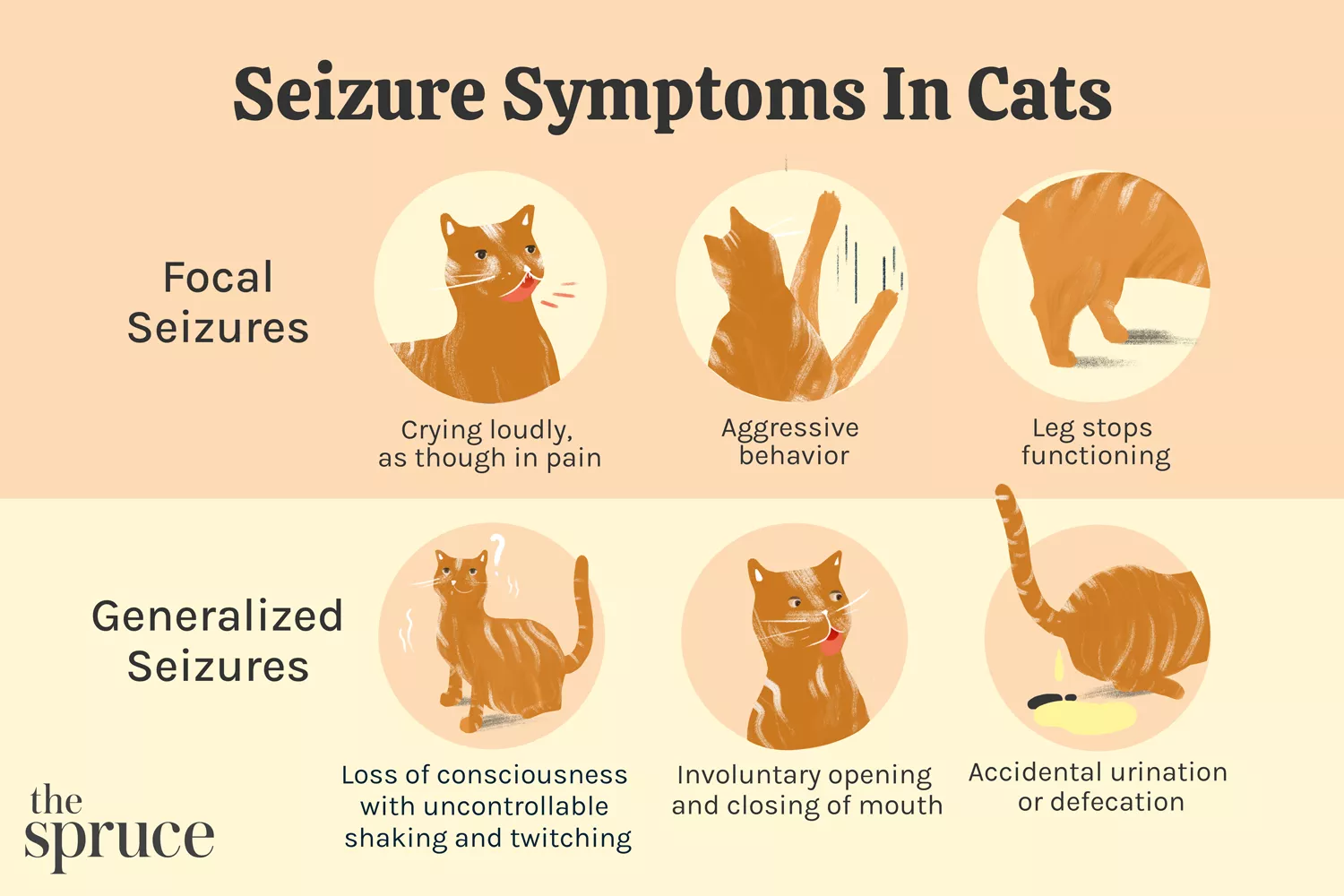
Cat seizures exhibit a range of symptoms, some more noticeable than others. They can be categorized into two types of symptomatic behaviors: focal and generalized seizures.
Focal Seizures
During a focal seizure, a cat may cry loudly as if in pain, exhibit aggression despite not being typically aggressive, or drool excessively, and exhibit other atypical behavior like obsessive tail chasing.3 The cat might lose function in a leg, appear to chew while staring off, or be unable to rise. You may observe fluttering in areas such as the eyelids, mouth, or ears. Despite a dazed appearance, cats remain conscious during focal seizures. It's important to note that focal seizures can transition into generalized seizures.
Generalized Seizures
A generalized, or grand-mal, seizure results in unconsciousness. The cat may fall and begin shaking uncontrollably, with legs moving in a paddling motion or becoming rigid. The mouth may open and close involuntarily, while the head arches backward. Involuntary urination or defecation can also occur. The severity and duration of a generalized seizure can vary greatly.
While some of these symptoms may suggest conditions other than seizures, their repeated occurrence should prompt a veterinary visit for further evaluation.
Drooling
Twitching (limbs, eyes, or whiskers)
Tail chasing or other obsessive behavior
Shaking (tremors)
Rigidity
Loud vocalizations
Unprompted aggression
Loss of consciousness
Thrashing or paddling of limbs
Abnormal mentation
Steps to Take If Your Cat Has a Seizure
If you suspect your cat is experiencing a seizure, you can take several steps to minimize injury.
Avoid moving your cat if possible unless they're in an unsafe place.
If you need to move your cat, use a towel to pick up the cat to avoid being scratched or bitten.
Keep other animals in the household away from your cat during a seizure
Make a note of the approximate length of the seizure
Keep your cat safely confined after a seizure if they seem disoriented and clumsy.
Contact a veterinarian for advice
What to Expect During a Vet Visit for Cat Seizures
To aid your veterinarian in determining the cause behind your cat’s seizures, be ready to provide the following information:
Age of onset of seizures
Frequency and length of seizures
Seizure behavior
Any events or encounters before seizure activity (i.e. eating a certain food, excessive excitement or stress, exposure to toxins, or new medications)
History of head trauma
Your veterinarian will conduct a thorough physical exam and diagnostic blood work to rule out common causes of seizures. If the cause is not immediately clear, advanced diagnostics such as an MRI or cerebral spinal fluid sampling may be needed.
Treating Cat Seizures
The effectiveness of seizure treatment typically depends on their cause. If the cause is unknown or due to previous head trauma, anticonvulsant medications may be used to manage seizure frequency and severity. Phenobarbital is commonly used in cats. Frequent seizures are often managed with one or more anticonvulsant medications, usually for life.
If seizures are due to toxicity, removing the toxin from the body is crucial. This could involve bathing the cat if a pyrethrin-based flea treatment was applied. The vet might induce vomiting if the cat ingested a toxin or administer medications to counteract its effects. Seizures from toxic exposure generally will not require lifelong medication
Seizures resulting from brain tumors may be treated with surgery to remove the tumor. If surgery is not feasible, anticonvulsants can help suppress seizures to maintain the cat's quality of life as much as possible.
Prognosis for Seizures in Cats
The prognosis for cats with seizures can vary greatly, depending on the cause and severity. If there's no life-threatening condition (like a brain tumor), anticonvulsant medications may effectively manage the seizures. Finding the correct dose for your cat may require time and patience, as these medications can have side effects that need regular monitoring to maintain overall health. Seizures from toxic exposure generally have a cautious prognosis, depending on the cat's resilience and the effectiveness of treatment provided.
How to Prevent Cat Seizures
Many seizures cannot be prevented due to unknown neurological disturbances or brain tumors. However, you can avoid seizures from toxic exposure by ensuring your cat isn't exposed to harmful chemicals like pyrethrins, particularly those in dog-specific pesticides. Keep your cat indoors to help prevent toxicity, contagious diseases, and head injuries due to trauma (like car collisions). Regular veterinary visits, at least once a year for a wellness exam—may catch health issues before seizures arise.



