How to Stop Your Cat Hissing at Other Cats After a Vet Visit
One common form of cat aggression happens between cats that live together but are briefly separated. This aggression can be distressing for the victim cat and the cats' owners. Often, the unexpected attack stems from redirected aggression, where the aggressor targets a surrogate because the actual target is inaccessible.
A typical scenario is when a household cat visits the groomer or veterinarian. Upon returning home, its feline friends may snub or attack it. This behavior happens because the returning cat has an unfamiliar scent that housemates don't recognize.
Confident cats typically resolve this shortsightedness over time. However, you can expedite this process and prevent the deterioration of feline relationships.
Consider Scent Communication Rules
Cats communicate with vocal, visual, and scent cues. Each cat's unique scent acts as an identification tag for other cats. When they sleep together, groom each other, or rub against one another, they share their scent. Consider this communal scent as a way to identify them as part of the same family.
After a vet visit, a cat may return with an unfamiliar scent, as it's been handled by strangers, bathed, or treated with medications that carry unusual odors. Other cats may not recognize these new scents and can react as if an intruder is encroaching on their territory.
When household cats greet the returning cat with hisses, the returning cat may become defensive. This situation can escalate beyond simple posturing, especially if the sick cat has to visit the vet clinic frequently.
Schedule Cats at the Vet Together
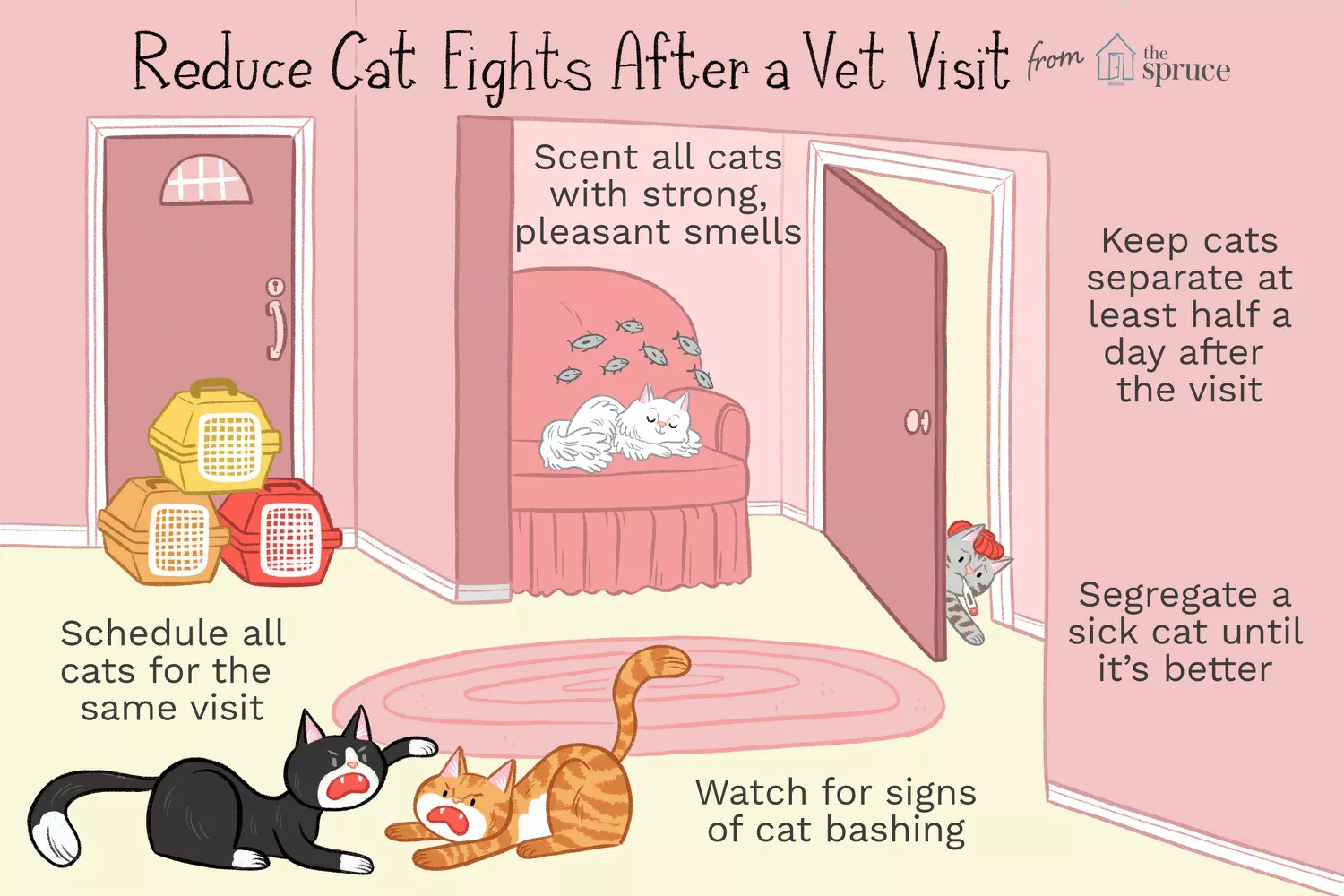
Try to schedule routine veterinary visits for your cats simultaneously. This way, they all share a similar scent after being handled by clinic staff, reducing the likelihood of them attacking each other upon returning home.
Keep a Sick Cat Separated
When a cat is ill, its body chemistry may alter its smell, causing other cats to behave differently even before the vet visit. Separate a sick cat from the others, especially if they are mistreating it. Prolonged aggression increases stress for all involved and takes longer to resolve.
Consider isolating the returning cat in a room alone for at least half a day. This allows it time to self-groom and removes the unpleasant clinic smell that offends its feline companions. It also gives the treated cat a chance to relax after the stress of the vet visit, making it less defensive.
Redistribute the Communal Cat Scent
Use a hand towel to pet the other household cats, focusing on the best-friend cat by rubbing the towel against its cheeks. This collects the best-friend cat's scent, which can then be transferred to the vet-visit cat to help re-establish the communal family scent.
Pheromones effectively expedite scent communication. Products like Feliway, contain a synthetic version of the substance your cat deposits when it rubs its cheek on your leg or furniture. These products signal a familiar and safe area, masking other scents or pheromones. They can make new situations feel more familiar and safe for cats. Use these on carriers, bedding, and favorite spots, or as a diffuser to improve the returning cat's acceptance.
Problems and Proofing Behavior
Monitor the first few hours of the cats' interaction, and separate the treated cat immediately if there is any cat-bashing or hissing. Reprimanding the cats for fighting is pointless; it will likely just confuse them more.
The cats may be more open to reacquainting after a cooling-off period. Avoid rushing to re-integrate the sick cat with the others. It may need additional time to recover from the vet visit's trauma, and there is no urgent need for it to rejoin the group.



