Understanding Kitten Biting: Causes and Solutions to Stop Aggressive Behavior
Why does my kitten bite me? Kittens often bite while they're playing and may become overexcited. This behavior is natural in kittens and is typically not a sign of hostility or fear. However, if left unchecked, it can become a serious problem.
Fortunately, you can generally train kittens to stop this behavior. Here are some possible reasons why your kitten is biting you and what you can do to address it.
Why Do Kittens Bite?
Your kitten may bite for several reasons, with play being the most common. Kittens won't outgrow rough play unless it is consistently discouraged. Biting is natural behavior, and it's essential for humans to teach kittens proper behavior.
However, biting or scratching may also indicate that your kitten is stressed, sick, or in pain. Here are some possible reasons for kitten biting:
Playing
Kittens often bite during play as they learn to socialize with siblings, test boundaries, practice hunting, and have fun. They might exhibit the same behavior while playing with you and occasionally grab and bite a bit too hard.
Teething
Teething discomfort may lead kittens to chew on various things, including you. Kittens start losing their baby teeth around 3 to 4 months of age, and will have adult teeth by six months old.
Seeking Attention
If your kitten nips at you and meows, they might be asking for attention. Your kitten may even try to lead you somewhere to ask for something specific, such as food or playtime.
Affection
Some kittens give their humans affectionate love bites, especially during snuggly petting sessions. They may lick you first, and then take a little nibble. Just be aware that some cats snap or bite when they get overstimulated, something called petting aggression. It's more common in adult cats but kittens may do this too.
Stress, Anxiety or Fear
A kitten may bite in self-defense if they feel threatened or frightened. Changes in your home may cause stress that puts your kitten on edge, such as loud noises and other pets or people. In addition, your kitten may dislike the area you're touching and bite to get you to stop.
Frustration
Kittens may get frustrated if they see an animal or object out of reach, like a bird outside a window. This frustration might cause them to redirect their intense emotions toward you, resulting in a bite.
Medical Conditions
A kitten may bite when they're sick or in pain, especially if they're touched where it hurts. Watch for signs of illness, such as vomiting, diarrhea, and poor appetite.
What To Do If Your Kitten Bites
If your kitten bites you during play, it's time to end playtime. Your kitten needs to know that a bite on exposed skin is inappropriate.
If your kitten bites when being petted or handled. they may be uncomfortable with that type of touch. Avoid touching your kitten's paws, belly, and underside of the tail. While some kittens are comfortable with being touched on any part of their body, others are protective of these sensitive spots.
If someone other than yourself is complaining about the kitten's biting, watch to see the interaction between that person and the kitten. Some young children don't understand that they can hurt a pet and may be inadvertently playing too roughly with the kitten.
If the biting happens outside playtime, take a closer look at the situation:
Examine your kitten gently by petting them all over. If they consistently react negatively to a gentle touch in a certain location, there's a good chance they are in pain and a trip to the vet is in order.
Be sure that your kitten's behavior is not related to something that it finds frightening. For example, is it scratching only in certain locations in the home, with certain people, or around certain animals? If that's the case, you may wish to investigate the possibility of fear.
When unsure of the cause of your kitten's biting and scratching, make an appointment with your veterinarian.
How to Stop Scratching and Biting
You've checked and are sure your kitten's biting and scratching is not a sign of any physical problem, but you're still winding up with kitten scratches and nips. Here are some tips for managing the problem and training your kitten to stop this behavior.
Teach Proper Play
When kittens bite during play, they've likely been encouraged to do so at some point. This is especially common if you or your children thought the behavior was cute when the kitten was very small and inadvertently reinforced it.
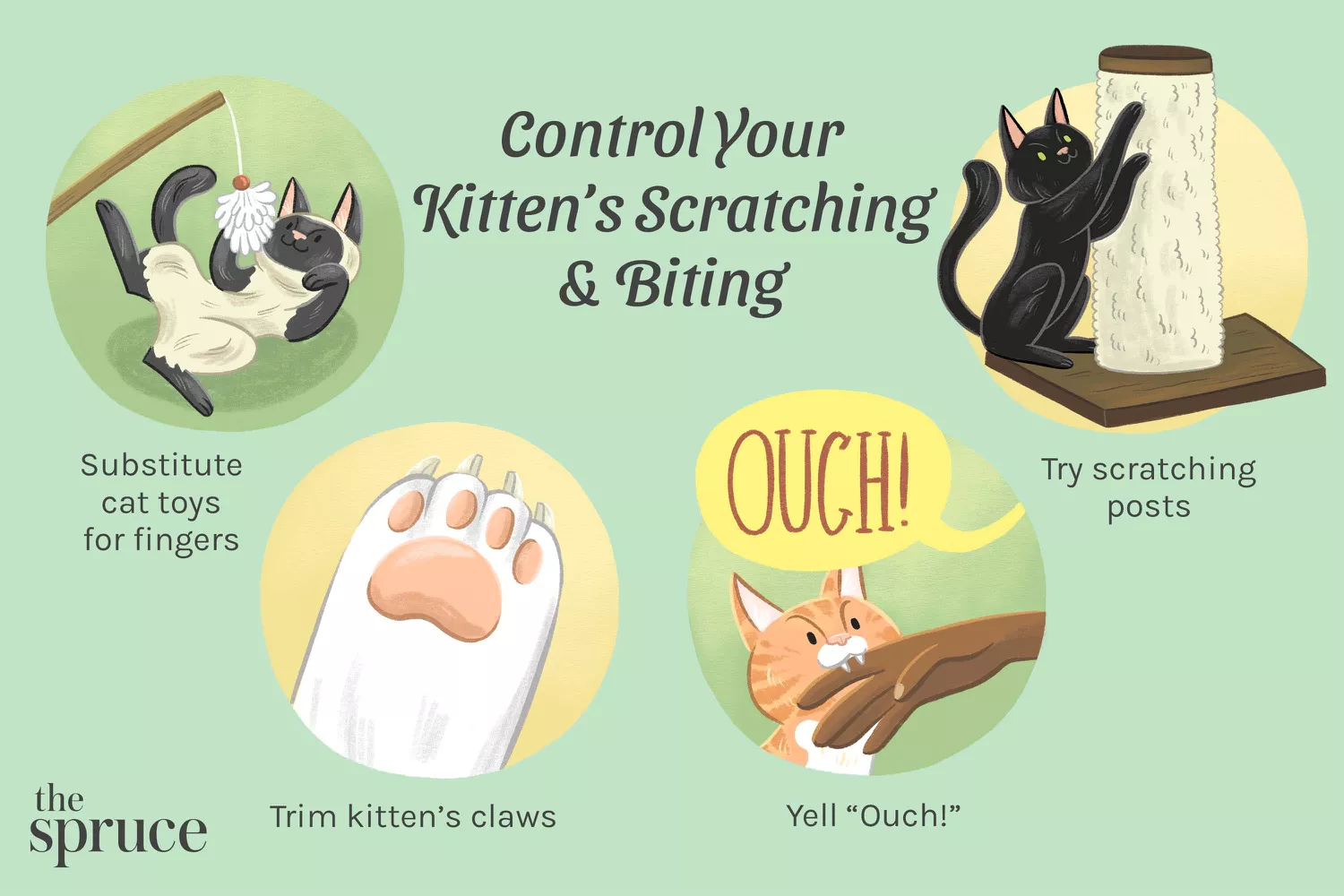
Do not "roughhouse" with your kitten or allow them to bite or scratch at any age. Rough play teaches cats that hands are toys; this habit will be harder to stop later. Substitute cat toys for your fingers when you're playing and save your fingers for gentle petting. Make all family members (and visitors) aware of these guidelines so the cat will receive a consistent message.
Yell "Ouch"
Say "Ouch" loudly and clearly if your kitten bites. While you have their attention, slowly move your hand away. Don't yank it away or the kitten will think the play is on, and they will try to grab it again.
Give the Kitten a Time-Out
If your kitten keeps trying to bite, leave the room or put your kitten in a quiet room with the door closed. Kitty may be overstimulated and needs some quiet recovery. Open the door after about five minutes. If the kitten is asleep, which is often the case, leave them alone with the door open. If they're awake, they may want loving attention. Forget the play for now: just pet your kitten or offer a delicious treat.
Redirect the Kitten's Attention
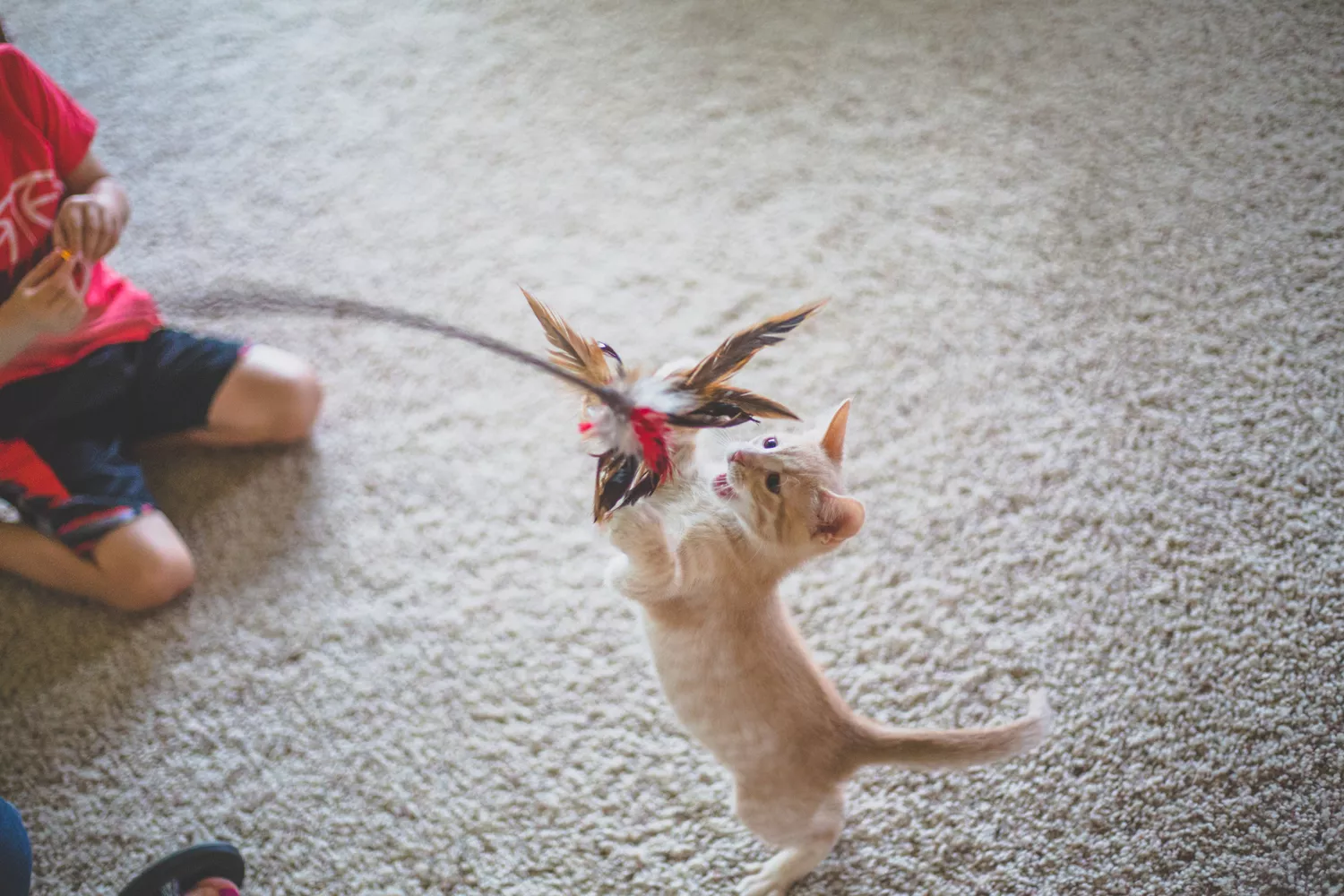
Often playful biting of hands or feet occurs simply because your cat is bored, and is looking for a play object. Give your kitten several 15-minute play sessions several times a day using a wand toy or interactive toy. Once you've established that hands are not toys, your play sessions should be more enjoyable for both of you.
In addition to active play, you can also enrich your cat's environment. A cat tree, window perch, and scratching post (or two) are all positive additions to your home. To the kitten, these are now places to play, explore, and relax.
When to Get Professional Help
If you and your family have tried these techniques consistently and your kitten is still biting, it's time to get help. Speak with a veterinarian or contact a credentialed feline behavior consultant. These experts can often come to your home, assess the situation, and offer concrete tips and solutions.



