Stopping Your Dog From Humping: Causes & Solutions
Humping is a common behavior in dogs, though it can sometimes be embarrassing. This behavior is especially awkward if your dog humps people, particularly those who don't like dogs. Some dogs will hump their toys, furniture, shoes, or other pets. While humping is usually harmless and normal, it can be curbed if it's problematic.
Learn why your dog is humping and discover ways to discourage your dog from humping inappropriately.
What is Humping in Dogs?
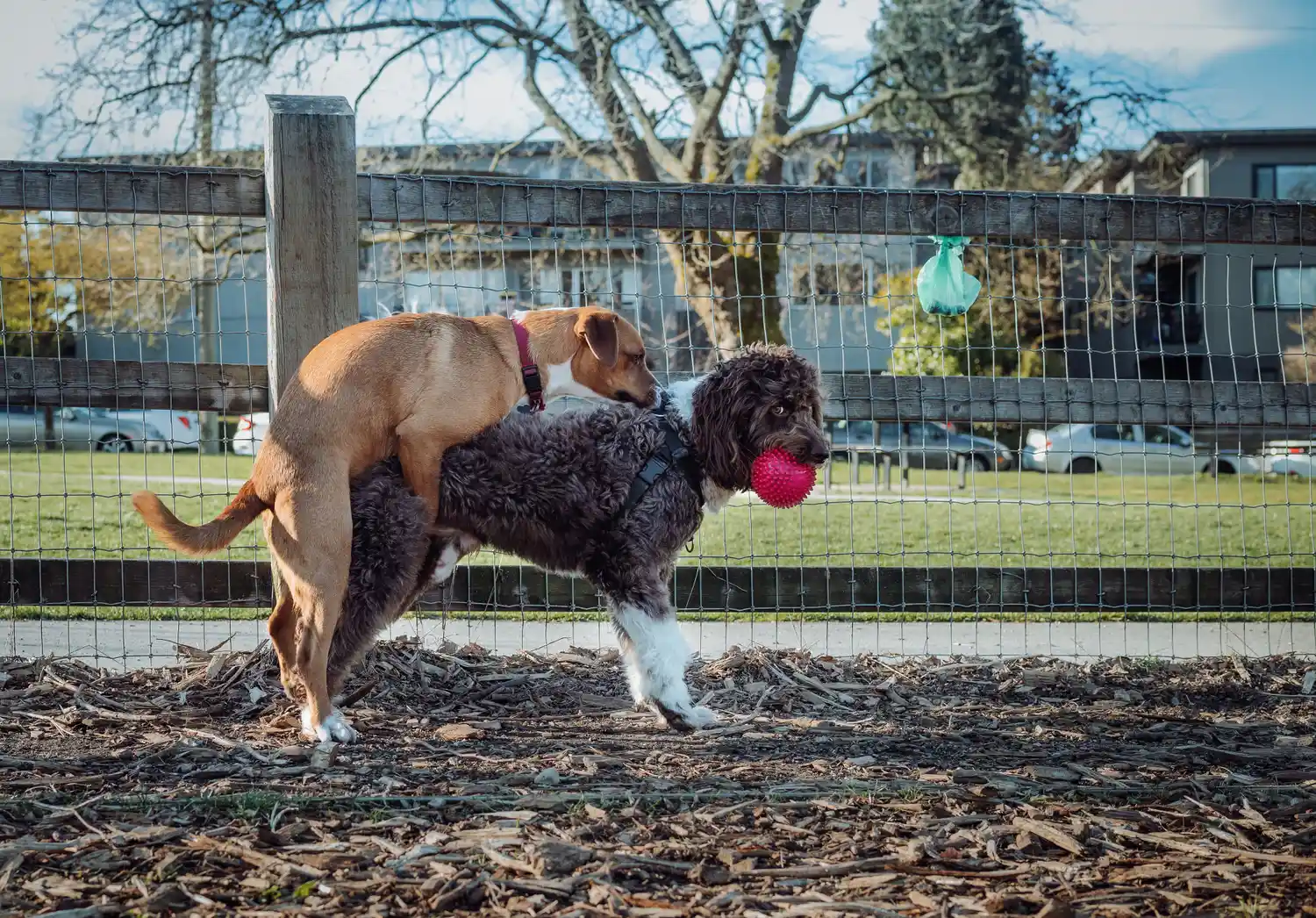
Dog humping, also called mounting, describes when dogs thrust their hips against a person, another dog, an object, or even the air. When humping another animal, dogs usually mount the animal's back end. Some dogs will mount a person's leg or the side of furniture.
Why Do Dogs Hump?
Humping can seem sexual but often is not. It's a mix of instinct and learned behavior and is completely normal for all dogs, male or female. Humping becomes a behavior problem when a dog humps people, annoys other dogs by mounting them, or when it occurs excessively.
There are a few different reasons why dogs hump.
Sexual/Hormonal
An intact dog (not spayed or neutered) may hump other dogs due to hormones and sexual attraction. If both dogs are intact, they often mate, so it's best to keep intact dogs of the opposite sex separate if mating isn't desired.
Sometimes, an intact dog will hump a spayed or neutered dog. Females also hump, and it may or may not be sexual. Humping objects or people might be masturbation. Neutering or spaying can help address this issue, but dogs may develop and continue the habit before and after being altered.
Stress
Dogs that are stressed or overstimulated can use humping as a sort of self-soothing behavior. This may explain why your dog humps visitors to your home. The dog is responding to the anxiety or stress of having a stranger in the house. Other stressors that can induce humping include changes in schedule, being boarded, you returning home after a long day at work, and a new pet being introduced to the household.
Excitement
Usually, dogs aren't emulating mating behavior when they hump. Nonsexual arousal is more likely to provoke a dog to hump. It's just a way for the dog to burn off energy or relieve stress.1 Some dogs bark, some run or jump, and others hump. This is normal for many dogs. If the behavior is frequent, training may help by redirecting your dog to another outlet for its excess energy.
Along the same lines, some dogs hump as an attention-seeking behavior or because they are bored. If this is the case, providing them with ample exercise, mental stimulation, and attention when they are not humping should help.
Playfulness
Like play fighting, play humping can be a completely normal and acceptable behavior between two dogs as long as it doesn't upset one of the dogs. Some dogs play hump each other back and forth, and everyone is fine with it. Some dogs simply enjoy humping. Make sure to break it up if one of the dogs seems annoyed by the humping. Training (for instance, to come when called) may be useful in decreasing the frequency and intensity of play humping.
Medical Issues
Before you try to train your dog not to hump, you should rule out any medical causes. While humping is not usually related to a medical condition, there are a few possibilities.
Urinary tract infections, itchy skin, and priapism (persistent erection) may elicit humping.1 This is similar to other behaviors, such as licking the genital area or rubbing against furniture or other objects. Visit your veterinarian to rule out health conditions as possible reasons for humping.
How to Stop Humping
Since there are a few different reasons for dog humping, it may take a bit of trial and error to get your dog to knock it off.
Obviously, you don't want your dog humping your guests. You also don't want humping to lead to a fight with another dog. Even humping an object can potentially cause damage (depending on the object). Fortunately, humping can usually be managed through training.
Catch Your Dog in the Act
First of all, if you want to stop your dog's humping, you need to address the behavior while it's happening. There's no point in scolding your dog once the behavior has ceased, as this will only confuse your dog.
As soon as you spot your dog humping, call your dog's name and firmly say a word like "stop," "off," or "uh-oh." The word "no" is not ideal since it's often used in conversation. Likewise, the word "down" may be confusing if your dog knows how to lie down on command (or if you ever want to teach it). Use a firm, but not angry, voice. You want to get your dog's attention without frightening them.
If you manage to get your dog's attention and the humping stops, reward them with a treat, a toy, or affection, depending on what your dog likes most. Immediately provide the reward when the humping stops to help your dog form a connection between the behavior and the reward. Remove the humping target if possible. If it's a person, you might just need to remove your dog from the room.
Redirect Your Dog's Attention
If you can't get your dog's attention with a verbal cue, try redirecting your dog to a toy or game. Find something very appealing, like a food puzzle or a favorite squeaky toy. Consistently interrupt your dog each time you notice humping, then coax your dog away to another activity. Praise or reward your dog when they move their attention to the toy or game and away from the humping.
Seek Professional Help
With patience, you may be able to stop your dog's humping habit on your own. However, some dogs won't quit that easily. If yours is one of them, you may wish to seek the help of a professional dog trainer or behaviorist to work on the issue.
Otherwise, you might need to accept that your dog is going to hump and avoid situations where humping will be a problem. If this is how things turn out, you'll need to know how to predict the humping behavior and prevent it whenever possible. This is especially true when humping may cause a dogfight or an injury to someone. Keeping your dog in another room when visitors come over, avoiding excessive stress or anxiety in your pet, and providing toys that aren't the right size for easy humping are all options that can help prevent this embarrassing behavior.



